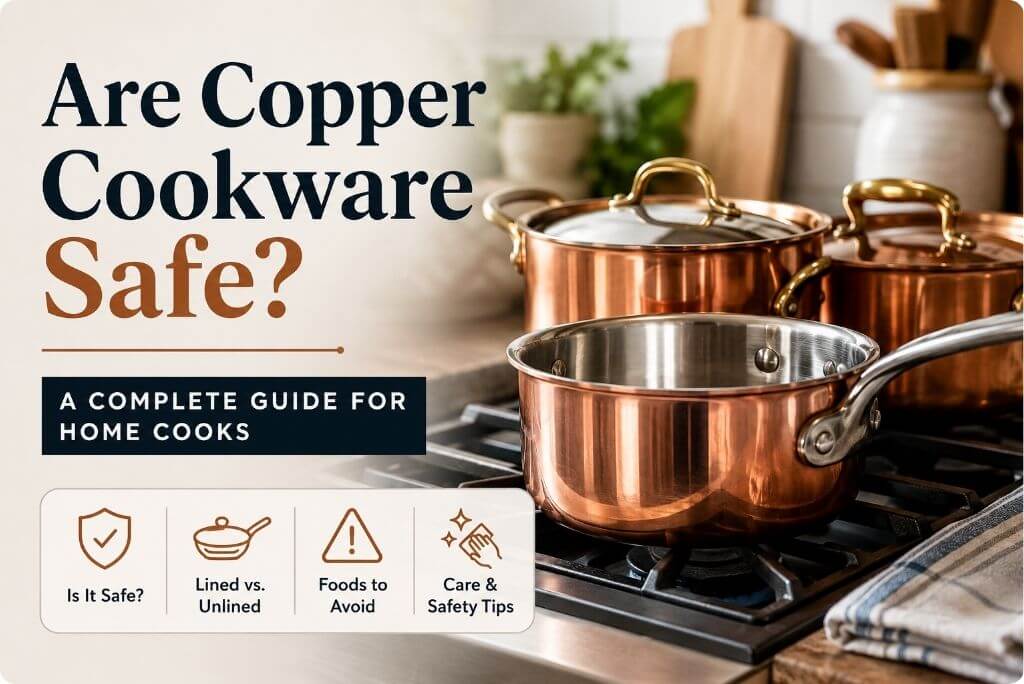
Is Copper Cookware Safe?
Copper cookware has a strong reputation for fast, even heating, and that is exactly why many cooks love it. The safety question usually comes down to one thing: whether the copper is lined. Most modern copper cookware is safe when it has a proper lining, but bare copper is a different story.
This guide explains what makes copper cookware safe or unsafe, which foods to avoid, and how to use copper pans the right way. It also helps you decide whether copper is actually worth buying for your kitchen.
Is Copper Cookware Safe? The Quick Answer
Yes, lined copper cookware is generally safe for everyday cooking. No, unlined copper is not the best choice for most meals, especially if the food is acidic. The lining matters because it keeps food from touching the copper surface.
Copper itself is not the problem in small amounts, but excessive amounts can be harmful over time. NIH notes that excess copper can cause stomach upset and, in more serious cases, liver damage. That is why the condition of the cookware matters so much.
Why People Worry About Copper Cookware
Copper is one of the best materials for cooking because it heats up quickly and spreads heat evenly. The concern isn’t the copper itself—it’s what can happen when food comes into direct contact with bare copper.
Copper is a reactive metal, which means it can interact with certain foods. This is most likely to happen with acidic ingredients like tomatoes, vinegar, citrus juice, or wine. When these foods touch unlined copper, small amounts of copper can move into the food.
A small amount of copper is a nutrient your body needs. However, too much copper from cookware is something you want to avoid. That’s why most modern copper cookware is lined with stainless steel or tin. The lining acts as a barrier, keeping food from touching the copper.
Older copper pots and pans deserve a closer look. If the lining is scratched, worn away, or peeling, the copper underneath may be exposed. In that case, the cookware may no longer be safe for everyday cooking until it has been repaired or re-lined.
The good news is that most safety concerns are easy to avoid. Using well-maintained, lined copper cookware and checking it regularly for damage greatly reduces the risk.
Is Lined Copper Cookware Safe?
Yes, lined copper cookware is generally safe for everyday cooking. The lining creates a protective layer between your food and the copper, so food doesn’t come into direct contact with the metal.
Most copper cookware has one of two linings: tin or stainless steel. Both are safe when the lining is in good condition, but they have a few differences.
Tin-lined copper has a naturally nonstick feel and is popular in traditional copper cookware. It’s great for gentle cooking, but tin is softer than stainless steel. Over time, it can wear down and may need to be re-lined if the copper starts to show through.
Stainless-steel-lined copper is the most common choice today. It is durable, easy to maintain, and stands up well to everyday cooking. It also doesn’t react with acidic foods, making it a practical option for most home cooks.
No matter which lining your pan has, it’s important to check it occasionally. If you notice deep scratches, peeling, or exposed copper, stop using the pan until it has been repaired or re-lined.
For most people, a well-made, properly maintained lined copper pan offers the benefits of fast, even heating without the safety concerns of cooking directly on bare copper.
Is Unlined Copper Cookware Safe?
Unlined copper cookware is generally not the best choice for everyday cooking. Because food touches the copper directly, there is a greater chance of copper transferring into the food, especially during longer cooking times.
The biggest concern is acidic ingredients. Foods made with tomatoes, vinegar, citrus juice, or wine can react with bare copper more easily. For that reason, unlined copper is usually not recommended for preparing most everyday meals.
That doesn’t mean unlined copper has no place in the kitchen. It is sometimes used for specific tasks, such as making jams, candies, or certain traditional recipes where experienced cooks value copper’s cooking performance.
For most home cooks, though, lined copper cookware is the safer and more practical option. It offers the same excellent heat control without requiring you to think as much about which foods are safe to cook.
If you’re shopping for copper cookware and want something simple to use, choosing a lined pan is usually the better decision.
What Foods Should Not Be Cooked in Copper Pans?
If your copper pan is unlined or its lining is damaged, it’s best to avoid cooking acidic foods. These foods can react with the exposed copper, especially if they are cooked for a long time.
Avoid cooking:
- Tomato sauce or tomato-based dishes
- Citrus-based recipes, such as lemon or orange sauces
- Vinegar-heavy recipes, including pickled or sweet-and-sour dishes
- Wine reductions and sauces made with wine
- Any other acidic food that simmers for a long time
If your copper cookware has a stainless steel or tin lining that is in good condition, you can safely cook these foods. The lining keeps the food from touching the copper, which greatly reduces the risk of a reaction.
When you’re unsure whether a pan is lined, check the manufacturer’s information or look inside the pan. A lined cooking surface is usually silver-colored, while exposed copper has a reddish-orange finish.
How to Use Copper Cookware Safely
Copper cookware is easy to use safely once you know a few basic rules. A little care helps your cookware last longer and keeps it safe for everyday cooking.
Before using a copper pan, check whether it has a lining. Most modern copper cookware is lined with stainless steel or tin, which creates a safe barrier between the food and the copper.
If you have an unlined copper pan, avoid cooking acidic foods like tomato sauce, citrus, vinegar, or wine-based dishes. These ingredients are better suited to lined cookware.
Take a quick look inside the pan every so often. If you notice deep scratches, worn spots, peeling, or areas where the copper is showing through, stop using it until it has been repaired or re-lined.
It’s also a good idea to follow the care instructions that came with your cookware. Using the recommended utensils, cleaning methods, and heat settings can help protect the lining and extend the life of the pan.
With regular care and a lining that’s in good condition, copper cookware can be a safe and reliable choice for many years.

Benefits of Copper Cookware
Copper cookware remains popular because it offers several advantages:
- Excellent heat conductivity – Heats up quickly and efficiently.
- Fast temperature response – Responds almost immediately when you raise or lower the heat.
- Even cooking – Distributes heat evenly, helping reduce hot spots and uneven cooking.
- Beautiful appearance – Adds a classic, professional look to any kitchen.
- Long lifespan – A well-made copper pan can last for decades with proper care.
For cooks who value precision and performance, these benefits can make copper cookware a worthwhile investment.
Drawbacks of Copper Cookware
Copper cookware also comes with a few trade-offs:
- Higher price – Usually costs more than stainless steel, nonstick, or cast iron cookware.
- Requires polishing – The exterior can tarnish over time and may need occasional polishing.
- Some linings wear over time – Tin linings, in particular, may eventually need to be replaced.
- Often not dishwasher safe – Many manufacturers recommend hand washing to protect the cookware.
- Needs regular maintenance – Requires a little more attention than lower-maintenance cookware options.
These drawbacks are not deal-breakers for many people, but they are worth considering before making a purchase.
How to Tell if Your Copper Pan Is Lined
A quick look inside the pan can tell you a lot.
If the inside is silver-colored and smooth, it is probably lined with stainless steel. If it has a softer, lighter look and feels more delicate, it may be tin-lined. If the inside is the same reddish copper color as the outside, then it is likely unlined.
If you are not sure, check the brand’s website, the product label, or the box it came in. That is the safest way to confirm what kind of lining it has. This matters because the answer to “Is copper cookware safe?” depends much more on the lining than on the outside copper itself.
Read More: Can I Use Induction Cookware on a Gas Stove?
How to Clean and Maintain Copper Cookware
Good care helps copper cookware last longer and stay safer.
For the inside, wash it gently with warm water and mild soap after it cools. Avoid harsh scrubbers that can damage the lining. If food is stuck on, let the pan soak for a short time instead of scraping it hard.
Dry the pan right away so water spots do not build up. For the outside, polish only when needed. Some people like the bright shine of copper, while others do not mind a natural patina. Either is fine as long as the cookware is still in good condition.
Storage matters too. Try not to stack heavy pans on top of one another unless you use a cloth or liner between them. That helps prevent scratches.
Read More: Is Hard Anodized Cookware Safe?
Is Copper Cookware Worth Buying?
Copper cookware is worth buying if you enjoy cooking and want excellent control over heat. It heats up quickly, cools down just as fast, and responds well when you adjust the burner. That makes it a favorite for recipes that need precise temperature control.
If you’re an experienced cook or enjoy making delicate sauces, candy, or other dishes where temperature matters, copper cookware can be a great investment.
On the other hand, copper isn’t the best choice if you want cookware that needs very little care. It usually costs more than other materials and may need occasional polishing to keep its shine. Some copper pans also require extra attention to protect the lining.
For most home cooks, stainless-steel-lined copper offers the best balance of performance, durability, and safety. Tin-lined copper is also a safe option, but it needs a little more care because the lining can wear down over time.
If you’re buying your first copper pan, choose a well-made, lined model from a trusted brand. You’ll get the cooking benefits of copper without the extra concerns that come with bare copper.
Copper vs. Other Cookware Materials
Here is a simple way to compare copper with other common cookware materials:
| Feature | Copper | Stainless Steel | Cast Iron | Nonstick |
| Heat control | Excellent | Very good | Good | Fair |
| Everyday safety | Excellent when lined | Excellent | Excellent | Very good |
| Maintenance | Moderate | Low | Moderate | Low |
| Durability | High | High | Very high | Moderate |
| Price | High | Medium | Low to medium | Medium |
Copper stands out for heat control. Stainless steel is easier to live with. Cast iron is very durable. Nonstick is convenient for quick cleanup. The best choice depends on how you cook and how much care you want to give your pans.
Read More: Is Aluminum Cookware Safe?
Frequently Asked Questions
Is copper cookware safe for everyday cooking?
Yes, as long as it is lined and the lining is in good condition. Lined copper cookware is the version most home cooks should use.
Does copper leach into food?
It can, but mainly when food touches bare copper. That is why lined cookware is the safer choice.
Is stainless-steel-lined copper safe?
Yes. Stainless steel is a strong, practical lining for copper cookware and works well for everyday use.
Is tin-lined copper safe?
Yes, as long as the tin lining is intact. It may need more care over time because tin can wear down.
Can you cook tomato sauce in copper pans?
Yes, if the pan is lined and the lining is in good condition. Avoid tomato sauce in unlined copper.
Can you cook eggs in copper cookware?
Yes, lined copper cookware works well for eggs because it heats evenly and responds quickly.
How do I know if my copper pan needs to be re-lined?
If you see exposed copper inside, deep scratches, or worn patches, it may be time to have it re-lined.
Is vintage copper cookware safe to use?
It can be, but only if the lining is still in good condition. Older cookware should always be checked carefully.
Can copper cookware go in the oven?
Some copper cookware can, but it depends on the handle and the brand’s instructions. Always check the manufacturer’s guidance first.
How long does copper cookware last?
Very long, if it is cared for properly. The copper itself can last for decades, but the lining may need attention sooner.
Final Verdict
So, is copper cookware safe? Yes, they can be safe and very effective, but only when they are used the right way.
Lined copper cookware is the best choice for most people. Stainless-steel-lined copper is the easiest option for daily use, while tin-lined copper is also safe if it is maintained well. Unlined copper is not a good choice for regular cooking, especially with acidic foods.
If you want cookware that offers great heat control and a premium feel, copper is worth considering. Just make sure you choose a lined pan, keep an eye on the condition of the lining, and use it with a little care.