Zwilling Stainless Steel Cookware Review: Is It Worth the Money?
Zwilling stainless steel cookware has become a popular choice for home cooks who want durable pans, even heating, and a clean cooking surface that can handle everyday meals with ease. Zwilling currently highlights its stainless-steel lines, including Spirit 3-Ply and Motion Stainless Steel, as induction-ready, oven-safe, dishwasher-safe, and backed by a lifetime warranty, which makes them especially appealing for cooks who want long-term value rather than a short-term fix.
In this Zwilling stainless steel cookware review, we will take a close look at how the cookware performs in real kitchens, what it does well, where it falls short, and whether the price makes sense for your needs. We will also look at who this cookware is best for, how easy it is to clean, and whether it is a smart upgrade for people moving away from nonstick pans.
If you are trying to decide whether Zwilling is worth buying, this guide will give you a clear answer. The goal is not just to list features, but to help you understand how the cookware feels to use, how it fits into daily cooking, and whether it is the right choice for your kitchen.
Quick Verdict
Zwilling stainless steel cookware is worth buying if you want pans that feel solid, heat evenly, and hold up well over time. It is not the easiest cookware for total beginners, but once you learn how to use stainless steel properly, it performs very well.
Overall rating: 4.5/5
Best for: home cooks who want durable everyday cookware, people cooking on induction, and buyers who want a long-term upgrade from cheap pans.
Biggest strengths: strong build quality, even heating, and a clean, premium feel in the kitchen.
Main drawbacks: the price is high, and food can stick if you rush the cooking process or skip proper preheating.
Who This Cookware Is Best For
Zwilling stainless steel cookware is best for people who cook often and want pans that can do more than one job. It makes sense for home cooks who sear meat, simmer sauces, boil pasta, sauté vegetables, and move between stovetop and oven. The current product pages also show clear induction support, which makes these pieces especially useful for modern kitchens.
It is also a smart fit for buyers who care about a stainless-steel cooking surface because it is durable, flavor-neutral, and easy to maintain with the right care. Zwilling explicitly describes its stainless-steel pans as the right choice for searing and tomato sauce, which is exactly the kind of practical use case many shoppers want to understand before buying.
Who Should Skip It
This cookware is not the best match for shoppers who want a truly effortless, beginner-friendly nonstick experience. Stainless steel can reward good technique, but it will not automatically release delicate foods the way a coated pan does. That means people who mainly cook eggs, crepes, or very sticky foods and do not want to learn heat control may prefer a nonstick option instead. That is a practical inference from Zwilling’s stainless-steel design and care guidance, which emphasizes proper cooling, cleaning, and use.
It is also not the first choice for someone shopping only on price. Zwilling’s stainless-steel cookware sits in the premium range, with current official pricing showing the Spirit 3-Ply 12-piece set at $549.99 and the Motion Stainless Steel 10-piece set at $399.99.
What Zwilling Stainless Steel Cookware Includes
Zwilling’s stainless-steel lineup currently includes the Spirit 3-Ply collection and Motion Stainless Steel collection, with individual pans and multi-piece sets in several sizes. The Spirit 3-Ply set page shows a 12-piece configuration with fry pans, saucepans, a sauté pan, a Dutch oven, and steamer and pasta inserts, while Motion Stainless Steel is sold in pieces such as 8-inch, 10-inch, and 12-inch fry pans, saucepans, and 10-piece sets.
That matters because buyers are not just choosing a brand; they are choosing a cookware system. A family setting up a kitchen from scratch may prefer the broader 12-piece Spirit set, while someone replacing only a skillet or saucepan may find Motion’s individual pieces more practical.
Materials and Construction
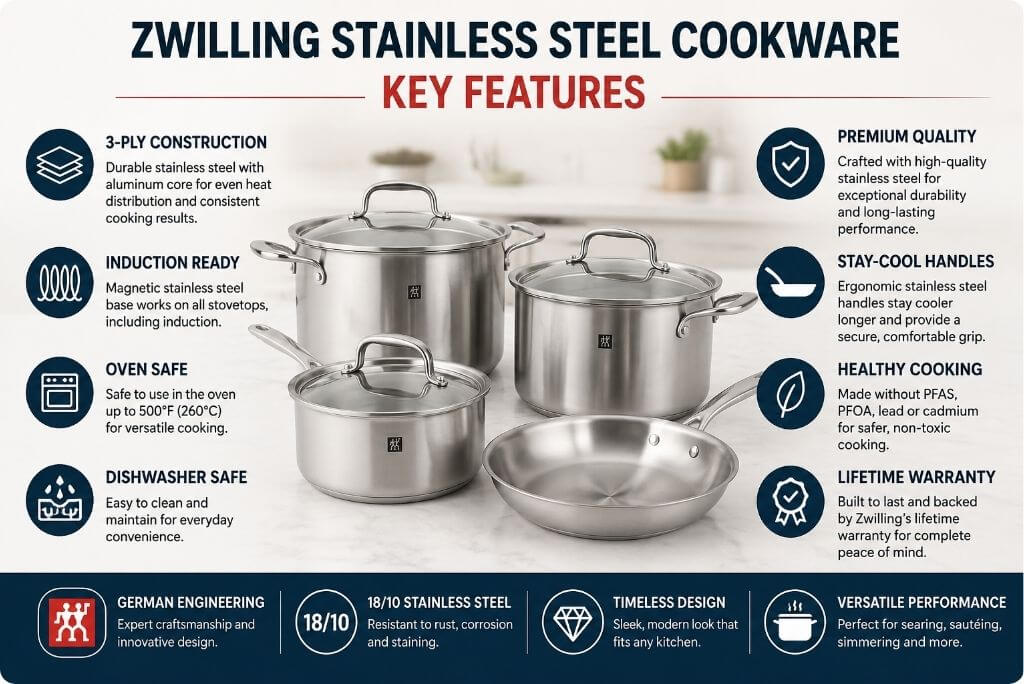
The most important thing to know about Zwilling stainless steel cookware is that its premium lines are built around stainless-steel bodies with an aluminum core. Zwilling describes Spirit 3-Ply as a fully clad, tri-ply stainless-steel construction with a thick aluminum core that heats quickly and evenly. The Motion Stainless Steel line is also presented as pure stainless-steel cookware with induction-ready, oven-safe construction.

This matters because stainless steel alone is not known for fast heat spreading, but aluminum is. In simple terms, the aluminum core helps reduce hot spots and makes the pan more responsive, while the stainless-steel outer layers provide durability and a cooking surface that does not react easily with food. That is why clad cookware is usually considered a step up from thin single-layer stainless steel. Zwilling’s own product pages point to this benefit directly.
Design and First Impressions
Zwilling’s design language is clean and practical rather than flashy. Spirit 3-Ply highlights V-shaped, stay-cool handles and flared rims for cleaner pouring, while Motion Stainless Steel emphasizes ergonomic V-shape handles as well. Those are small details, but they matter in daily use because a comfortable handle and a neat pour can make a pan feel better immediately.
The overall impression is that Zwilling is aiming for cookware that feels serious but approachable. It looks like cookware made to move from stove to oven to table without feeling overly delicate, which is exactly the kind of balance many home cooks want from stainless steel. That judgment follows from the product features Zwilling highlights across both lines.
Cooking Performance
Heat-Up Time
A good stainless steel pan should respond quickly without feeling flimsy. Zwilling says its thick aluminum core heats quickly and evenly, which is exactly what you want for daily cooking. That kind of construction helps the pan come up to temperature in a controlled way instead of creating uneven patches that burn one part of the food while leaving another part undercooked.
Heat Distribution
Even heat distribution is one of the strongest reasons to buy clad stainless steel in the first place. Zwilling’s tri-ply design is meant to support more even heating than basic stainless-steel cookware, and that should help with common tasks like sautéing vegetables or searing protein. In practical terms, this means less guessing and more consistent results if you use medium to medium-high heat properly.
Browning and Searing
This is where stainless steel usually shines. If you want good color on chicken thighs, steak, pork chops, or mushrooms, Zwilling’s stainless steel construction should suit that style of cooking well. Stainless steel is often a better choice than nonstick for browning because it can handle higher heat more confidently. Zwilling’s product descriptions specifically mention browned dishes and even heating as key benefits of the Spirit line.
Food Release
This is the section where expectations matter most. Stainless steel will not behave like nonstick, and that is not really the point. Eggs, fish, and pancakes can still work, but they require the right heat level, enough oil or butter, and patience before turning. A lot of people blame the pan when the real issue is too much heat or not enough preheating. That is why stainless steel is often loved by experienced cooks and misunderstood by beginners.
Simmering and Sauces
For soups, sauces, and reductions, Zwilling stainless steel should perform very well. The steady heat retention of clad stainless steel is helpful when you want to simmer gently instead of chasing temperature swings. This makes it a practical choice for tomato sauce, cream sauces, pan sauces, and slow-cooked one-pot meals.
Is Zwilling Stainless Steel Cookware Safe?
For everyday cooking, Zwilling’s stainless steel cookware is a safe, practical choice. Zwilling describes its stainless-steel line as non-toxic, and the cookware is made from food-contact stainless steel rather than a chemical nonstick coating.
The main safety concerns people often ask about — PFAS, PFOA, lead, and cadmium — are usually bigger issues with certain coated or imported cookware, not with a plain stainless-steel pan used as intended. The FDA also notes that very small amounts of PFAS can enter food through cookware in some cases, so the safest habit is still to cook at normal temperatures and avoid overheating any pan.
Stainless steel is also a good choice for acidic foods like tomato sauce, because it does not react the way some bare metals can. For long-term safety, the simple rule is to use the pan normally, let it cool before washing, and follow Zwilling’s care advice so the surface stays in good shape.
Cleaning and Maintenance
Zwilling stainless steel cookware is easy to care for if you clean it soon after cooking. Warm water, a soft sponge, and a small amount of dish soap are usually all you need for everyday cleaning.
If food gets stuck or burns onto the pan, fill it with warm water and let it soak for a few minutes. For tougher stains, simmer a little water in the pan before gently scrubbing. This loosens burnt food without damaging the surface.
You may notice rainbow-colored marks or light stains after cooking on high heat. This is normal with stainless steel and does not affect performance. A stainless steel cleaner or a little white vinegar can help restore the shine.
Most Zwilling stainless steel cookware is dishwasher safe, but hand washing is the better choice if you want to keep the polished finish looking new for years.
A few simple habits can extend the life of your cookware: avoid using metal scouring pads, don’t leave salty or acidic food sitting in the pan for long after cooking, and dry the cookware before putting it away to help prevent water spots.
Durability and Long-Term Value
One of Zwilling’s biggest strengths is its durability. The stainless steel surface stands up well to daily cooking and resists small scratches better than most nonstick cookware. Normal signs of use, such as light marks, are expected and usually don’t affect performance.
The cookware is also designed to resist warping under normal cooking conditions. As with any stainless steel pan, avoiding sudden temperature changes—like placing a hot pan in cold water—helps it stay flat over time.
The handles feel secure and are built for regular use. They stay firmly attached and provide a confident grip when lifting heavier pots or pans.
With proper care, Zwilling stainless steel cookware can last for decades. While the upfront cost is higher than many budget sets, you are paying for cookware that is made to be used for years, not replaced every few seasons. If you cook often and want long-lasting performance, it is a worthwhile investment.
Pros and Cons
Pros
- Even heating from the clad construction and aluminum core.
- Induction compatibility and oven safety.
- Pure stainless-steel cooking surface with no coating to wear down.
- Dishwasher-safe convenience.
- Good fit for searing and sauce-making.
Cons
- Higher price than budget cookware.
- Not as effortless as nonstick for delicate foods. This is a practical conclusion from how stainless steel works and Zwilling’s care guidance.
- Takes a little more technique and attention.
Zwilling vs Competitors
Zwilling is one of several trusted brands that make quality stainless steel cookware. The right choice depends on your budget, cooking style, and how much experience you have with stainless steel.
Here’s how Zwilling compares with some of its biggest competitors.
Zwilling vs All-Clad
If you want the best cooking performance and don’t mind spending more, All-Clad is usually the stronger choice. Its fully clad cookware is known for excellent heat control, making it a favorite among serious home cooks and many professional chefs.
Zwilling also offers even heating and solid build quality, but it usually costs a little less. For most home kitchens, the difference in everyday cooking is smaller than the price difference.
Choose All-Clad if: You want top-tier performance and plan to use the cookware for decades.
Choose Zwilling if: You want premium quality while saving some money.
Zwilling vs Made In
Made In is designed for people who enjoy cooking often and want cookware that performs like restaurant-quality equipment. Many of its pans are made in Italy and are known for quick, even heating.
Zwilling feels a little more beginner-friendly. Its cookware is widely available, offers more set options, and is easier to find replacement pieces if you need them later.
If you’re just moving from nonstick to stainless steel, Zwilling may be the easier brand to start with.
Zwilling vs Cuisinart
Cuisinart gives you much better value if you’re shopping on a budget. Many of its stainless steel sets cost significantly less than Zwilling while still offering good everyday performance.
The tradeoff is that Zwilling generally has better finishing, sturdier construction, and a more premium feel. It may also hold up better after years of regular use.
If you cook only a few times a week, Cuisinart can be enough. If you cook almost every day, Zwilling is likely the better long-term investment.
Zwilling vs Tramontina
Tramontina is one of the best value brands in stainless steel cookware. Its tri-ply collections deliver impressive cooking performance for the price and are often recommended for budget-conscious buyers.
Zwilling, however, offers more refined details, such as comfortable handles, polished finishes, and a wider range of cookware collections.
If keeping costs low is your priority, Tramontina is hard to beat. If you want a more premium cooking experience and don’t mind paying more, Zwilling is the stronger option.
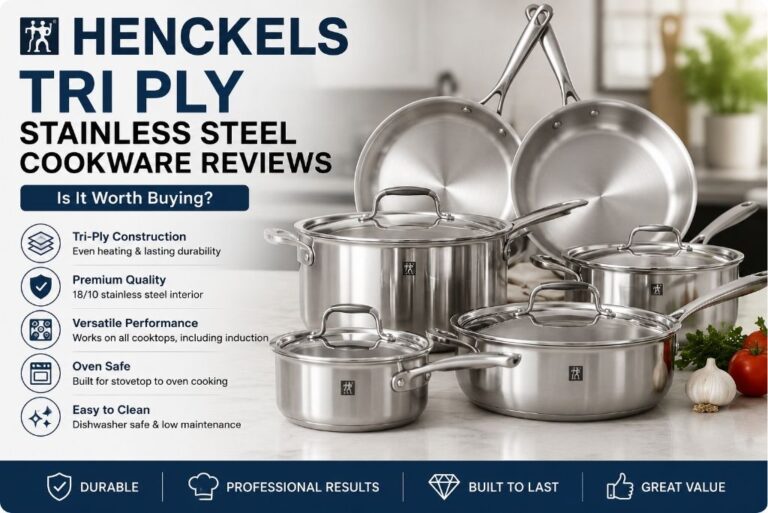
Read More: Henckels Tri Ply Stainless Steel Cookware Review
Who Should Buy Zwilling Stainless Steel Cookware?
Zwilling is a great choice for everyday home cooks who want cookware they can rely on for years. It works well for everything from quick weeknight dinners to larger family meals, making it a practical long-term upgrade.
It is also a good fit for serious home chefs who enjoy searing meat, making sauces, or trying new recipes. The cookware handles high heat well and gives you more control than most nonstick pans.
If you cook on an induction stove, Zwilling is an easy recommendation because it works on induction as well as gas and electric cooktops. That flexibility also makes it a smart choice if you might change your stove in the future.
Buyers looking for long-lasting cookware will get the most value from Zwilling. With proper care, it can stay in your kitchen for many years, making the higher upfront cost easier to justify.
However, Zwilling may not be the best choice for everyone. If you mostly cook eggs or delicate foods and want food to release with very little effort, a quality nonstick pan may suit you better. It’s also worth considering a more affordable brand if you’re on a tight budget or only cook occasionally.
Read More: Calphalon Stainless Steel Cookware Review
Frequently Asked Questions
Is Zwilling stainless steel cookware worth it?
Yes, if you want cookware that feels sturdy and is built for long-term use. Zwilling’s stainless-steel sets are sold with a lifetime warranty, and the brand positions them as pure stainless steel, induction-ready, oven safe, and dishwasher safe.
Does food stick to it?
It can, especially if the pan is not preheated well or if you cook on heat that is too low. That is normal for stainless steel, so a little technique matters more than it does with nonstick cookware.
Is induction compatible?
Yes. Zwilling lists its stainless-steel cookware as compatible with all stovetops, including induction.
Is the oven safe?
Yes. Zwilling lists these stainless-steel lines as oven safe, with some products rated up to 500°F and others to 400°F, so it is smart to check the exact piece before use.
Is the dishwasher safe?
Yes, but Zwilling says hand washing is gentler. The brand also notes that dishwasher cleaning may cause discoloration over time, even if it does not affect performance.
Can beginners use stainless steel cookware?
Yes, but stainless steel takes a little practice. Once you learn how to preheat the pan and control the heat, it becomes much easier to use well. That learning curve is the main tradeoff.
How long does Zwilling cookware last?
With normal care, it can last for many years. Zwilling backs these stainless-steel sets with a lifetime warranty, which is a good sign that the cookware is made for long-term use rather than short-term convenience.
Final Verdict
Zwilling stainless steel cookware is a strong buy if you want durable pans that feel well made and work on almost any cooktop. The biggest strengths are even heating, solid build quality, induction compatibility, and the lifetime warranty. Zwilling also backs these stainless-steel lines as dishwasher safe and oven safe, which adds to the long-term value.
The main weakness is that it is not the easiest cookware for complete beginners. Like most stainless steel, it takes a little practice to keep food from sticking, and the price is higher than budget brands.
Overall, Zwilling is worth buying for everyday home cooks, induction users, and anyone who wants cookware that can last for years without feeling cheap. If you want low-maintenance cooking for eggs and delicate foods, a good nonstick pan may be a better fit.