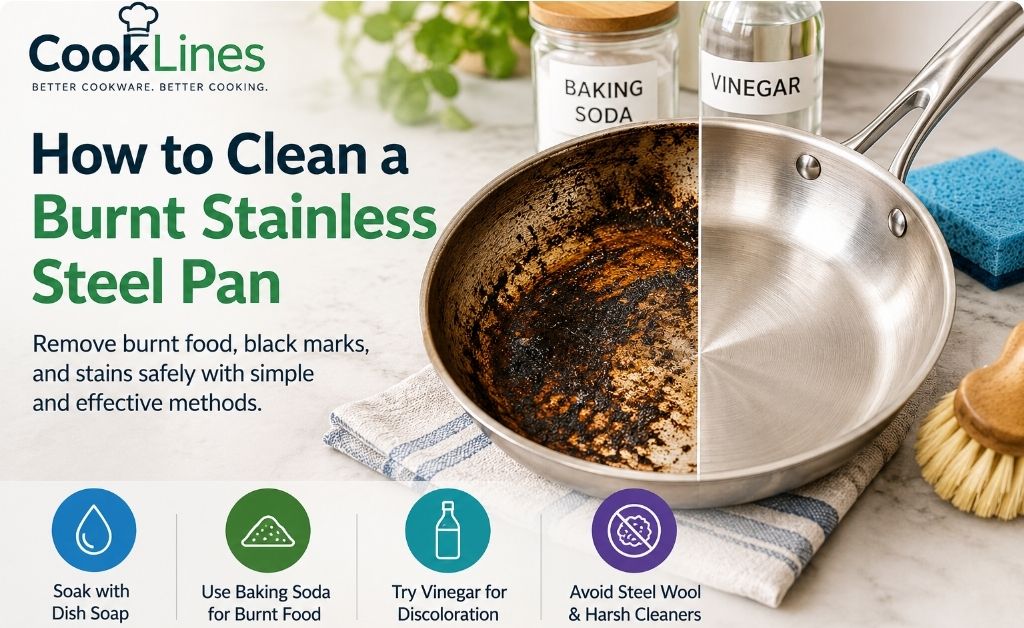
How to Clean a Burnt Stainless Steel Pan? Learn thoroughly.
A burnt stainless steel pan can look ruined after food is left cooking too long. You may see black patches, brown residue, or a thick layer of stuck-on food that seems impossible to remove.
The good news is that stainless steel is generally forgiving. In many cases, you can remove burnt food without replacing the pan or using aggressive chemicals.
The key is to match the cleaning method to the type of mess. Burnt food, carbonized residue, rainbow discoloration, and white mineral spots are different problems and don’t always need the same treatment.
This guide explains how to clean a burnt stainless steel pan step by step, starting with the gentlest methods and moving to stronger options when necessary.
Quick Answer: How Do You Clean a Burnt Stainless Steel Pan?
For ordinary burnt food, start by letting the pan cool. Add warm water and dish soap, then soak it for 15–20 minutes.
If the residue remains, add water and baking soda to the pan and bring the mixture to a gentle boil. Use a wooden spoon or suitable non-abrasive tool to loosen the softened food.
All-Clad specifically recommends baking soda and water brought to a boil for burnt food, while Tramontina recommends soaking stuck-on food before gently scrubbing and also recommends baking soda for stubborn residue.
For rainbow-colored or mineral discoloration, white vinegar is usually more appropriate than baking soda.
Avoid steel wool, oven cleaner, bleach, and aggressive abrasive products unless the manufacturer’s instructions specifically say otherwise. These can scratch or damage the surface.
What You’ll Need
For most burnt stainless steel pans, you won’t need a complicated collection of cleaning products.
Start with:
- Warm water
- Mild dish soap
- Baking soda
- White vinegar
- Soft sponge or cloth
- Nylon scrubbing pad
- Wooden or silicone utensil
You may also use a non-abrasive stainless steel cookware cleaner for particularly stubborn stains, provided it is suitable for your cookware.
Always check the manufacturer’s care instructions first, especially for cookware with a special exterior finish or a nonstick interior.
Before You Start: Let the Pan Cool
Don’t immediately put a very hot stainless steel pan under cold running water.
A sudden temperature change can cause thermal shock and, depending on the cookware, may contribute to warping. All-Clad specifically warns against placing a hot pan under cold water.
Instead, remove the pan from the burner and let it cool enough to handle safely.
You don’t necessarily need to wait until it reaches room temperature. The important thing is to avoid a dramatic hot-to-cold temperature change.
Once the pan is safe to handle, you can begin cleaning.
Method 1: Soak With Warm Water and Dish Soap
If the burnt food isn’t heavily carbonized, start with the simplest method.
Step 1
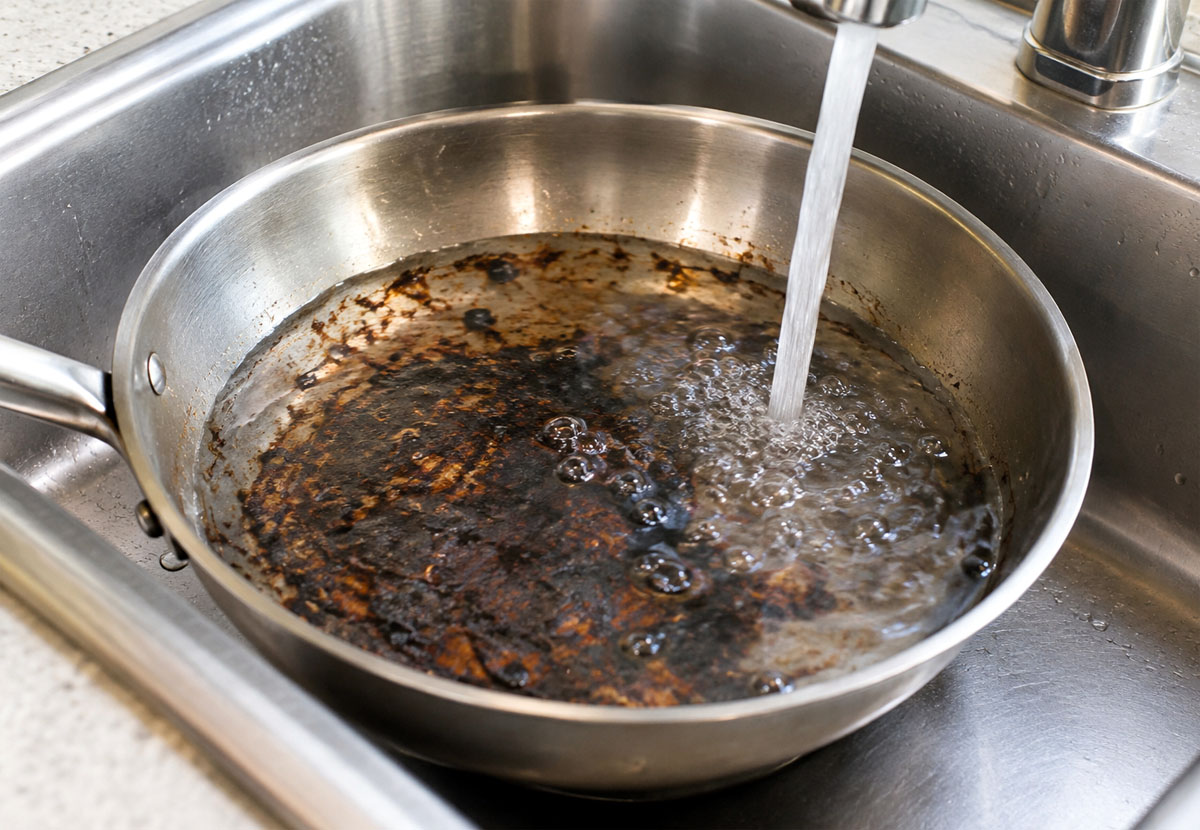
Fill the pan with warm water until the burnt area is covered.
Step 2
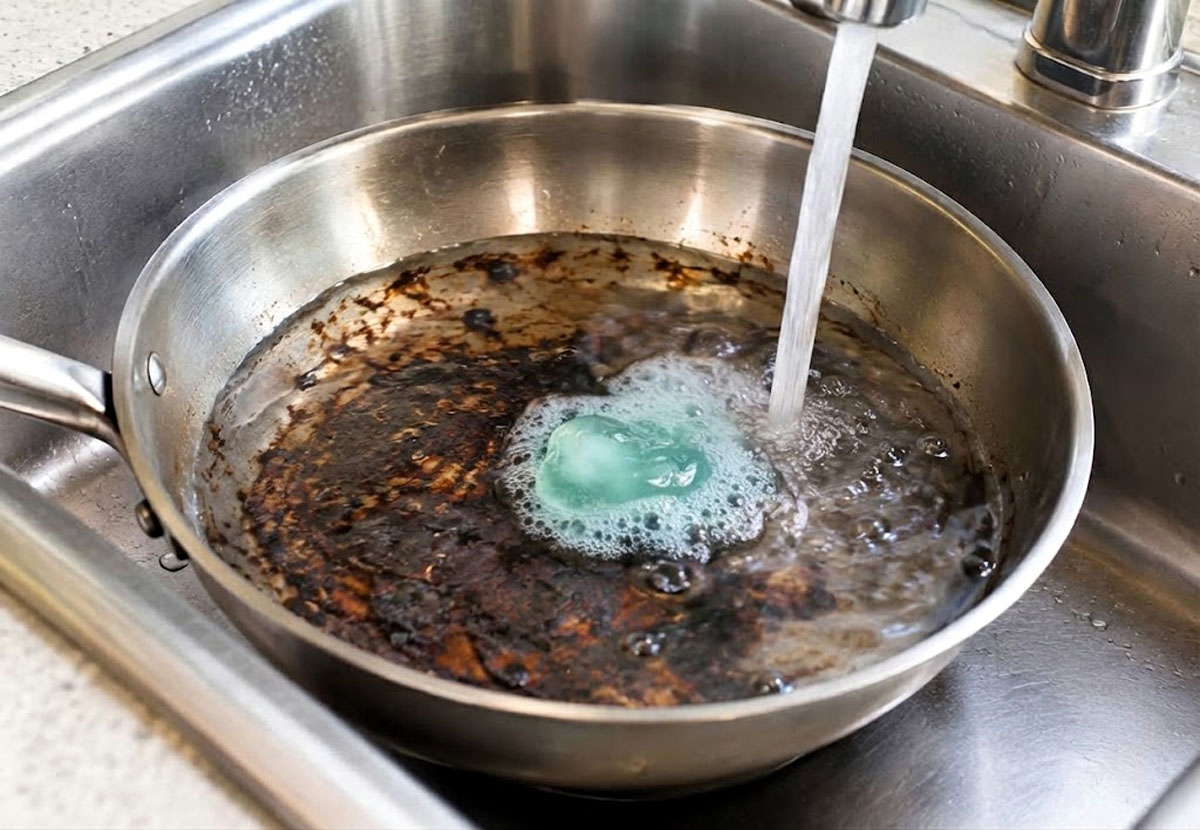
Add a small amount of mild dish soap.
Step 3
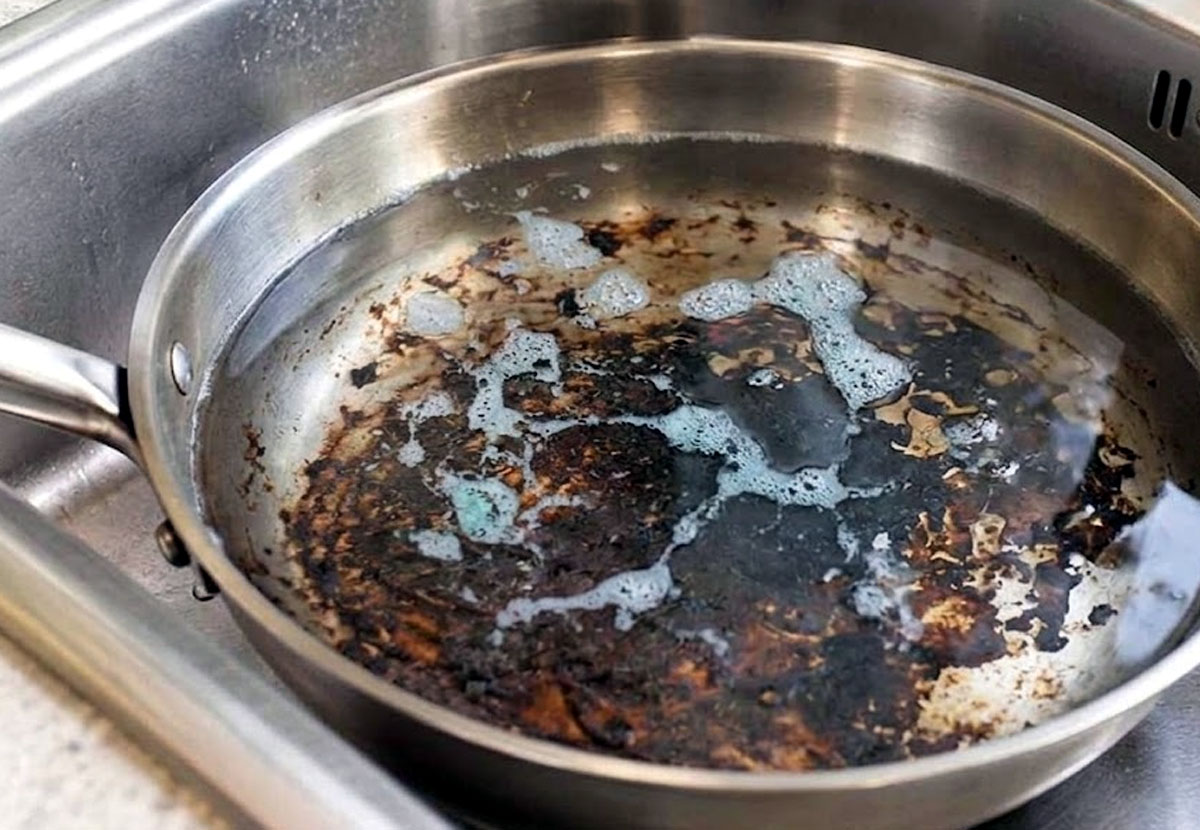
Let the pan soak for about 15–20 minutes.
Step 4
Use a soft sponge to loosen the softened residue.
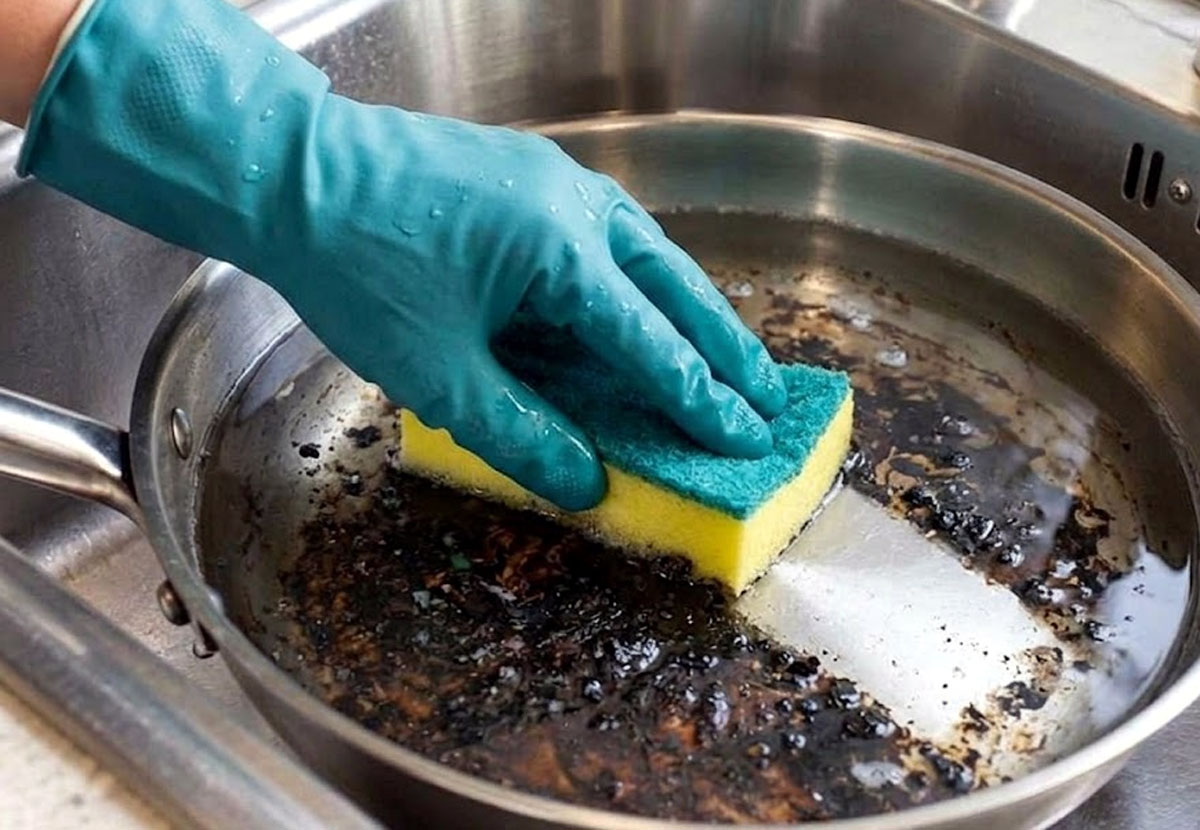
Keep in mind here, this method is particularly useful when food has simply dried onto the pan rather than forming a thick layer of carbon.
Tramontina recommends soaking stainless steel cookware with stuck-on food in warm soapy water for 15–20 minutes before gently scrubbing.
Don’t start with aggressive scrubbing if soaking can do the job.
Method 2: Use Baking Soda and Water for Burnt Food
When soaking isn’t enough, baking soda is one of the most useful next steps.
This is especially effective when food has been burned onto the bottom of the pan.
Step 1
Add enough water to cover the burnt area.
Step 2
Add a generous amount of baking soda.
Step 3
Bring the mixture to a gentle boil.
Step 4
Let it simmer for several minutes.
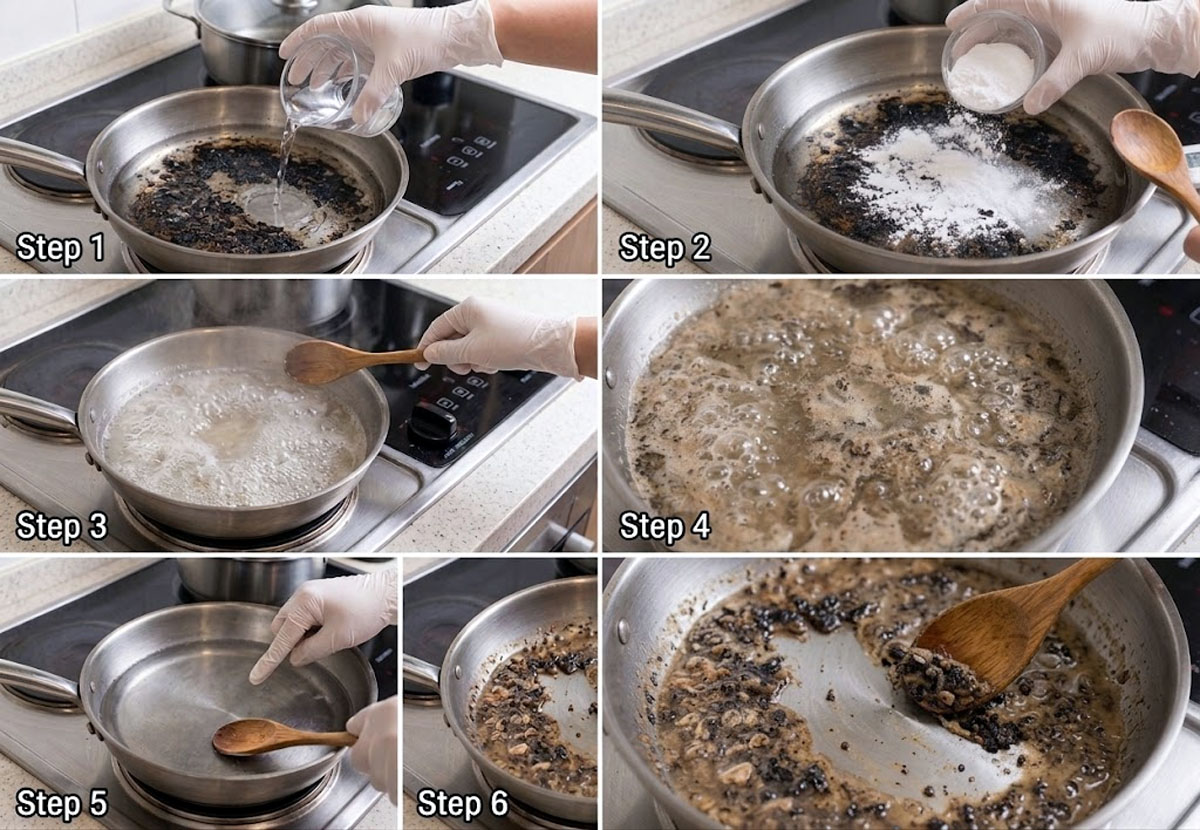
Step 5
Turn off the heat and allow the mixture to cool enough to handle.
Step 6
Use a wooden spoon or another suitable non-abrasive utensil to loosen the softened food.
Step 7
Wash the pan normally with dish soap and a soft sponge.
This method isn’t just a popular household trick. All-Clad’s current stainless steel care instructions specifically recommend sprinkling baking soda over burnt food, adding water, bringing it to a boil, and using a wooden spoon to loosen the residue.
If the residue doesn’t come off after one treatment, repeat the process rather than immediately switching to an aggressive abrasive.
Method 3: Make a Baking Soda Paste
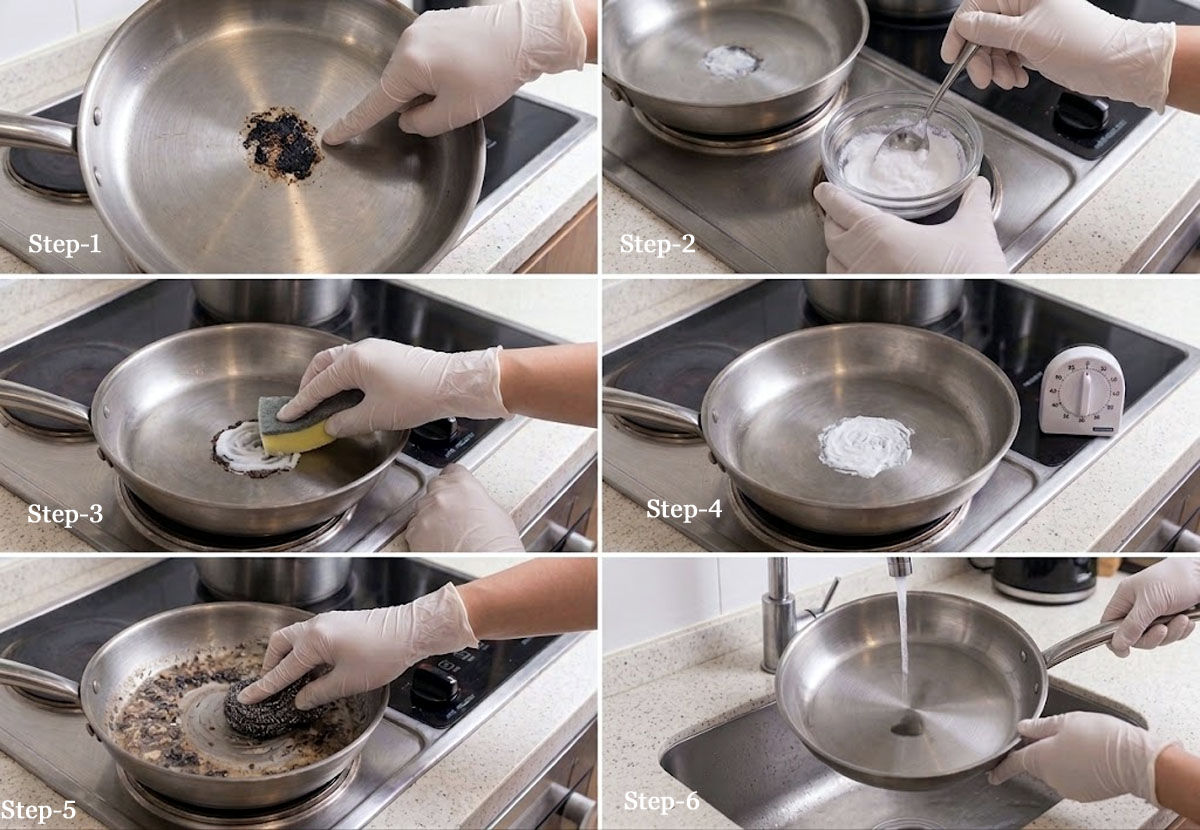
A baking soda paste can be useful when the burnt area is localized.
Mix baking soda with a small amount of water until it forms a thick paste.
Spread the paste over the affected area and let it sit for a while.
Then gently scrub with a soft sponge or appropriate nylon pad.
This gives you more controlled cleaning than filling the entire pan with water.
Tramontina recommends a baking soda-and-water paste for stubborn stainless steel residue.
For a heavily burned pan, you can combine this approach with the soaking or simmering method.
Method 4: Use White Vinegar for Rainbow Discoloration
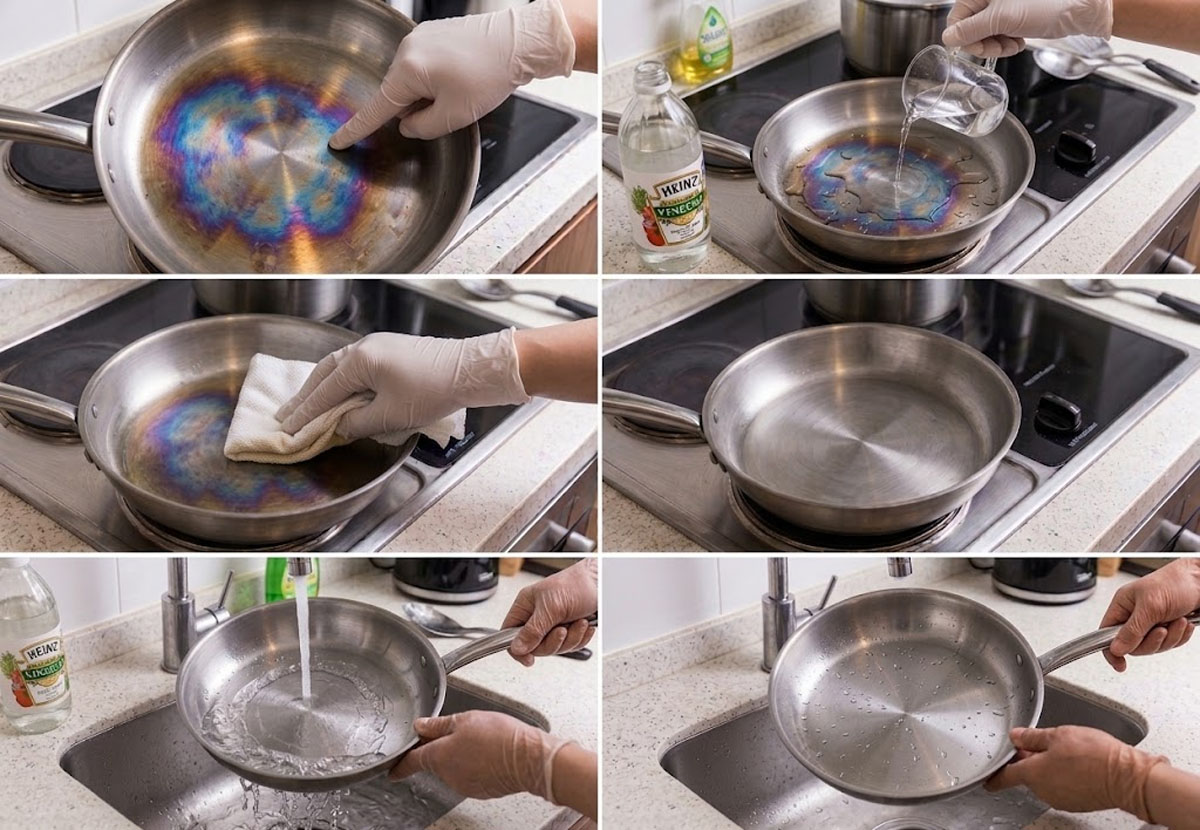
Not every ugly-looking stainless steel pan is actually burnt.
Sometimes the pan develops blue, purple, gold, or rainbow-colored patches after heating.
This is generally a heat-related discoloration, not the same thing as a layer of burnt food.
White vinegar is a better choice for this type of problem.
Apply white vinegar to the affected area and wipe it with a soft cloth or sponge.
All-Clad recommends white vinegar for blue or rainbow discoloration on stainless steel cookware.
You may also use a diluted vinegar solution when appropriate. Tramontina recommends a vinegar-and-water solution for mineral deposits and rainbow discoloration.
After cleaning, rinse the pan thoroughly and dry it.
How to Remove White Spots From Stainless Steel
White or cloudy spots are another common stainless steel problem.
They can result from mineral deposits left behind by hard water.
They aren’t necessarily signs that the pan is permanently damaged.
For these spots, white vinegar can help dissolve the mineral residue.
All-Clad recommends boiling a 1:1 mixture of white vinegar and water for cloudy white hard-water spots.
Afterward:
- Empty the pan.
- Rinse it thoroughly.
- Wash with mild dish soap.
- Dry the pan completely.
Drying stainless steel after washing also helps reduce water spots.
How to Remove Black Burn Marks
Black marks require a little more patience.
First determine whether the black area is:
- Burnt food
- Carbonized cooking residue
- Burnt oil
- Heat discoloration
- A permanent surface change
If it is burnt food or carbonized residue, start with baking soda and water.
For particularly stubborn marks, manufacturers such as All-Clad recommend a suitable non-abrasive, non-chlorine cookware cleaner.
Apply the cleaner according to its instructions rather than assuming that stronger scrubbing will produce better results.
The goal is to remove the residue without unnecessarily scratching the stainless steel.
How to Remove Burnt Oil From Stainless Steel
Burnt oil can be more difficult than ordinary food residue because it can form a hard, sticky layer.
Start by soaking the pan in warm water and dish soap.
If that doesn’t work, use baking soda and water.
For more persistent marks, a suitable non-abrasive stainless steel cleaner can be used according to the manufacturer’s directions.
All-Clad lists burnt fat among the types of stubborn marks that may require a non-abrasive cookware cleanser.
Avoid reaching immediately for oven cleaner or steel wool.
A more aggressive cleaner isn’t automatically a better cleaner.
Can You Use Steel Wool on Stainless Steel?
It’s better to avoid steel wool unless the cookware manufacturer specifically recommends it for your particular product.
Steel wool can leave scratches and change the appearance of the stainless steel surface.
All-Clad specifically advises against steel wool and steel scouring pads for its stainless steel cookware. Tramontina also recommends avoiding steel wool.
A non-abrasive sponge or appropriate nylon pad is a safer starting point.
Remember that stainless steel can tolerate considerable use, but that doesn’t mean every abrasive cleaning method is harmless.
Can You Use Bar Keepers Friend on Stainless Steel?
Some stainless steel cookware manufacturers specifically recommend non-abrasive stainless steel cleaners, including products such as Bar Keepers Friend, for difficult marks.
For example, All-Clad lists Bar Keepers Friend and Bon Ami among suitable non-chlorine, non-abrasive cleanser options for certain stubborn stainless steel stains.
However, don’t assume that a cleaning product recommended for one cookware collection is automatically appropriate for every stainless steel pan.
Check the manufacturer’s care instructions for your specific cookware.
If you do use a commercial stainless steel cleaner, follow the product directions carefully, rinse thoroughly, and don’t leave residue behind.
Should You Use Vinegar and Baking Soda Together?
You’ll often see internet cleaning hacks that recommend combining vinegar and baking soda.
The reaction is visually impressive because the mixture bubbles.
But that doesn’t necessarily mean the combination is the most effective way to clean a heavily burnt pan.
For stainless steel, it is more useful to choose the ingredient based on the problem.
For burnt food, baking soda and water are a practical starting point.
For mineral deposits or rainbow discoloration, vinegar is often more appropriate.
This targeted approach is also consistent with manufacturer care guidance. All-Clad recommends baking soda and water for burnt food and white vinegar for discoloration and hard-water spots.
What Not to Use on a Burnt Stainless Steel Pan
When a pan looks badly burned, it’s tempting to use the strongest product available.
That’s usually unnecessary.
Avoid or use extreme caution with:
Oven Cleaner
Oven cleaners can be unnecessarily harsh for stainless steel cookware.
All-Clad specifically warns against oven cleaners for its stainless steel cookware.
Bleach
Chlorine-based cleaners can damage stainless steel and aren’t necessary for normal cookware cleaning.
All-Clad advises avoiding detergents containing bleach or peroxide on its stainless cookware.
Steel Wool
Steel wool can scratch the surface and alter its finish.
Aggressive Abrasive Pads
Abrasive scouring pads can leave visible scratches.
Use a gentler pad first and move to a stronger option only when the cookware manufacturer’s instructions allow it.
Metal Scrapers
A sharp metal tool can gouge or scratch the surface.
A wooden or suitable plastic/silicone tool is usually a better choice for loosening softened residue.
What If the Burnt Food Won’t Come Off?
Don’t assume the pan is ruined after one cleaning attempt.
Very heavy carbon buildup may require several rounds.
Try this sequence:
Soak → simmer with baking soda → cool → loosen residue → wash → repeat if necessary.
If the remaining mark is more like a stain than raised food residue, move to a suitable stainless steel cleaner rather than continuing to scrape.
The important distinction is between something sitting on the surface and a change in the surface itself.
A stainless steel pan can have cosmetic discoloration even after all the burnt food has been removed.
How to Tell if Your Stainless Steel Pan Is Actually Damaged
A dark stain doesn’t automatically mean the pan is unsafe or unusable.
Look at the physical surface.
If the pan has:
- Deep cracks
- Significant warping
- A badly separated or damaged base
- Severe pitting
- Structural damage to the handle or body
then cleaning alone isn’t the solution.
Minor scratches or cosmetic discoloration are different from structural damage.
For example, All-Clad notes that pitting can affect the appearance of stainless steel without necessarily interfering with cooking performance.
If you’re unsure whether a particular defect affects your cookware, check the manufacturer’s guidance for that model.
How to Prevent a Stainless Steel Pan From Burning
The easiest burnt pan to clean is the one you never burn in the first place.
A few cooking habits make a major difference.
Control the Heat
High heat isn’t necessary for every recipe.
Stainless steel can become very hot, and leaving an empty pan or oil over excessive heat can create stubborn residue.
Use the lowest heat that gives you the cooking result you need.
Don’t Leave an Empty Pan on High Heat
If you need to step away from the stove, turn down the burner or remove the pan.
An empty stainless steel pan can heat much faster than you expect.
Don’t Let Oil Smoke Heavily
If your cooking oil is repeatedly smoking, your pan is likely too hot for the task.
Reduce the heat before adding the food.
Clean the Pan After Cooking
Don’t leave food residue sitting in the pan until it becomes hard and dry.
Cleaning while the residue is still relatively fresh is usually easier.
Dry the Pan After Washing
Water spots are mostly a cosmetic problem, but drying the cookware after washing helps maintain a cleaner appearance.
How to Clean Stainless Steel After Everyday Cooking
Not every meal requires a deep-cleaning routine.
For normal cooking:
- Let the pan cool.
- Remove leftover food.
- Rinse with warm water.
- Add mild dish soap.
- Wash with a soft sponge.
- Rinse thoroughly.
- Dry the pan.
If food is stuck, soak it before scrubbing.
If residue remains, move to baking soda.
This simple approach is usually better for the cookware than aggressively scrubbing after every meal.
Burnt Food vs. Discoloration: Which Method Should You Use?
| Problem | First method to try |
| Dried food | Warm water + dish soap |
| Stuck-on food | Soak, then gentle scrubbing |
| Burnt food | Baking soda + water + simmer |
| Burnt oil | Baking soda, then suitable stainless cleaner if needed |
| Black carbon buildup | Baking soda treatment and gentle cleaning |
| Rainbow discoloration | White vinegar |
| White mineral spots | White vinegar solution |
| Severe marks | Manufacturer-approved non-abrasive cleaner |
This distinction is important because using the wrong method can waste time.
You don’t need to scrub a rainbow stain with baking soda when vinegar is the more appropriate option.
Can You Put Stainless Steel Pans in the Dishwasher?
That depends on the specific cookware.
Some stainless steel cookware is dishwasher safe, while manufacturers may still recommend hand washing to preserve the appearance of the finish.
For example, Tramontina says many of its stainless steel pans are dishwasher safe but recommends hand washing to preserve the finish over time.
Always check the instructions for your specific pan.
If your goal is to preserve the finish for as long as possible, gentle hand washing is often the safer default when the manufacturer permits or recommends it.
Final Takeaway
A burnt stainless steel pan usually doesn’t need to be thrown away.
Start with the least aggressive method: warm water and dish soap. If burnt food remains, use baking soda and water, and for stubborn discoloration or mineral deposits, consider white vinegar.
The most important thing is to identify the problem before choosing the cleaning method.
Burnt food needs a different approach from rainbow discoloration. Mineral spots aren’t the same as carbon buildup. And a cosmetic stain isn’t necessarily evidence of permanent damage.
Avoid steel wool, oven cleaner, bleach, and unnecessarily aggressive abrasives. Manufacturer guidance from All-Clad and Tramontina consistently favors controlled cleaning methods that remove residue without damaging the cookware surface.
With the right technique, even a badly stained stainless steel pan can often be brought back to a much cleaner and more usable condition.
Related Topic: Is Stainless Steel Cookware Safe
Frequently Asked Questions
What is the easiest way to clean a burnt stainless steel pan?
Start by soaking the pan in warm water and dish soap. If burnt food remains, use baking soda and water and bring the mixture to a gentle boil. Loosen the softened residue with a wooden utensil and wash the pan normally.
Does baking soda damage stainless steel?
Baking soda is commonly recommended by stainless steel cookware manufacturers for removing stuck-on and burnt food. Use it with water and avoid aggressive scrubbing that could scratch the surface.
How do I remove black marks from a stainless steel pan?
First determine whether the marks are burnt food, carbonized residue, burnt oil, or discoloration. For burnt food, start with baking soda and water. For stubborn marks, a manufacturer-approved non-abrasive stainless steel cleaner may be appropriate.
How do I remove rainbow stains from stainless steel?
White vinegar is commonly recommended for blue or rainbow discoloration on stainless steel cookware. Wipe the affected area with vinegar using a soft cloth or sponge, then rinse and dry.
Can I use steel wool to clean burnt stainless steel?
It is generally better to avoid steel wool because it can scratch the stainless steel surface. All-Clad specifically recommends against steel wool for its stainless cookware.
Can I use oven cleaner on stainless steel cookware?
You should avoid oven cleaner unless the cookware manufacturer specifically says it is safe. All-Clad specifically advises against oven cleaners for its stainless steel cookware.
Why does my stainless steel pan have white spots?
White or cloudy spots are often mineral deposits left by hard water. White vinegar can help dissolve these deposits. All-Clad recommends a 1:1 white vinegar and water solution for cloudy hard-water spots.
When should I replace a burnt stainless steel pan?
A burnt appearance alone doesn’t necessarily mean the pan needs replacing. Consider replacement if the cookware has serious structural damage, significant warping, cracks, or other defects that affect safe or practical use.
How can I prevent food from burning onto my stainless steel pan?
Use appropriate heat, avoid leaving an empty pan over high heat, don’t allow cooking oil to burn heavily, and clean residue soon after cooking. Proper heat control is one of the easiest ways to reduce difficult cleanup.