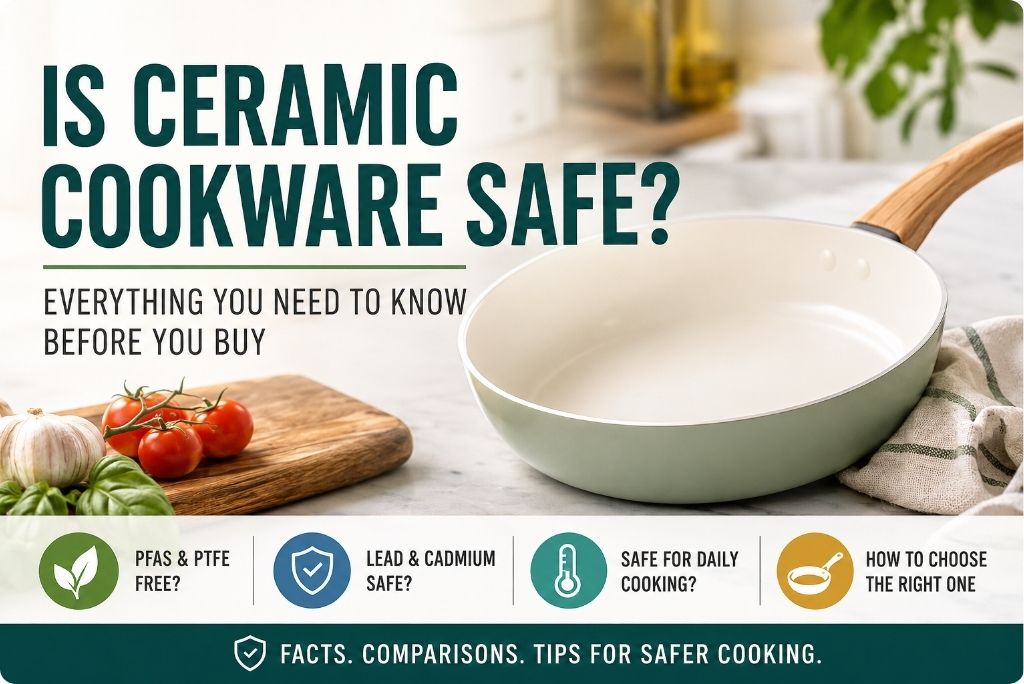
Is Ceramic Cookware Safe? Everything You Need to Know
If you’re thinking about replacing your old nonstick pans, you’ve probably asked yourself, “Is ceramic cookware safe?” With so much information online about PFAS, Teflon, lead, and other chemicals, it’s understandable to wonder whether ceramic cookware is truly a healthier option.
The good news is that high-quality ceramic cookware is generally considered safe for everyday cooking. Most ceramic-coated pans are made without PFAS, PTFE, and PFOA, making them a popular choice for people who want to reduce their exposure to certain synthetic chemicals. However, not all ceramic cookware is made the same, and factors like manufacturing quality, proper use, and regular care all play a role in its long-term safety and performance.
In this guide, you’ll learn how ceramic cookware is made, whether it contains harmful chemicals, how it compares to traditional nonstick cookware, and what to look for when choosing a safe, durable option for your kitchen.
The Short Answer: Is Ceramic Cookware Safe?
Yes, high-quality ceramic cookware is generally considered safe for everyday cooking when it is made by a reputable manufacturer and used properly. Consumer Reports notes that ceramic cookware is typically made from silicon dioxide and other metal oxides rather than PTFE or other PFAS, and its 2025 kitchenware guidance says ceramic nonstick coatings tested did not contain PFAS. At the same time, FDA guidance shows that some ceramicware can be a source of lead or cadmium if it is poorly made or not intended for food use.
The safest way to think about it is this: ceramic cookware is usually a better choice than old-style nonstick if you want to avoid PFAS-based coatings, but product quality still matters. A good ceramic pan used at normal cooking temperatures is a very different thing from a low-quality imported pan with unclear testing or a badly worn surface.

What Is Ceramic Cookware?
Ceramic cookware is not just one single material. In stores, the term usually refers to either cookware made entirely from ceramic or cookware that has a ceramic nonstick coating on a metal base. Those two products can look similar, but they behave differently in the kitchen and have different safety and care considerations.
100% Ceramic Cookware
Pure ceramic cookware is made from clay and other natural minerals that are shaped and fired at high heat. It is heavy, holds heat well, and can give steady cooking performance. Because it does not rely on a synthetic nonstick layer, people often choose it for a more traditional, simple material.
Ceramic-Coated Cookware
Ceramic-coated cookware is much more common today. It usually has an aluminum or stainless steel core with a ceramic nonstick coating on the cooking surface. Good Housekeeping describes ceramic as PTFE-free, quick to heat up, and appealing to people who want to avoid traditional nonstick coatings, but it also notes that ceramic wears out faster than PTFE-based cookware.
Why the Difference Matters
The difference matters because safety, durability, and cooking performance do not all work the same way in both types. Pure ceramic does not have the same kind of coating wear issue, while ceramic-coated pans are more dependent on the quality of the coating and the way you cook with them. That is why one brand’s “ceramic pan” may last longer and perform better than another even if both are marketed in the same way.
Does Ceramic Cookware Contain Harmful Chemicals?
This is the question most readers care about, and for good reason. A lot of cookware marketing uses words like “clean,” “safe,” and “non-toxic,” but those words do not always mean the same thing. The main concerns usually fall into three buckets: PFAS, heavy metals such as lead and cadmium, and what happens when the cookware is damaged or overheated.
PFAS, PTFE, and PFOA
PFAS are a large family of fluorinated chemicals. PTFE, the material best known by the Teflon name, is one type of PFAS. PFOA is a different chemical that was used in some older nonstick products and has largely been phased out of cookware manufacturing. Consumer Reports says ceramic cookware is typically not made with PTFE or other PFAS, which is one of the biggest reasons people switch to it.
That said, it is smart not to rely only on a marketing claim on the box. Consumer Reports has also warned that labels such as “PFOA-free” or “PTFE-free” do not automatically prove that a product is fully PFAS-free unless the maker is transparent about the actual materials and testing.
Lead and Cadmium
Lead and cadmium are the other major concerns, especially with imported or decorative ceramicware. FDA guidance says some ceramicware has been found to leach lead or cadmium, and the agency has specific action levels and labeling requirements for ornamental or decorative ceramic items that are not meant for food use. The FDA also states that there are no regulations that authorize cadmium as a food additive or as a component of cookware or food-contact surfaces.
This does not mean every ceramic pan is unsafe. It means buyers should care about where the cookware came from, whether the brand provides testing information, and whether the item is clearly intended for cooking. FDA warnings in 2024 and 2025 also show that some imported cookware can leach lead into food, which is why reputable sourcing matters so much.
Can Ceramic Cookware Release Chemicals?
Under normal use, high-quality ceramic cookware is designed to be food-safe. The concern rises when the surface is heavily scratched, scoured, chipped, or exposed to conditions it was never meant to handle. A NIST study on commercially available nanoceramic cookware found more material migration under aggressive abrasion and scratching conditions than in fresh pans, and it detected titanium dioxide and silicon dioxide nanoparticles in the most severe simulated use scenario. That does not mean every ceramic pan is dangerous, but it does show that wear and abuse can change how the surface behaves over time.
Is Ceramic Cookware Safe to Use Every Day?
For most home cooks, ceramic cookware can be safe for everyday use when it is treated as a gentle nonstick surface rather than a heavy-duty searing pan. Good Housekeeping’s testing guidance says ceramic cookware should be used at low to medium heat, because high heat can damage the coating and shorten its nonstick life. It also recommends silicone or wooden utensils, cooking with a little fat, and hand washing to protect the surface.
Chipped or badly worn cookware deserves extra caution. Minor cosmetic wear does not automatically make a pan unsafe, but deep scratches, peeling, or obvious surface breakdown are a good sign that it is time to replace it. The reason is simple: once the surface is compromised, food release gets worse and the risk of unwanted migration from the coating or underlying materials can increase.
For everyday cooking, the safest approach is to keep ceramic cookware on a lighter duty path: eggs, vegetables, pancakes, fish, and other foods that benefit from gentle heat and easy release. If you regularly cook at very high heat, dry-sear meat, or prefer cookware that can take rough treatment, a more durable material such as stainless steel or cast iron may fit your routine better.
Ceramic Cookware vs. Teflon: Which Is Safer?
The safety question here is not just “Which one is good?” It is more useful to ask, “Which one fits my cooking habits and comfort level?” PTFE-based nonstick pans usually offer stronger nonstick performance and longer glide, but they should be used carefully and replaced if scratched or overheated. Ceramic cookware is PFAS-free in many cases and appeals to shoppers trying to avoid traditional nonstick chemistry, but it usually wears out faster.
| Feature | Ceramic Cookware | PTFE Nonstick Cookware |
| Main appeal | PFAS-free option, easy cleanup | Stronger release and longer glide |
| Heat handling | Best on low to medium heat | Also needs careful heat control |
| Durability | Wears out faster | Usually lasts longer if cared for well |
| Safety concern | Quality differences, lead/cadmium in poor products | Overheating and scratching |
| Best for | Gentle everyday cooking | People who want top nonstick performance |
If your top priority is avoiding PFAS-based coatings, ceramic is often the more comfortable choice. If your priority is long-lasting nonstick performance, PTFE cookware may still be attractive, but it should be used carefully and replaced when damaged.
Pros and Cons of Ceramic Cookware
Pros
- Naturally free from PTFE and commonly made without PFAS.
- Food releases easily, so you can cook with less oil.
- Easy to clean with warm water and a soft sponge.
- Heats up quickly, which is great for everyday meals.
- Works well for eggs, vegetables, pancakes, fish, and other delicate foods.
- Available in many styles and colors to match different kitchens.
Cons
- The nonstick coating doesn’t last forever and slowly wears down with use.
- High heat can shorten the life of the coating.
- Metal utensils and rough scrubbers can scratch the surface.
- Not the best choice for high-heat searing or heavy-duty cooking.
- Quality varies, so buying from a trusted brand is important.
How to Choose Safe Ceramic Cookware
The best ceramic cookware is the kind that gives you clear information, not vague promises. Look for a brand that explains exactly what the product is made from and whether it has been tested for lead and cadmium. Reputable manufacturers are much more likely to provide that information clearly and consistently.
A simple buying checklist can help:
- PFAS-free, PTFE-free, and PFOA-free claims that are clearly explained
- Lead and cadmium testing information
- A known brand with transparent customer support
- Clear instructions for heat limits and care
- A solid warranty or return policy
- Cookware that is labeled for food use, not decorative use only
It also helps to be cautious with unusually cheap imported cookware, especially if the listing gives very little detail about materials or compliance. FDA warnings show that some cookware sold in the market can leach lead, so “budget-friendly” should never be the only decision factor when safety is the goal.
How to Make Ceramic Cookware Last Longer
Ceramic cookware lasts longer when you treat it gently from the start. Low to medium heat is usually the best range, because high heat can damage the coating and reduce the nonstick effect more quickly. Using a little oil or butter also helps protect the surface and improves cooking results.
A few simple habits make a real difference:
- Use wooden or silicone utensils instead of metal
- Let pans cool before washing
- Hand wash when possible
- Avoid abrasive scrubbers and harsh pads
- Do not use cooking spray if the manufacturer warns against it
- Store pans carefully so they do not scratch each other
The goal is not to baby the cookware. It is simply to avoid the kinds of abuse that shorten the life of any nonstick surface. A well-cared-for ceramic pan can be a useful kitchen tool, while a pan that is overheated and scrubbed hard will lose its benefits much faster.
Read More: How to Use Ceramic Cookware
Frequently Asked Questions
Is ceramic cookware healthier than Teflon?
It can be a better fit for people trying to avoid PFAS-based coatings, since ceramic cookware is typically PTFE-free and many ceramic coatings are sold as PFAS-free. But “healthier” also depends on quality, because low-quality ceramic cookware can still raise concerns about lead or cadmium.
Is ceramic cookware oven-safe?
Many ceramic pans are oven-safe, but the exact limit depends on the brand, the handle material, and the design. The safest answer is always to check the manufacturer’s instructions rather than assume every ceramic pan can handle the same temperature.
Is ceramic cookware dishwasher-safe?
Some brands say yes, but hand washing is usually better if you want the coating to last longer. Good Housekeeping specifically recommends hand washing ceramic nonstick cookware to protect the finish.
Why does food start sticking after a while?
That usually happens when the coating has worn down, been overheated, been scratched, or built up residue over time. Once that happens, the pan may still be usable for a while, but its nonstick benefit is fading.
How long does ceramic cookware last?
There is no single lifespan for every pan, because quality and care vary so much. In general, ceramic cookware tends to wear out faster than PTFE cookware, especially if it is used on high heat or cleaned roughly.
Is ceramic cookware worth buying?
Yes, if you want a convenient nonstick pan and you are willing to care for it properly. It is especially appealing for people who want to avoid PFAS-based coatings and mainly cook with moderate heat. If you need something extremely durable for rough use, another material may be a better long-term fit.
Final Verdict
So, is ceramic cookware safe? In most cases, yes. High-quality ceramic cookware is generally considered safe for everyday cooking, especially when it comes from a reputable brand and is used the way the manufacturer intends. It is a strong option for people who want to avoid PFAS-based nonstick coatings without giving up the convenience of easy cleanup.
The bigger lesson is that not all ceramic cookware is the same. Some products are made and tested carefully, while others raise concerns about lead, cadmium, or poor durability. If you choose ceramic cookware wisely, use it on gentler heat, and replace it when it becomes badly worn, it can be a practical and trustworthy part of a healthy kitchen.