How to Use Ceramic Cookware: A Complete Beginner’s Guide
Cooking with ceramic cookware is simple, but using it the right way can make a big difference in how well it performs and how long it lasts. Many people buy ceramic pans because they are easy to clean, require less oil, and offer a smooth nonstick cooking surface. However, common mistakes like using high heat or the wrong utensils can cause food to stick and shorten the life of the coating.
In this guide, you’ll learn how to use ceramic cookware the right way, from preparing it before the first use to choosing the best cooking temperature, cleaning it properly, and avoiding common mistakes. Whether you’ve just bought your first ceramic pan or want to keep your current cookware in great condition, these practical tips will help you get better cooking results and extend the life of your cookware.
Before You Use Ceramic Cookware for the First Time
Wash and Dry the Cookware
Before cooking, wash the pan with warm water, mild dish soap, and a soft sponge. This helps remove any factory residue, dust, or packaging oils that may still be on the surface.
Dry it fully with a clean towel before use. A dry pan is easier to handle, and it also helps you start cooking with a clean surface.
Read the Manufacturer’s Care Instructions
Ceramic cookware is not all made the same, so always check the care guide that comes with the pan. Some brands are safe for the oven, but only up to a certain temperature.
The same is true for dishwashers. A few ceramic pans say they are dishwasher-safe, but handwashing is usually gentler and helps the coating last longer. It is also worth checking for any brand-specific tips, such as the best heat level to use or whether metal utensils should be avoided.

How to Use Ceramic Cookware Properly
Preheat the Pan Correctly
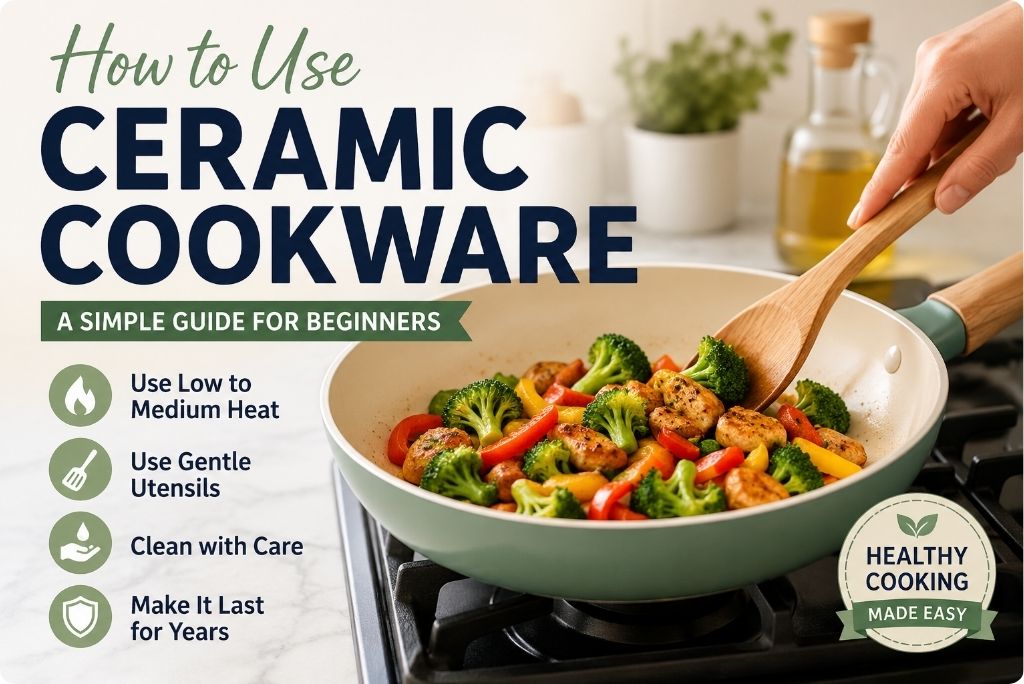
Start with low to medium heat. Ceramic cookware heats up fairly fast, so you usually do not need a strong flame to get good results.
Avoid leaving the pan empty on the stove for too long. A short preheat is fine, but long heating without food can wear down the surface over time.
Add a Small Amount of Oil or Butter
A little oil or butter can help food release more easily, especially when you are cooking eggs, pancakes, or fish. Even though ceramic cookware is often sold as nonstick, it usually works best with a light coating of fat.
Olive oil, avocado oil, and butter all work well for everyday cooking. Use just enough to coat the pan lightly. Too much oil can make food greasy and leave buildup on the surface.
Cook at Low to Medium Heat
Ceramic cookware performs best at gentle heat. It spreads heat well, so turning the burner high usually does not improve cooking. It can actually make food stick faster and may shorten the life of the coating.
Use medium-high heat only when the recipe truly needs it, such as for quick browning or sautéing. For most meals, low to medium heat gives better control and better results.
Avoid Overcrowding the Pan
Give the food enough space to cook properly. If the pan is too full, food will steam instead of brown, and it may stick more easily.
Cooking in smaller batches often works better than trying to fit everything in at once. It takes a little more time, but the food usually cooks more evenly and tastes better.
Best Foods to Cook in Ceramic Cookware
Eggs and Breakfast Foods
Ceramic cookware is a good fit for eggs, omelets, pancakes, and other breakfast foods. These foods usually cook best over gentle heat, which matches ceramic well.
A small amount of butter or oil helps keep them from sticking. If the pan is hot enough but not overheated, eggs usually slide out more easily and cook with less mess.
Fish and Chicken
Light fish fillets and small pieces of chicken also work well in ceramic cookware. The smooth surface helps delicate foods cook without tearing apart when you flip them.
The only drawback is that ceramic is not the best choice for very deep browning. If you want a heavy sear, another pan may do that job better.
Vegetables
Vegetables are one of the easiest things to cook in ceramic cookware. It works well for sautéing onions, peppers, mushrooms, zucchini, and similar foods.
The key is not to overcrowd the pan. When the vegetables have space, they brown better and stay tender instead of turning soft and soggy.
Pancakes and Grilled Sandwiches
Ceramic cookware is also useful for pancakes and grilled sandwiches because these foods need even heat and easy release. The pan helps food cook smoothly without much sticking when used correctly.
A little butter or oil is still helpful here. It improves browning and makes cleanup easier afterward.
Foods Better Suited to Other Cookware
Some foods are not a great match for ceramic cookware. Very high-heat steak searing, deep frying, and recipes that need long periods of strong heat are usually better in stainless steel, cast iron, or another heavier pan.
Ceramic can still handle everyday cooking well, but it is not designed for the roughest heat. Using the right pan for the job will give you better results and help your cookware last longer.
Common Mistakes to Avoid
One of the biggest mistakes is using high heat. Ceramic cookware usually works better on low to medium heat, and strong heat can make food stick faster and wear the surface down sooner.
Another common mistake is heating an empty pan for too long. A short preheat is fine, but leaving it on the stove without food can damage the coating over time.
Try not to use metal utensils. They can scratch the surface, especially if you cook often. Wood, silicone, or nylon tools are a safer choice.
Avoid harsh cleaners and rough scrub pads. They may remove stuck-on food quickly, but they can also wear down the finish and make the pan less nonstick.
Do not run a hot pan under cold water. A sudden change in temperature can be hard on the cookware and may cause warping in some pans.
When storing ceramic pans, do not stack them carelessly. If they rub against each other, the surface can get scratched. A soft cloth or pan protector between each pan helps prevent that.
How to Clean Ceramic Cookware
Everyday Cleaning
Let the pan cool before washing it. Then clean it with warm water, mild dish soap, and a soft sponge or cloth. This is usually all you need after everyday cooking.
Avoid steel wool, scouring pads, or harsh cleaners. They can wear down the ceramic coating and reduce its nonstick performance over time.
Removing Burnt or Stuck-On Food
If food sticks to the pan, don’t scrape it with force. Fill the pan with warm water and let it soak for 15 to 30 minutes to loosen the residue.
For stubborn spots, make a paste with baking soda and a little water. Gently rub it onto the stained area with a soft sponge, then rinse well. This method is effective without being too harsh on the coating.
Is Ceramic Cookware Dishwasher Safe?
Some ceramic cookware is labeled dishwasher-safe, but that doesn’t always mean it’s the best choice. Frequent dishwasher cycles can gradually dull the finish and shorten the life of the nonstick coating.
Handwashing takes only a few minutes and is usually the better option if you want your ceramic cookware to stay in good condition for as long as possible. If you’re unsure, check the care instructions for your specific brand.
How to Make Ceramic Cookware Last Longer
Ceramic cookware can last for years if you treat it with a little care. A few simple habits make a bigger difference than expensive cleaning products or special tools.
Use the Right Utensils
Choose wooden, silicone, or nylon utensils whenever possible. They are gentle on the ceramic surface and are much less likely to leave scratches than metal tools.
Avoid Sudden Temperature Changes
Let the pan cool for a few minutes before washing it. Pouring cold water into a very hot pan can stress the cookware and may shorten its lifespan over time.
Store Cookware Properly
If you stack your pots and pans, place a soft cloth, paper towel, or pan protector between them. This helps prevent scratches and chips that can happen during storage.
Use the Right Heat Every Time
For most recipes, low to medium heat is all you need. Ceramic cookware heats evenly, so using the highest burner setting rarely improves cooking. Instead, it can wear out the nonstick surface faster and reduce the pan’s performance over time.
When Should You Replace Ceramic Cookware?
Ceramic cookware does not last forever. With regular use, the coating gradually wears down. Replacing a worn-out pan can improve cooking results and help prevent frustration in the kitchen.
It’s time to replace the cookware if the ceramic coating is peeling or flaking. Once the surface is damaged like this, it will no longer cook as well and should not be relied on for everyday use.
Deep scratches or chips are another sign that the pan has reached the end of its life. Small surface marks are usually harmless, but damage that exposes the material underneath can affect performance.
If food sticks every time you cook, even after using the pan correctly and cleaning it well, the nonstick coating has likely worn out. At that point, replacing the pan is usually more practical than trying to restore it.
A warped pan should also be replaced. It won’t sit flat on the burner, which can lead to uneven heating and make cooking more difficult.
Frequently Asked Questions
Do You Need to Season Ceramic Cookware?
Most ceramic cookware does not need seasoning like cast iron. Simply wash it before the first use and cook with a small amount of oil or butter for the best results. If the manufacturer recommends a different method, follow the care instructions that came with your cookware.
Can Ceramic Cookware Go in the Oven?
Many ceramic pans are oven-safe, but the maximum temperature varies by brand. Always check the manufacturer’s instructions before placing the cookware in the oven. Also, make sure the handles and lids are oven-safe.
Can You Use Metal Utensils?
It is best not to. Metal utensils can scratch the ceramic coating over time. Wooden, silicone, or nylon utensils are gentler and help keep the cooking surface in good condition.
Why Does Food Stick to Ceramic Cookware?
Food often sticks because the pan is too hot, too little oil is used, or the nonstick coating has worn down with age. Cooking over low to medium heat and using a small amount of oil usually gives the best results.
How Long Does Ceramic Cookware Last?
The lifespan depends on the quality of the cookware and how well it is cared for. With regular use and proper care, many ceramic-coated pans perform well for several years. Using gentle heat, soft utensils, and careful cleaning can help extend their life.
Final Thoughts
Ceramic cookware is easy to use once you understand a few basic habits. Cook over low to medium heat, use gentle utensils, and clean the pan with care after each meal. These simple steps help the cookware perform better and stay in good condition longer.
No cookware lasts forever, and ceramic coatings will naturally wear with regular use. However, treating your cookware properly can slow that process and help you enjoy reliable cooking for years.
When in doubt, follow the care instructions from the manufacturer. A few minutes of proper care today can help your ceramic cookware continue to cook well and make cleanup easier every time you use it.