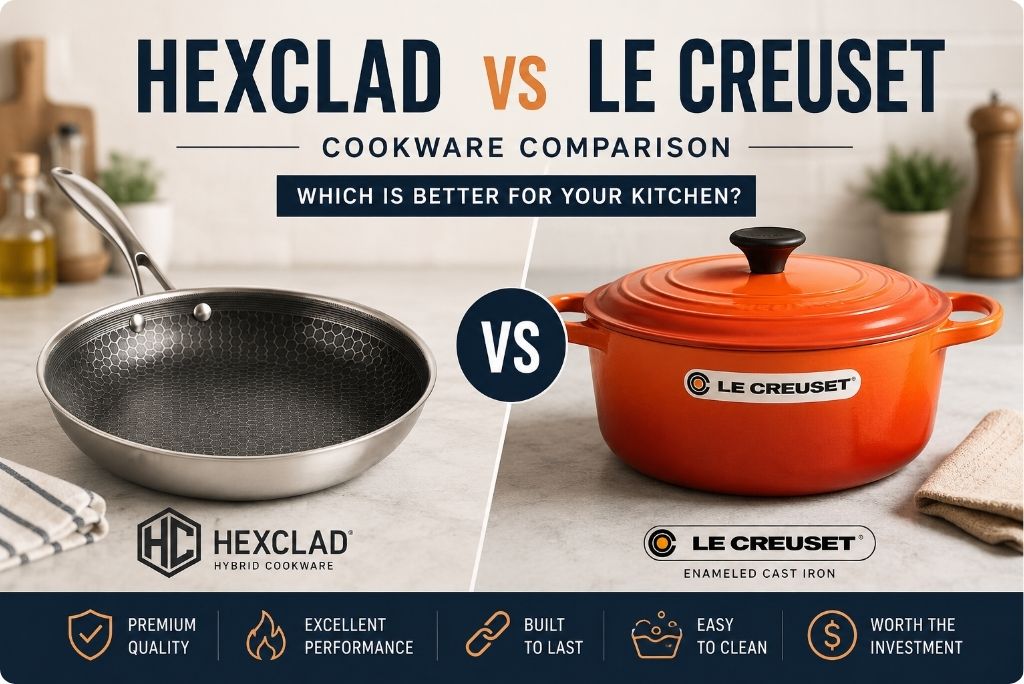
HexClad vs Le Creuset Cookware: Which Is Better?
HexClad and Le Creuset are both premium cookware brands, but they solve very different problems in the kitchen.
HexClad is built around a hybrid stainless-steel surface with a tri-ply aluminum core and a nonstick coating in the recessed areas, while Le Creuset is best known for enameled cast iron that excels at heat retention, slow cooking, and oven-to-table meals.
In other words, this is not a simple “which brand is better?” comparison. It is really about which cooking style, cleanup routine, and long-term value matter most to you.
Let you understand both and explore in depth below;
Quick Verdict: HexClad vs. Le Creuset Cookware
If you want a fast answer, here it is: HexClad is the better pick for cooks who want a lighter, easier-to-maintain pan for everyday use, especially if they cook a mix of eggs, chicken, vegetables, and quick skillet meals.
Le Creuset is the better pick for people who want outstanding heat retention, beautiful serving pieces, and cookware that shines in braises, soups, stews, roasts, and bread baking.
HexClad leans toward convenience and versatility; Le Creuset leans toward classic cooking performance and heirloom-style durability.
If I had to simplify it even further: choose HexClad for easier daily cooking and cleanup, and choose Le Creuset for the best oven and stovetop results when heat retention matters most.
HexClad vs Le Creuset at a Glance
| Features | HexClad | Le Creuset |
|---|---|---|
| Core cooking style | Hybrid stainless steel with nonstick valleys | Enameled cast iron |
| Heat behavior | Fast, even heating from an aluminum core | Excellent heat retention and strong, steady heat |
| Best at | Everyday skillet cooking, searing, convenience | Braising, simmering, baking, oven cooking |
| Dishwasher safe | Yes, but hand washing is recommended to preserve appearance | Yes, but hand washing is recommended. |
| Oven safe | Up to 900°F on many pans | Up to 500°F on many cast iron pieces |
| Induction compatible | Yes. | Yes. |
| Seasoning needed | No seasoning required | No seasoning required |
| Warranty | Lifetime warranty against manufacturer defects | Limited lifetime warranty on covered cookware |
| Best for | Busy home cooks who want less fuss | Cooks who want classic cast-iron performance and presentation |
HexClad’s own product and science pages describe a tri-ply construction with an aluminum core, a magnetic stainless-steel base, dishwasher-safe use, metal-utensil safety, and oven safety up to 900°F on many pans.
Le Creuset’s care and product pages describe enameled cast iron as suitable for all stovetops, including induction; dishwasher-safe, with hand washing recommended; oven-safe up to 500°F on many pieces; and ready to use without seasoning.
Brands Overview
What Is HexClad?
HexClad’s signature cookware uses a hybrid design: stainless-steel ridges on the surface, a nonstick coating in the valleys, and a tri-ply body with an aluminum core for faster and more even heating.
The company says its pans are dishwasher safe, metal-utensil safe, induction compatible, and oven safe up to 900°F, depending on the product. HexClad also says its TerraBond™ ceramic nonstick coating is PFAS-free.

What makes HexClad appealing is the promise of doing several things at once: browning like stainless steel, releasing food more easily like nonstick, and handling high heat more confidently than many traditional nonstick pans.
That combination is especially attractive to cooks who want one pan that can cover a lot of everyday tasks without much maintenance.
What Is Le Creuset?
Le Creuset is best known for its enameled cast iron cookware. The brand says its enamel is non-reactive and non-porous, so it will not absorb odors or flavors and will not react with acidic foods like tomatoes, wine, vinegar, and citrus.
Le Creuset also says its enameled cast iron requires no seasoning, is dishwasher safe, and is designed for long-term durability with excellent heat retention.

Le Creuset also stresses that its cookware is made for everyday use and trusted over time. On its product and warranty pages, the company says many pieces are covered by a limited lifetime warranty, and it states that defective cookware may be replaced according to warranty terms.
That matters because premium cookware buyers often want more than performance; they want confidence that the purchase will last.
Build Quality and Materials
HexClad Construction
HexClad’s core structure is designed for quick responsiveness. The aluminum core helps distribute heat efficiently, while the stainless-steel layers add strength and induction compatibility.
The hybrid surface is what gives the pan its distinct feel: the ridges help with browning, while the coated valleys help with food release. HexClad describes this as a way to combine some of the strengths of stainless steel, nonstick, and cast iron in one pan.
In practical terms, this means HexClad is built for flexibility rather than pure thermal mass. It heats quickly, responds well when you adjust the burner, and is designed to handle lots of different cooking tasks without feeling as heavy or slow as cast iron. That makes it easy to reach for on a busy weeknight.
Le Creuset Construction
Le Creuset’s enameled cast iron is built for a different experience. Cast iron stores heat very well, so once the pan or Dutch oven is hot, it stays hot and keeps cooking evenly.
The enamel finish prevents raw cast iron from touching food, which is why Le Creuset says seasoning is not needed and acidic dishes are safe to cook in it.
The brand also says its cast iron is the lightest weight per quart in the industry on some product pages, which helps offset the typical heaviness of cast iron.
That structure is a big reason Le Creuset feels so different from HexClad. It is slower to heat, but once hot, it holds that heat beautifully. For dishes that benefit from steady temperature and long simmering, that is a major advantage.
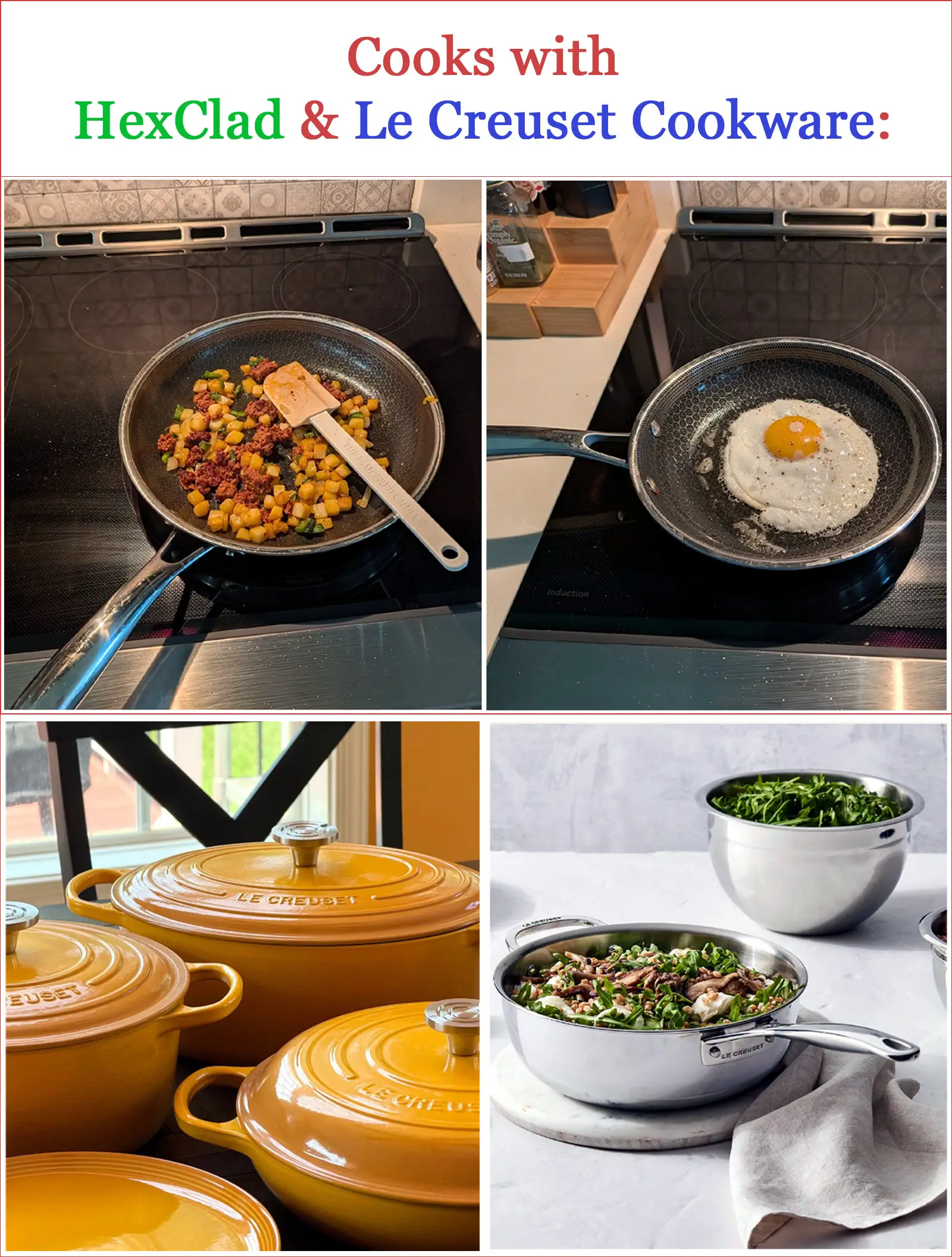
Cooking Performance Comparison
Heat Distribution
HexClad’s aluminum core is meant to spread heat quickly and evenly, which helps reduce hot spots and makes the pan more responsive when you are moving from searing to simmering. That is useful for everyday cooking where you need speed and control.
Le Creuset also offers strong heat distribution, but its biggest strength is heat retention rather than fast responsiveness. Once an enameled cast-iron pan is fully heated, it holds that heat very well, which helps keep cooking temperatures steady and makes it ideal for slow, even cooking.
Heat Retention
This is where Le Creuset usually wins. Cast iron stores heat better than hybrid stainless cookware, so it is especially useful for braises, stews, roasts, and dishes you want to keep warm at the table. If you are cooking something that benefits from a long, steady simmer, Le Creuset has the advantage.
HexClad still performs well, but it is built more for quick heating and versatility than for the deep, steady heat retention cast iron is known for. That makes it better suited to fast, flexible cooking than to long-cooked dishes that depend on a heavy thermal mass.
Searing Performance
HexClad markets its hybrid ridges as giving strong searing power, and its construction is clearly designed to brown food well while still offering easier release than a bare stainless pan. That makes it a strong choice for chicken cutlets, steak, burgers, and vegetables when you want a good crust without a lot of cleanup afterward.
Le Creuset is also excellent for searing, especially in Dutch ovens and skillets where heat retention matters. Because the pan stays hot, you can get very good browning on meat and vegetables. The difference is that Le Creuset usually gives you more of that deep, steady cast-iron sear, while HexClad gives you quicker convenience and easier release.
Cooking Delicate Foods
For eggs, pancakes, fish, and other delicate foods, HexClad has the edge if your main concern is easier release and less fuss. Its hybrid surface is designed to help food slide away more easily than it would on plain stainless steel. That said, it still is not the same as a true traditional nonstick pan, so a little oil and proper preheating still matter.
Le Creuset can cook delicate foods too, especially if you understand how cast iron behaves, but it is not usually the first choice for people who want the easiest possible egg flip or fish release. Its strength is steady, even cooking, not frictionless release.
Sauce and Liquid-Based Cooking
Le Creuset is especially strong for sauces, soups, chili, curries, and braises because the enamel is non-reactive and does not absorb flavors.
That means you can cook acidic ingredients like tomatoes or wine without worrying about metallic taste or seasoning damage. For many cooks, that is one of the biggest reasons to own a Le Creuset Dutch oven.
HexClad can also handle sauce-based cooking well, but it is not the classic choice for long-simmered, moisture-heavy recipes. It is more of an all-purpose skillet system, while Le Creuset is the more natural fit for deep, slow, stovetop-to-oven cooking.
Oven Cooking
Both brands are oven-friendly, but Le Creuset is built for this kind of cooking in a more traditional way. Many Le Creuset cast-iron pieces are oven-safe up to 500°F, and the brand highlights braising, roasting, bread baking, and oven-to-table serving as core uses.
HexClad goes much higher on paper, with many pans rated up to 900°F, which is impressive for a hybrid pan. In real home use, though, that high oven limit is less important than whether the pan fits your cooking style. HexClad is the more flexible everyday tool; Le Creuset is the more iconic oven workhorse.
Ease of Use
HexClad is easier to use for many people because it is lighter and more forgiving for quick meals. The brand’s hybrid design is aimed at cooks who want performance without the heavy feel of cast iron, and that can make a big difference if you cook often or need to move pans around a lot.
Le Creuset is more substantial in the hand, and that weight is part of the performance. But it can also make the cookware harder to lift, especially when full.
If you want a pan you can grab, tilt, and clean with minimal effort, HexClad usually feels easier. Or If you want a piece that feels solid, traditional, and built for long simmering sessions, a le creuset feels more satisfying.
Read More: Viking vs All-Clad
Cleaning and Maintenance
HexClad
HexClad says its pans are dishwasher safe, but it also says hand washing with warm soapy water and a soft sponge is the best way to preserve appearance. The company warns that dishwasher use may dull the pan over time and that certain detergents can affect the surface finish.
For stuck-on food, HexClad recommends gentle cleaning rather than abrasive scrubbing.
That gives HexClad a practical advantage for busy households. Even if you do not love washing pans by hand, the brand is designed to be relatively low-maintenance compared with more delicate cookware.
Le Creuset
Le Creuset says its enameled cast iron is dishwasher safe, but it recommends hand washing for the best long-term appearance.
Its care guidance also notes that regular use of an enameled cast iron cleaner can help maintain the finish and that cookware should be rinsed and dried completely to avoid residue or rust-like marks on rims.
In practice, Le Creuset is easy to clean for what it is, but it still rewards careful use. If you treat the enamel well, it can look beautiful for years. If you rush the process or expose it to rough handling, the finish may show wear sooner than HexClad’s steel-based surface.
Durability and Expected Lifespan
HexClad is designed to be tough, and the company backs its cookware with a lifetime warranty against manufacturer defects. At the same time, HexClad makes it clear that normal wear, misuse, excessive heat, improper cleaning, and cosmetic changes are not covered. That means the pan is durable, but it still needs sensible care.
Le Creuset’s durability story is different. Enameled cast iron is extremely long-lasting when cared for properly, and the brand’s limited lifetime warranty reflects that confidence. The enamel can still chip if the cookware is dropped or misused, but the overall reputation of Le Creuset is built on cookware that can last for many years, even decades.
If your priority is “I want a pan that can take a lot of everyday use with minimal thought,” HexClad has the edge. If your priority is “I want cookware that can become a long-term kitchen staple and maybe even a family piece,” Le Creuset is hard to beat.
Safety Comparison
HexClad Safety
HexClad says its TerraBond™ coating is PFAS-free, and the brand positions the cookware as a safer alternative to many traditional nonstick options. The company also says its cookware is metal-utensil safe, which is one reason many people like it for daily use. As always, the key is following the care instructions and avoiding abuse, especially very high heat and harsh cleaning.
Le Creuset Safety
Le Creuset says its enameled cast iron is non-reactive, does not require seasoning, and is safe for acidic foods. The company also states on its chemical disclosures page that it conducts internal and third-party testing and that its products comply with federal safety regulations established by the FDA. That is useful for shoppers who want more transparency around food-contact materials.
For most home cooks, both brands are safe when used as directed. The bigger safety difference is not whether they are usable in normal kitchens; it is how much heat, care, and maintenance each one expects from you. HexClad is built to reduce fuss. Le Creuset is built to reward careful cooking.
Compatibility with Different Cooktops
Both brands are highly versatile on modern stovetops. HexClad says its hybrid pans work with gas, electric, and induction cooktops, while Le Creuset says its cast iron is suitable for all stovetops, including induction. That means either brand will work well if you are cooking on a gas range, glass top, or induction setup.
The real difference is how they behave once they are on the burner. HexClad reacts more quickly, while Le Creuset feels steadier and more anchored. If you regularly adjust heat during cooking, HexClad can feel more responsive. If you prefer a pan that holds temperature and keeps food hot, Le Creuset is more satisfying.
Warranty and Customer Support
HexClad offers a lifetime warranty against manufacturer defects, but its warranty language makes clear that damage from misuse, excessive heat, improper cleaning, or other forms of abuse is not covered. That is standard for premium cookware, but it is still worth reading the fine print before you buy.
Le Creuset also offers a limited lifetime warranty on many cookware products, and its warranty and registration pages explain that coverage applies to normal household use in line with care instructions. If a piece is defective, Le Creuset says it may replace the item with the same product or an equivalent one if the original is no longer made.
Price and Overall Value
Price is where the decision becomes personal. HexClad is expensive compared with standard cookware, but it tries to justify that price with versatility, easy cleanup, and a hybrid design that handles a wide range of everyday tasks. Le Creuset is also expensive, but you are paying for cast-iron performance, long-term durability, and a strong reputation for stovetop-to-table cooking.
The best value depends on what you actually cook. If you make quick weekday meals and dislike scrubbing pans, HexClad may feel worth the money. If you love braising, roasting, simmering, and baking, Le Creuset may offer better long-term value because it is so strong in those jobs.
Real-World Cooking Scenarios
For breakfast cooking, HexClad usually feels more convenient. Eggs, bacon, and vegetables are easier to manage when you want quick release and easier cleanup. That is especially true in busy kitchens where the pan needs to do a little bit of everything.
For dinner cooking, Le Creuset often becomes the star. It is particularly good for stews, roasts, soups, braises, and one-pot meals where steady heat matters more than speed. The brand’s own product pages highlight those kinds of dishes again and again, which is a good clue about where the cookware shines.
For entertaining, Le Creuset has the edge because its cookware looks beautiful on the table and holds heat well during serving. For quick cleanup after a weeknight meal, HexClad has the edge because it is designed for lower-maintenance use.
Read More: Calphalon vs All-Clad Cookware
Pros and Cons
Pros and Cons of HexClad:
Pros
- A hybrid surface gives you a mix of searing and easier release.
- Aluminum core helps with faster, more even heating.
- The dishwasher is safe and easy to maintain.
- Induction compatible and metal-utensil safe.
- Very high oven-safe rating on many pans.
Cons
- Premium price.
- Dishwasher use may dull the finish over time.
- It is versatile but not as thermally powerful as cast iron for slow cooking.
Pros and Cons of Le Creuset
Pros
- Excellent heat retention.
- Great for braising, simmering, roasting, and baking.
- Non-reactive enamel is safe for acidic foods.
- No seasoning required.
- Beautiful cookware that works well from stove to table.
Cons
- Heavy compared with hybrid cookware.
- Slower to heat than lighter pans.
- Expensive upfront.
- Enamel needs careful handling to avoid chips.
Who Should Buy HexClad?
1. HexClad is a strong choice for busy home cooks who want one pan that can handle a lot of different jobs without demanding much attention. It is especially appealing if you cook a mix of eggs, meats, vegetables, and quick skillet dinners, and you want cleanup to be easier at the end of the night.
It is also a good option for cooks who like the feel of stainless steel but want more food release than a traditional stainless pan usually provides. If you want convenience and versatility more than deep cast-iron performance, HexClad fits that need well.
Who Should Buy Le Creuset?
2. Le Creuset is the better choice for cooks who love slow, flavorful cooking and want cookware that can move from stovetop to oven to table without losing its appeal. It is especially good for braises, soups, stews, roasts, and bread baking, where steady heat and strong retention matter more than speed.
It is also a great fit for people who see cookware as a long-term investment. The brand’s limited lifetime warranty, the durability of enameled cast iron, and the strong reputation around heat performance make it appealing to buyers who want one piece to keep for years.
HexClad vs Le Creuset:
Which Is Better for Different Buyers?
| Buyer Type | Better Choice | Why |
| Beginner cook | HexClad | Easier everyday handling and cleanup |
| Busy family | HexClad | Faster meals, less maintenance |
| Serious home cook | Le Creuset | Better for slow, layered cooking |
| Bread baker | Le Creuset | Strong oven performance and heat retention |
| Steak lover | Le Creuset | Deep searing and steady heat |
| Eggs and breakfast cook. | HexClad | More convenient release and cleanup |
| Small kitchen owner | HexClad | Lighter and easier to manage |
| Induction user | Tie | Both work well on induction. |
| Budget-conscious premium buyer | HexClad | More all-purpose for daily use |
| Long-term investment shopper | Le Creuset | Classic durability and heirloom appeal |
This is the easiest way to think about the decision: HexClad is the convenience winner, while Le Creuset is the thermal-performance winner. The right choice depends on which one solves your day-to-day kitchen problems better.
Read More: HexClad vs All-Clad
Got Questions? We’ve Got Answers Ready.
Is HexClad better than Le Creuset?
Not universally. HexClad is better for easier daily cooking and cleanup, while Le Creuset is better for heat retention, braising, and oven cooking.
Can HexClad replace cast iron?
It can cover some of the same jobs, but it does not behave exactly like cast iron. HexClad heats faster and is easier to maintain, while cast iron holds heat better and gives you more thermal stability.
Is Le Creuset worth the higher price?
For people who cook often and value braising, baking, and long-term durability, it often is. For people who mainly want quick, easy daily cooking, HexClad may be the better value.
Which cookware lasts longer?
Both can last a long time with proper care. Le Creuset’s enameled cast iron is especially famous for long-term durability, while HexClad’s lifetime warranty and durable construction make it a strong everyday option.
Which is easier to clean?
HexClad usually feels easier because the hybrid surface is designed for simpler cleanup and lower maintenance, though both brands are dishwasher safe with hand washing recommended for best appearance.
Which is better for induction cooktops?
Both are compatible with induction. HexClad uses a magnetic stainless-steel base, and Le Creuset says its cast iron works on all stovetops, including induction.
Can both go in the oven?
Yes. HexClad rates many pans up to 900°F, while Le Creuset enameled cast iron is commonly oven-safe up to 500°F.
Which brand is safer?
Used as directed, both are designed for normal home cooking. HexClad says its coating is PFAS-free, and Le Creuset says its products comply with FDA safety regulations and publishes chemical disclosures for cookware.
Should I buy both?
If your budget allows it, that can actually be the smartest choice. HexClad is excellent for everyday convenience, while Le Creuset shines for braises, roasts, soups, and special meals. Together, they cover almost everything a home cook needs.
Read More: Made In vs All-Clad
Now the Decision:
HexClad and Le Creuset are both premium cookware brands, but they are built for different kinds of cooks.
HexClad is the better choice if you want lighter cookware, faster heating, easier cleanup, and a pan that can handle a wide range of everyday meals with less effort.
On the other hand, a le creuset is the better choice if you want stronger heat retention, better slow-cooking performance, and beautiful cookware that excels in braises, soups, stews, roasts, and baking.
If you want the simplest possible answer, buy HexClad for convenience and daily versatility. Buy Le Creuset for classic cast-iron performance and long-term cooking confidence. And if you love cooking enough to own both, HexClad can handle the weekday jobs while Le Creuset takes care of the recipes that need patience, depth, and steady heat.