
T-Fal Ceramic Cookware Review
If you’re looking for an affordable ceramic cookware set, you’ve probably come across T-fal ceramic cookware. Known for its budget-friendly price and easy-to-clean nonstick surface, it’s a popular choice for beginners and everyday home cooks. But is it actually worth buying, and does it deliver the performance and durability you expect?
In this T-fal ceramic cookware review, we’ll take an honest, in-depth look at its cooking performance, nonstick ability, safety, durability, ease of cleaning, and overall value for money. We’ll also compare it with similar ceramic cookware brands and explain who it’s best suited for.
By the end of this cookware review, you’ll know whether T-fal ceramic cookware is the right choice for your kitchen or if another cookware option would better fit your cooking style and budget.
T-Fal Ceramic Cookware at a Glance
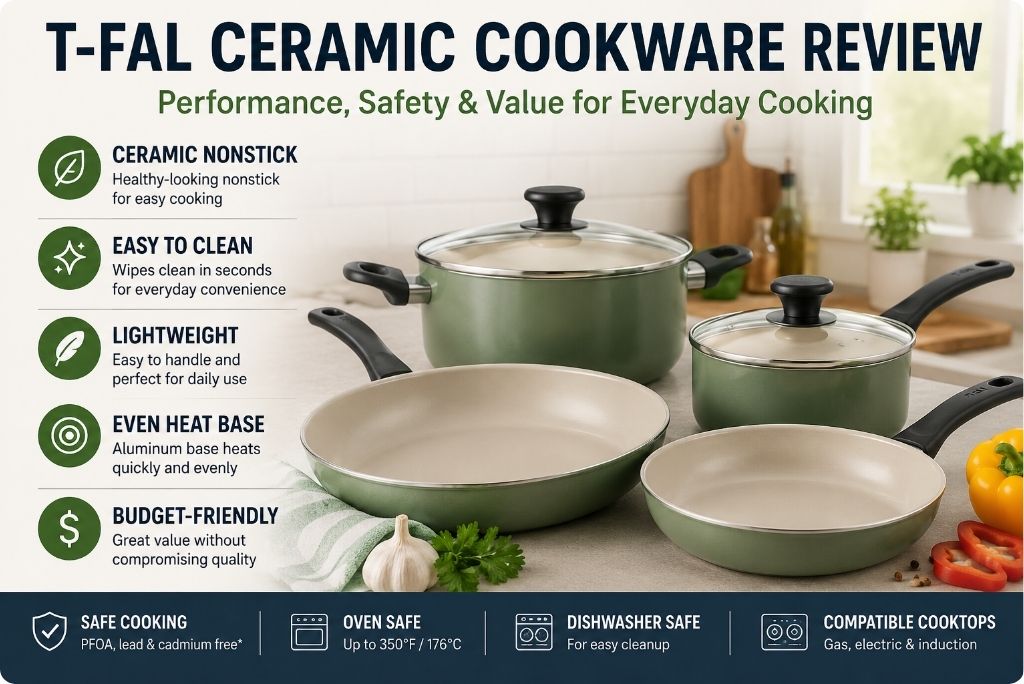
T-fal ceramic cookware is made for simple everyday cooking. It usually has an aluminum body, which helps the pan heat up quickly and stay light in the hand. The ceramic nonstick surface is what makes food release easier and cleanup faster.
A few details depend on the exact model. Some pans are oven-safe and dishwasher-safe, while others are not. Induction support is also model-specific, so it is worth checking before you buy if you use an induction stove.
This cookware is usually a good fit for home cooks who want an affordable, easy-care pan for routine meals. It is less suited to people who want a pan for very high heat or very heavy use over many years.
| Feature | Details |
| Cookware type | Ceramic nonstick |
| Base material | Aluminum |
| PFAS / PTFE / PFOA | Varies by product line |
| Oven safe | Model-dependent |
| Dishwasher safe | Model-dependent |
| Induction compatible | Selected models only |
| Best for | Everyday home cooking |
| Price range | Budget to mid-range |

What Is T-fal Ceramic Cookware?
Brand Overview
T-fal is a well-known cookware brand that focuses on practical, affordable kitchen tools for everyday home cooking. Most people choose it because the pans are easy to use, easy to clean, and usually cheaper than many premium brands.
Its ceramic cookware is aimed at regular home cooks, not professional kitchens. That makes it a good option if you want something simple and convenient, but not necessarily something built for decades of heavy use.
Construction and Materials
T-fal ceramic cookware usually has an aluminum body under the coating. Aluminum helps the pan heat up quickly and keeps the cookware light enough to handle comfortably.
The inside has a ceramic nonstick coating that helps food slide off more easily. Most sets also include basic features like comfortable handles and glass or metal lids, depending on the model.
T-fal sells different cookware sets, so the exact pieces can vary. Some sets are small and simple for everyday meals, while others include more pans for cooks who want a full starter set.
Cooking Performance Review
T-fal ceramic cookware is designed for everyday cooking rather than restaurant-style, high-heat cooking. It performs best when you use low to medium heat and follow the care instructions. Here’s what you can expect in daily use.
Nonstick Performance
When the cookware is new, the ceramic coating releases food very well. Eggs slide out easily, pancakes flip without sticking, and delicate foods like fish are less likely to break apart.
For most meals, you only need a small amount of oil or butter. While you can cook some foods without any fat, a light coating of oil usually gives better browning and helps protect the ceramic surface.
Like all ceramic cookware, the nonstick coating becomes less slippery over time. This doesn’t mean the pan is defective—it’s a normal part of how ceramic coatings wear. Using low heat, gentle utensils, and hand washing can help the coating last longer.
Heat-Up Speed
T-fal ceramic cookware heats up quickly because it has an aluminum base beneath the ceramic coating.
This is helpful when you’re making quick breakfasts, reheating leftovers, or preparing simple weeknight meals. Since the pan warms up fast, it’s a good idea to start with lower heat than you might use with stainless steel cookware.
Even Cooking
The cookware spreads heat fairly evenly for everyday cooking. Pancakes, vegetables, and chicken usually cook with consistent results when the burner matches the pan size.
You may notice slight hot spots if the heat is set too high or if you’re using a large pan on a small burner. Keeping the heat at medium or below helps food cook more evenly.
Performance for Different Foods
T-fal ceramic cookware handles many everyday recipes well.
- Eggs: One of its strongest uses. Fried, scrambled, and omelets release easily with little oil.
- Pancakes: Cook evenly and flip without much effort.
- Vegetables: Great for sautéing onions, peppers, mushrooms, and similar vegetables.
- Chicken: Works well for thin chicken breasts and cutlets, though very thick pieces may need lower heat to cook evenly.
- Fish: The smooth surface helps delicate fillets stay together when turning.
- Sauces: Good for simmering cream or tomato-based sauces over gentle heat.
- Reheating leftovers: Heats food quickly without much sticking, making cleanup simple.
Best Cooking Methods
This cookware performs best with gentle to moderate cooking.
It’s a good choice for sautéing vegetables, making eggs, light pan-frying, simmering soups or sauces, and preparing everyday family meals.
It isn’t the best option for very high-heat cooking, such as getting a deep crust on steaks or using an empty pan over high heat for long periods. High temperatures can shorten the life of the ceramic coating and reduce its nonstick performance over time.
For most home cooks who prepare simple meals every day, T-fal ceramic cookware offers reliable performance, easy food release, and quick cleanup, especially when used with moderate heat and proper care.
Is T-fal Ceramic Cookware Safe?
Ceramic Coating Safety
T-fal ceramic cookware is made for food contact, so the coating is designed to cook food directly. In simple terms, that means the surface should be safe to use when the pan is sold and used as intended. FDA says food-contact substances used in cookware must be authorized for that use and reviewed for safety before they are marketed in the U.S.
The main thing to remember is that “ceramic” does not mean “invincible.” It is still a coated surface, so its safety and performance depend on normal use and good care. Used properly, it can be a practical everyday option for home cooking.
PFAS, PTFE, PFOA, Lead, and Cadmium
Buyers often worry about PFAS, and that is a fair question. EPA says PFAS are long-lasting chemicals, and FDA notes that very small amounts can enter food through cookware in some cases. That is why it is worth checking the exact model instead of assuming every pan in a brand is the same.
The bigger safety warning is poor-quality cookware, especially products that can leach lead into food. FDA has warned consumers not to use certain imported cookware that may release lead, and it also states there are no FDA regulations that allow lead as a component of cookware or food-contact surfaces.
For most shoppers, the safest approach is simple: buy from a known brand, use the pan only for its intended purpose, and avoid any product that raises concerns about lead or other unsafe materials.
Safe Cooking Temperatures
Ceramic cookware is best used at the temperatures the maker recommends, usually with low to medium heat for everyday meals. Very high heat is unnecessary for most cooking and can shorten the life of the coating.
The practical rule is easy: if the pan is smoking, overheating, or turning food dark too fast, the heat is too high. Keeping the temperature moderate helps the coating last longer and keeps the pan easier to use over time.
Read Moer: Is Ceramic Cookware Safe?
Durability and Longevity
How Long Does It Last?
T-fal ceramic cookware can hold up well for everyday cooking, but it is not built to last forever. Ceramic coatings are hard and chemically stable, yet they still need careful use if you want them to stay nonstick for as long as possible.
How long it lasts depends mostly on heat, cleaning, and storage. Using low to medium heat, avoiding harsh scrubbers, and washing gently can help the coating perform better over time.
Scratch Resistance
The surface is fairly scratch-resistant for normal use, but it is still a coated pan, not a metal pan. That means wooden, silicone, or other non-metal utensils are the safer choice if you want to protect the finish.
Everyday wear usually shows up before serious damage does. Small marks, light dulling, or a loss of slickness are more common than sudden failure, especially if the pan is used often.
Common Problems Over Time
The most common issue is that food stops sliding off as easily as it did at first. That usually happens when the coating is overheated, scrubbed too hard, or used with metal tools.
Staining and discoloration can also happen with regular use, even when the pan still works fine. In some cases, sudden temperature changes can also lead to warping, so it helps to let the pan cool before washing.
The honest takeaway is simple: T-fal ceramic cookware can be a useful everyday pan, but it rewards gentle care. Treat it well, and it should stay usable much longer than a pan that is overheated or scrubbed hard.
Cleaning and Maintenance
Is It Easy to Clean?
Yes, mostly. Food usually wipes off easily after normal cooking, especially if you let the pan cool first and wash it with warm water, mild soap, and a soft sponge. Ceramic nonstick pans are made to be simple to clean, but gentle care helps keep that smooth surface working well.
Sticky food may need a little soaking, but it should not need hard scrubbing. If something is stuck on, let the pan sit in warm water for a bit, then wipe it clean instead of scraping it.
Care Tips
The safest routine is simple: let the pan cool, wash it by hand when possible, and use soft tools only. Even if a pan says it is dishwasher-safe, hand washing usually helps it last longer.
For storage, avoid stacking pans directly on top of each other if you can. A cloth or pan protector between them helps prevent scratches. The biggest mistakes are using metal utensils, steel wool, abrasive cleaners, cooking sprays that leave buildup, and overheating the pan.
Pros and Cons
No cookware is perfect, and T-fal ceramic cookware is no exception. It offers good value for everyday cooking, but it also has a few trade-offs that are worth knowing before you buy.
Pros
- Excellent nonstick food release when new
- Lightweight and easy to handle
- Quick and simple to clean
- Budget-friendly for most households
- Great for beginners and everyday home cooking
- Heats up quickly for fast meals
Cons
- Ceramic coating gradually wears over time
- Not the best choice for high-heat cooking or searing
- Needs gentle care to maintain performance
- Less durable than stainless steel or cast iron
- Some models are not induction compatible
T-fal Ceramic Cookware vs Competitors
T-fal vs GreenPan
T-fal is usually the more affordable choice, making it a good option for shoppers who want reliable ceramic cookware without spending a lot. GreenPan costs more but often offers better build quality and a wider selection of cookware collections.
Both brands are easy to clean and work well for everyday cooking. If your budget is limited, T-fal offers better value. If you’re willing to pay more for upgraded features and finishes, GreenPan may be worth considering.
T-fal vs Caraway
Caraway is aimed at buyers looking for premium cookware with a modern design. It has a higher price tag, while T-fal focuses on delivering solid everyday performance at a much lower cost.
Both brands provide smooth nonstick cooking and simple cleanup. For most home cooks, T-fal offers better value, while Caraway is a better fit if design, color choices, and premium styling are important to you.
T-fal vs Blue Diamond
Blue Diamond is another affordable ceramic cookware brand, so these two are closely matched on price. Both heat up quickly and are easy to clean after everyday meals.
The better choice often comes down to personal preference, cookware set options, and warranty. T-fal has a long history of making nonstick cookware and is a dependable choice for buyers who want a simple, budget-friendly ceramic set.
Is T-fal Ceramic Cookware Worth the Money?
For most home cooks, yes. T-fal ceramic cookware offers good everyday performance at a price that is easier on the budget than many premium ceramic brands. If your main goal is simple cooking and easy cleanup, it delivers solid value for the money.
The trade-off is durability. Like most ceramic nonstick cookware, the coating will not stay at its best forever. With proper care and low to medium heat, it can serve you well for everyday meals, but it is not designed to last as long as stainless steel or cast iron.
T-fal is a smart buy if you are setting up your first kitchen, replacing an old nonstick pan, or looking for affordable cookware that is easy to use. It is especially well suited for cooking eggs, vegetables, pancakes, fish, and other foods that benefit from a nonstick surface.
If you often cook over very high heat, sear steaks, or want cookware that can last for many years, another material may be a better investment. Stainless steel is a stronger choice for long-term durability, while cast iron is better for high-heat cooking and excellent heat retention.
Overall, T-fal ceramic cookware offers good value when you have realistic expectations. It is designed to make everyday cooking easier, not to replace heavy-duty cookware for demanding cooking tasks.
Who Should Buy T-fal Ceramic Cookware?
T-fal ceramic cookware is a practical choice for people who want simple, affordable cookware for everyday meals. It is designed for convenience rather than heavy-duty cooking, so it fits some kitchens better than others.
Best For
- Beginners learning to cook
- Budget-conscious shoppers
- Families making everyday meals
- Home cooks who want easy food release and quick cleanup
- People who mainly cook on low to medium heat
- Anyone replacing an old nonstick pan without spending a lot
Not Ideal For
- People who regularly cook over very high heat
- Anyone who often sears steaks or other meats at high temperatures
- Buyers looking for cookware that can last for decades
- Serious home cooks who want the durability of stainless steel or cast iron
If your priority is easy everyday cooking at a reasonable price, T-fal ceramic cookware is a solid choice. If your cooking style is more demanding or you want cookware for the long term, investing in stainless steel or cast iron may be a better option.
Read More: Stainless Steel vs Ceramic Cookware
Frequently Asked Questions
Is T-fal ceramic cookware non-toxic?
T-fal ceramic cookware is generally considered safe for everyday cooking when used according to the manufacturer’s instructions. Always check the product description for the specific model, as materials and features can vary across product lines.
Does the ceramic coating wear out?
Yes. Like all ceramic nonstick cookware, the coating gradually loses its nonstick performance with regular use. Using low to medium heat and gentle cleaning can help it last longer.
Can it go in the oven?
Some T-fal ceramic cookware is oven-safe, while other models are not. Always check the maximum oven temperature listed in the product manual before using it in the oven.
Is it dishwasher-safe?
Some models are dishwasher-safe, but hand washing is usually the better choice. It is gentler on the ceramic coating and can help extend the cookware’s lifespan.
Can I use metal utensils?
It is best not to. Wooden, silicone, or nylon utensils are much less likely to scratch the ceramic coating and help keep the pan performing well.
Is induction compatible?
Only certain T-fal ceramic cookware models work on induction cooktops. If you have an induction stove, check the product specifications before buying.
How long does it last?
With proper care, T-fal ceramic cookware can provide reliable everyday performance for several years. The exact lifespan depends on how often you use it, the cooking temperature, and how well you care for the coating.
Final Verdict
T-fal ceramic cookware is a solid choice for everyday cooking. It offers easy food release, quick cleanup, and good value for beginners, families, and budget-conscious shoppers.
The main downside is that the ceramic coating will wear over time and needs gentle care to maintain performance. It is not the best choice for high-heat cooking or buyers who want cookware that lasts for decades.
If you want affordable, convenient cookware for daily meals, T-fal ceramic is worth considering. For heavy cooking or long-term durability, stainless steel or cast iron may be a better option.



One Comment