Ceramic vs Stainless Steel Cookware: Which Is Better
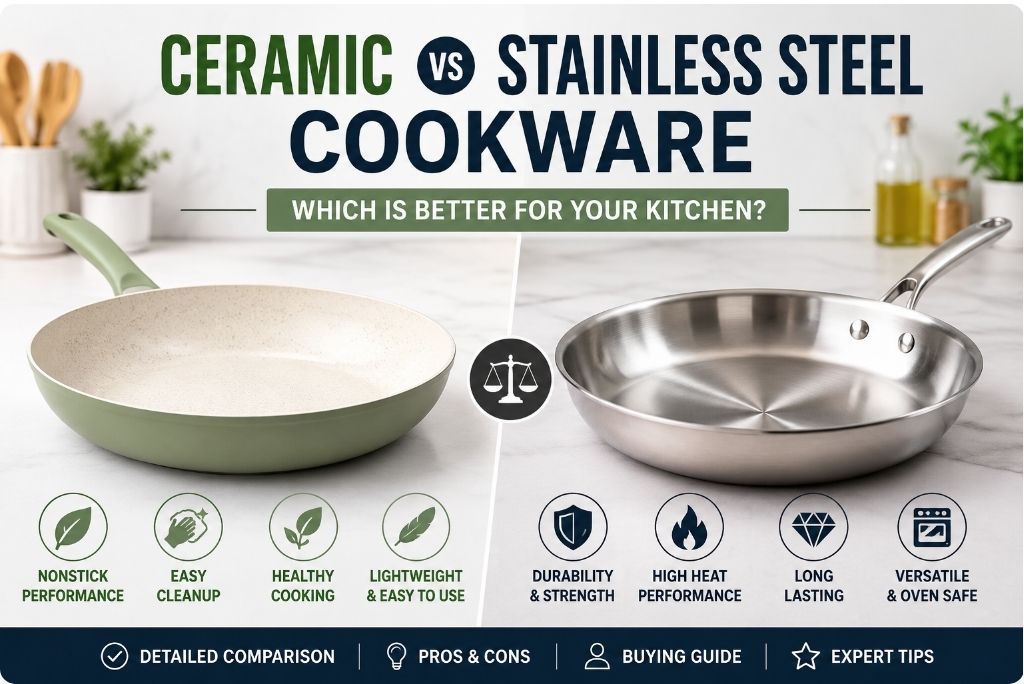
Buying new cookware seems simple at first, but once you start comparing options, the choice can get confusing fast. Ceramic and stainless steel are two of the most popular choices, and both have loyal fans for good reason. One promises easy food release and simple cleanup. The other offers strength, versatility, and long-term value.
The best choice depends on how you cook, what foods you make most often, and how much time you want to spend on care and cleanup. In this guide, we will look closely at ceramic vs stainless steel cookware so you can understand the real differences and choose the one that fits your kitchen best.
Quick Answer: Ceramic vs Stainless Steel Cookware
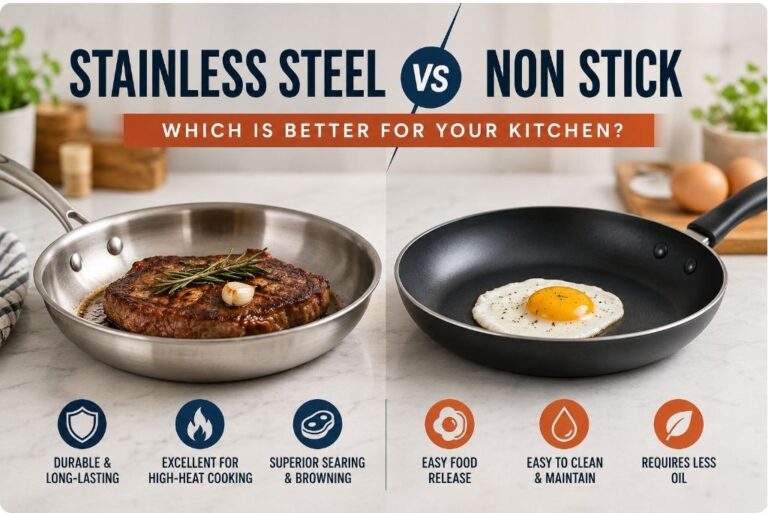
If you want the short version: ceramic cookware is usually better for easy cleanup, delicate foods, and a more nonstick cooking experience. Stainless steel cookware is usually better for durability, high-heat cooking, browning, and long-term value.
Here is the simplest way to think about it:
- Choose ceramic cookware if you want easy food release, low-oil cooking, and beginner-friendly cleanup.
- Choose stainless steel cookware if you want something tough, long-lasting, and great for searing and everyday cooking.
- Choose both if you want the easiest cooking experience and the strongest long-term performance in different situations.
If you cook eggs, pancakes, fish, or other delicate foods often, ceramic can feel very convenient. If you cook meat, sauces, stir-fries, or meals that need strong heat, stainless steel usually gives you better results.
Ceramic vs Stainless Steel Cookware at a Glance
| Feature | Ceramic Cookware | Stainless Steel Cookware |
| Cooking surface | Smooth and slick | Durable and non-reactive |
| Nonstick performance | Very good when new | Not naturally nonstick, but can work well with technique |
| Heat tolerance | Moderate | High |
| Heat distribution | Depends on base quality | Excellent in quality clad pans |
| Heat retention | Moderate | Very good |
| Food release | Easy at first | Better with proper preheating and oil |
| Durability | Lower | Very high |
| Lifespan | Usually shorter | Often many years or decades |
| Scratch resistance | Limited | Strong |
| Oven safety | Often good, but check limits | Usually excellent |
| Metal utensil use | Not ideal | Usually safe |
| Dishwasher safety | Sometimes, but hand washing is better | Often dishwasher safe |
| Induction compatibility | Depends on base | Common in compatible models |
| Maintenance | Easy, but needs gentle care | Easy once you learn the basics |
| Weight | Often lighter | Often heavier |
| Typical price | Usually lower to mid-range | Mid-range to premium |
| Best for | Eggs, pancakes, fish, easy cleanup | Searing, browning, sauces, everyday durability |
What Is Ceramic Cookware?
Ceramic cookware usually falls into two categories: true ceramic cookware and ceramic-coated cookware. True ceramic cookware is made from clay and fired in a kiln. Ceramic-coated cookware is usually a metal pan with a ceramic-based nonstick coating on top. When people compare ceramic vs stainless steel cookware, they are usually talking about ceramic-coated pans, because that is what most shoppers buy.

Ceramic cookware is popular because it feels simple and forgiving. Food often slides off easily, especially when the pan is new and well cared for. Many people also like the cleaner look and the idea of cooking with less oil. It can be a good choice for everyday tasks like scrambled eggs, pancakes, crepes, sautéed vegetables, or fish fillets.
The biggest appeal of ceramic cookware is convenience. It is easy to use, easy to clean, and often feels less intimidating for beginners. That said, ceramic coatings do wear down over time, especially if the pan is overheated, scratched, or washed too harshly. Once that surface starts to break down, the nonstick performance usually declines.
How Ceramic Cookware Is Made
True ceramic cookware is formed from natural clay and hardened by heat. Ceramic-coated cookware is different. It usually starts with an aluminum or stainless steel base, then receives a ceramic-like coating on the cooking surface. That coating is what gives the pan its slick feel.
For most home cooks, ceramic-coated cookware is the version that matters most. It is lighter than many stainless steel pans, heats fairly quickly, and gives you a nonstick-like experience without the same kind of coating found in traditional nonstick pans.
Key Features
Ceramic cookware is known for being smooth, attractive, and easy to use. It often performs well with low to medium heat and is especially handy when you do not want food to stick. It is also a popular option for people who want a cookware surface that feels simple and modern.
A few common features include:
- A slick cooking surface
- Low-oil cooking
- Lightweight construction
- Easy cleanup
- Moderate heat tolerance
Pros and Cons of Ceramic Cookware
Ceramic cookware is popular because it’s simple to use and easy to maintain. It’s a great fit for everyday meals, especially if you prefer quick cleanup and low-fat cooking. The tradeoff is that it doesn’t usually last as long as other cookware materials.
Pros
- Naturally nonstick, so food releases easily
- Quick and easy to clean after cooking
- Great for beginners with little cooking experience
- Needs less oil or butter for many recipes
- Lightweight and easy to lift and handle
Cons
- Doesn’t last as long as stainless steel
- The nonstick coating slowly wears down over time
- Not designed for very high cooking temperatures
- Doesn’t create a deep, crispy sear on meat
What Is Stainless Steel Cookware?
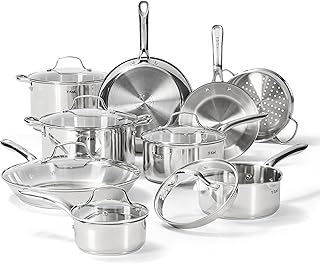
Stainless steel cookware is known for strength, reliability, and versatility. It does not rely on a coating to do its job, which is one reason it lasts so long. Good stainless steel pans can handle high heat, daily use, and a wide range of cooking tasks without wearing out quickly.
Most quality stainless steel cookware uses a layered structure. The outer layer is stainless steel, while the core often contains aluminum or copper to help move heat more evenly. This is why people often talk about “clad” cookware. A well-made clad pan cooks much more evenly than a thin, basic pan.
Stainless steel is not naturally nonstick, and that is where many beginners get frustrated. But once you learn how to preheat properly and use enough fat, it becomes a very dependable cooking tool. It is excellent for browning meat, making pan sauces, cooking vegetables, and handling acidic ingredients like tomato sauce.
How Stainless Steel Cookware Is Constructed
Stainless steel cookware is usually made from layers of metal. You may hear terms like 18/10, 18/8, or 18/0. These numbers refer to the mix of chromium and nickel in the steel. The exact details are not as important to most home cooks as the overall quality of the pan, but they do help explain why some pans resist rust and staining better than others.
The most useful feature in many stainless steel pans is the core. Aluminum or copper inside the pan helps spread heat more evenly, which makes the cookware more reliable. A thin stainless steel pan without a good core can create hot spots, but a well-designed pan can perform beautifully.
Key Features
Stainless steel cookware is built for long-term use. It is strong, resistant to damage, and usually safe for a wide range of cooking methods. It can go from stovetop to oven in many cases, and it often handles metal utensils better than ceramic.
Key features include:
- Strong and durable construction
- High-heat performance
- Excellent browning
- Long lifespan
- Non-reactive cooking surface
Pros and Cons of Ceramic Cookware
Stainless steel cookware is built to last and can handle almost any cooking task. It takes a little practice to use well, but many home cooks find it’s worth learning because of its versatility and durability.
Pros
- Extremely durable and resistant to damage
- Creates excellent browning on meat and vegetables
- Safe for high-heat cooking and oven use
- Can last for many years with proper care
- Delivers reliable, professional-style cooking results
Cons
- Takes a little time to learn how to use correctly
- Food may stick if the pan isn’t preheated properly
- Usually heavier than ceramic cookware
- Higher purchase price, though it often lasts much longer
Ceramic vs Stainless Steel Cookware: Detailed Comparison
Cooking Performance
Cooking performance is where the difference between ceramic vs stainless steel cookware becomes very clear. Ceramic usually wins when the goal is easy release. Stainless steel usually wins when the goal is strong browning and heat control.
For eggs, pancakes, crepes, and fish, ceramic often feels easier because food is less likely to stick. That makes it a comfortable choice for fragile foods that can break apart easily. For steak, chicken thighs, roasted vegetables, and dishes where you want a deep brown crust, stainless steel usually gives better results.
In simple terms, ceramic is often better for convenience, while stainless steel is better for technique and flavor development.
Heat Distribution
Heat distribution matters because it affects how evenly your food cooks. If a pan has hot spots, some parts of your food may burn while others stay undercooked. This is one area where the construction of the pan matters more than the material alone.
A high-quality stainless steel pan with an aluminum or copper core often does a better job of spreading heat evenly than a low-cost ceramic pan. That does not mean every stainless steel pan is better, but it does mean construction is just as important as the outer material.
Ceramic cookware can also distribute heat well if the base is solid, but lower-end versions may struggle more with even cooking.
Heat Retention
Heat retention is another important difference. Stainless steel tends to hold heat better, which helps when you are cooking meat or need the pan to stay hot after ingredients are added. That stable heat can improve browning and reduce temperature swings.
Ceramic cookware usually cools faster. That can be fine for delicate foods, but it is not always ideal for searing or high-heat cooking.
If you like to cook in batches, keep food warm, or make recipes that need steady heat, stainless steel often has the edge.
Nonstick Performance
Ceramic is often praised for its nonstick performance, and for good reason. When new, it can be very slick. Eggs slide around easily, and cleanup is usually simple. The issue is that ceramic nonstick performance tends to fade sooner than many people expect.
Stainless steel is not nonstick in the traditional sense, but it can still perform well when used correctly. Preheating the pan, adding oil at the right time, and waiting for food to naturally release all make a big difference. Once you learn the method, sticking becomes much less of a problem.
Ceramic is easier right away. Stainless steel is often better once you know how to use it.
High-Heat Cooking
If you cook at high temperatures often, stainless steel is usually the better choice. It is better suited for searing, browning, and oven use. It can handle the kind of heat that helps create strong flavor and a crisp outer layer.
Ceramic cookware generally works best at low to medium heat. Too much heat can shorten the life of the coating and hurt performance. If you regularly crank the burner high, stainless steel is the safer long-term option.
Durability
Durability may be the biggest reason people choose stainless steel. It is resistant to scratches, does not rely on a fragile coating, and can handle years of daily use.
Ceramic cookware is more delicate by comparison. It can chip, scratch, and wear down over time, especially if you use metal utensils or stack it without care. Even with gentle treatment, it will usually not last as long as stainless steel.
If you want cookware that can take a beating, stainless steel is the stronger material.
Lifespan
Ceramic cookware usually has a shorter lifespan. How long it lasts depends on quality, care, and how often you use it, but many people find they need to replace ceramic pans sooner than they expected.
Stainless steel cookware often lasts much longer. A good pan can stay useful for a very long time, which makes it appealing for anyone who sees cookware as a long-term purchase rather than a temporary one.
If you are thinking in terms of years of service, stainless steel usually wins.
Maintenance and Cleaning
Ceramic is easy to clean at the moment. Most food residue comes off quickly, and that is one of its biggest strengths. The only catch is that the surface needs gentle care to stay in good condition.
Stainless steel can look harder to clean at first because food may stick more often, but it is usually easy to maintain once you learn a few simple habits. A quick soak, proper preheating, and deglazing after cooking can make a big difference.
For everyday cleanup, ceramic is easier. For long-term care and reliability, stainless steel is often less demanding than people think.
Health and Safety
Many shoppers compare ceramic vs stainless steel cookware because of safety concerns. Ceramic cookware is often chosen because it feels like a cleaner, simpler option. Stainless steel is also a safe choice for many kitchens because it is non-reactive and does not depend on a fragile coating.
The key thing to remember is that safe cooking depends on using the cookware properly. Overheating any pan, using damaged cookware, or ignoring care instructions can cause problems. For acidic foods like tomato sauce, stainless steel is often especially useful because it does not react the way some other materials might.
If your main concern is a non-reactive, durable surface, stainless steel is a strong option. If your main concern is easy release and a simple feel, ceramic can be appealing, as long as you are okay with a shorter lifespan.
Environmental Impact
This is not always the first thing buyers think about, but it matters. A pan that lasts longer usually creates less waste over time. In that sense, stainless steel often has an environmental advantage because it can stay in use for many years.
Ceramic cookware may need to be replaced more often, which means more packaging, more manufacturing, and more waste. On the other hand, some people prefer ceramic for the way it performs in the short term and the less oily cooking style it allows.
If sustainability matters to you, durability is worth thinking about.
Weight and Handling
Ceramic cookware often feels lighter and easier to lift. That can be helpful if you cook often, move pans around a lot, or do not want something heavy in the hand.
Stainless steel cookware is often heavier, especially when it has a thick, multi-layer base. Some cooks like that solid feel because it feels sturdy and professional. Others find it tiring to handle.
The best choice here depends on your comfort level. If weight matters a lot, ceramic may feel easier. If you prefer a pan that feels stable and substantial, stainless steel may suit you better.
Price and Long-Term Value
Ceramic cookware often costs less upfront, which makes it attractive for budget-conscious buyers. That lower starting price can be helpful, especially if you are replacing one or two pans at a time.
Stainless steel usually costs more at the beginning, but it often lasts much longer. That means the real cost over time can be lower, especially if you buy a quality pan once instead of replacing a cheaper one every few years.
A simple way to think about it is this: ceramic may save money today, while stainless steel may save money over the long run.
Which Cookware Is Better for Different Types of Cooking?
The best cookware depends on what you cook most often. For eggs, pancakes, and fish, ceramic is often the easier choice because it gives you smoother food release. For steak, chicken, and vegetables that need browning, stainless steel is usually better because it handles higher heat more effectively.
For sauces, especially tomato-based ones, stainless steel is often the safer bet because it is non-reactive and can stand up to frequent stirring and simmering. For stir-fries and skillet meals, stainless steel also tends to perform better because it can keep up with strong heat.
Here is a simple guide:
| Cooking Task | Better Choice | Why |
| Fried eggs | Ceramic | Easy release and simple cleanup |
| Pancakes | Ceramic | Less sticking and good for gentle cooking |
| Fish | Ceramic | Helps delicate fillets stay intact |
| Steak | Stainless Steel | Better browning and searing |
| Chicken | Stainless Steel | Strong heat helps build flavor |
| Stir-fry | Stainless Steel | Handles high heat well |
| Tomato sauce | Stainless Steel | Non-reactive and durable |
| Soup | Stainless Steel | Good heat retention and everyday use |
| Sautéed vegetables | Either | Depends on your preference and technique |
Which Cookware Is Best for Different Types of Buyers?
Best for Beginners
Ceramic cookware is often easier for beginners because it feels more forgiving. Food releases more easily, cleanup is simple, and the learning curve is smaller.
Best for Experienced Home Cooks
Stainless steel is often the better choice for cooks who want more control and better browning. Once you understand heat management, it becomes incredibly versatile.
Best for Healthy Cooking
Both can fit into a healthy kitchen. Ceramic may help you use less oil, while stainless steel gives you a reliable, long-lasting surface for a wide range of meals. The better choice depends on how you cook, not just on the material itself.
Best for Families
Stainless steel is usually better for families because it stands up well to daily use. It can handle a lot of cooking, a lot of cleaning, and a lot of time without wearing out quickly.
Best for Small Kitchens
Ceramic can feel lighter and easier to store, but stainless steel often gives you more value if you need cookware that can do many jobs well. In a small kitchen, versatility matters more than owning too many pans.
Best for Budget Buyers
Ceramic may cost less upfront, but stainless steel often gives better value over time. If you want a low starting price, ceramic is appealing. If you want a purchase that lasts longer, stainless steel is usually the smarter investment.
Common Myths About Ceramic and Stainless Steel Cookware
One common myth is that ceramic cookware lasts forever. It does not. It can be very useful, but it still wears out.
Another myth is that stainless steel always sticks. That is not true. Sticking usually happens because of timing, temperature, or lack of oil, not because stainless steel is impossible to use.
Some people also think ceramic is always safer than stainless steel. In reality, both can be safe when used properly and cared for correctly.
It is also false that stainless steel is too difficult for everyday cooking. There is a learning curve, but once you understand a few basics, it becomes very manageable.
How to Make Either Cookware Last Longer
Ceramic Care Tips
Ceramic cookware lasts longer when you treat it gently. Use medium or low heat, avoid overheating empty pans, and do not use sharp utensils that can damage the surface. Hand washing is usually the safest option, and it helps to store the pans carefully so they do not get scratched.
Stainless Steel Care Tips
Stainless steel performs best when you preheat it properly and do not rush the cooking process. Add oil after preheating, let food develop a crust before moving it, and use gentle soaking if food sticks. A little technique goes a long way with stainless steel.
When It Makes Sense to Own Both
For many home cooks, the best answer is not ceramic or stainless steel. It is both.
A ceramic skillet can be perfect for eggs, pancakes, or fish on busy mornings. A stainless steel sauté pan can handle chicken, vegetables, sauces, and dinner recipes that need more heat. A well-rounded kitchen often uses each material where it works best.
This approach gives you convenience and durability at the same time. You do not have to force one pan to do everything.
Frequently Asked Questions
Is ceramic cookware safer than stainless steel?
Both can be safe when used correctly. Ceramic is popular with people who want a simple nonstick feel, while stainless steel is valued for its durability and non-reactive surface.
Does ceramic cookware contain PFAS?
Many ceramic-coated pans are marketed as PFAS-free, but it is still important to check the manufacturer’s claims and care instructions before buying.
Why does food stick to stainless steel?
Food usually sticks when the pan is not heated properly, when there is not enough oil, or when the food is moved too early. With the right technique, sticking becomes much less of a problem.
Can ceramic cookware go in the oven?
Many ceramic pans can go in the oven, but the safe temperature depends on the brand and handle design. Always check the product instructions.
Which cookware lasts longer?
Stainless steel usually lasts much longer than ceramic cookware.
Is stainless steel worth the higher price?
For many people, yes. If you want cookware that can last for years and handle many kinds of cooking, stainless steel often gives better long-term value.
Final Verdict
There is no single winner in the ceramic vs stainless steel cookware debate. The better choice depends on what matters most to you.
Choose ceramic cookware if you want easier food release, simple cleanup, and a pan that feels beginner-friendly. It is a strong option for eggs, pancakes, fish, and light everyday cooking.
Choose stainless steel cookware if you want something that lasts longer, handles higher heat, and gives you better browning and control. It is the better choice for searing, sauces, stir-fries, and long-term value.
Choose both if you want the best of both worlds. Ceramic can make delicate cooking easier, while stainless steel can give you the durability and performance you will rely on for years.
The smartest choice is not the one that sounds best on paper. It is the one that matches how you actually cook every day.