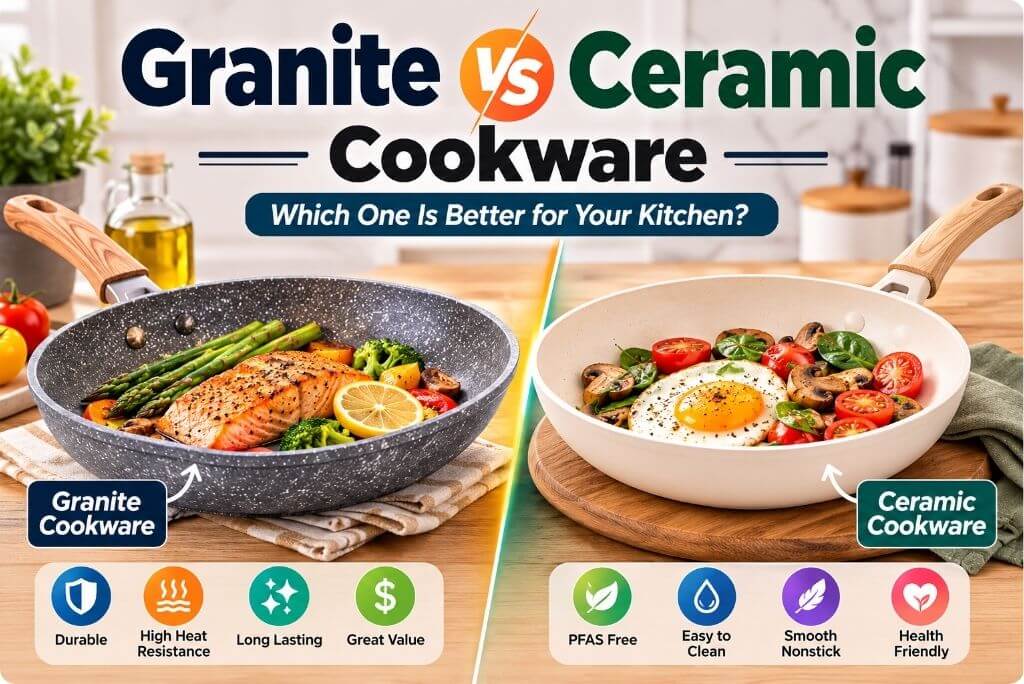
Granite vs Ceramic Cookware: Which Is Better for Your Kitchen?
If you are trying to choose between granite and ceramic cookware, you are probably looking for the same things most home cooks want: safe materials, easy cleanup, good food release, and a pan that will last. That is exactly what this guide is meant to help with. It uses FDA guidance on food-contact materials and Consumer Reports’ testing and cookware guidance to keep the comparison practical and trustworthy, not just marketing-driven.
Quick Comparison: Granite vs Ceramic Cookware
| Factor | Granite Cookware | Ceramic Cookware |
| Safety | Generally safe when used as directed, but usually made from aluminum with a granite-look nonstick coating. | Generally considered safe and often marketed as PFAS-free, but quality varies by brand. |
| Durability | Usually more durable than ceramic in everyday use, especially if the coating is well made. | Can be durable, but the nonstick surface may wear down faster over time. |
| Cooking performance | Good for everyday cooking, browning, and frying. | Excellent for delicate foods like eggs, pancakes, and fish. |
| Cleaning | Easy to clean because of the nonstick surface. | Also easy to clean, often with very little oil. |
| Lifespan | Often lasts longer than ceramic if cared for properly. | Usually has a shorter lifespan than granite cookware. |
| Price | Often budget-friendly to mid-range. | Usually mid-range, sometimes more expensive for premium brands. |
| Heat resistance | Handles moderate heat well, but high heat can damage the coating. | Good heat resistance, but overheating can shorten the life of the coating. |
| Maintenance | Low maintenance; avoid metal utensils and harsh scrubbing. | Low maintenance, but extra care is needed to protect the ceramic coating. |
| Best for | Busy home cooks who want easy cleanup and better everyday durability. | People who want a smooth nonstick surface for gentle cooking and often prefer PFAS-free options. |
Granite cookware is usually the better choice for durability and daily use, while ceramic cookware is often better for health-conscious buyers and delicate cooking.
What Is Granite Cookware?
“Granite cookware” is mostly a marketing name, not a literal description of the material. In cookware shopping, the term usually refers to a pan with a stone-look finish or a granite-style nonstick coating. The real base is often metal, and the cooking performance depends more on the construction and coating than on the word “granite” on the box. Granite itself is a natural igneous rock, so the name can sound more rugged and premium than the cookware really is.

That does not automatically make granite cookware bad. In fact, many people like it because it usually feels familiar, cooks evenly enough for everyday meals, and is easy to clean. It is often a comfortable middle ground for home cooks who want nonstick convenience without paying for a heavy-duty premium pan. The main thing to remember is that the coating matters more than the name.
What Is Ceramic Cookware?
Ceramic cookware is a broader category, but in everyday shopping it usually means a pan with a ceramic-based nonstick coating. Ceramic materials are nonmetallic and inorganic, and Consumer Reports notes that ceramic nonstick coatings did not contain PFAS in its testing. That is one reason many buyers consider ceramic cookware when they want a PFAS-free nonstick option.

Ceramic cookware is especially appealing for people who cook eggs, crepes, pancakes, fish, and other delicate foods that benefit from easy release. Consumer Reports’ testing has also shown ceramic-coated frying pans performing well in recent nonstick pan tests. The tradeoff is that ceramic coatings can lose their slickness over time, especially if they are overheated or scrubbed aggressively.
Granite vs Ceramic Cookware: Side-by-Side Comparison
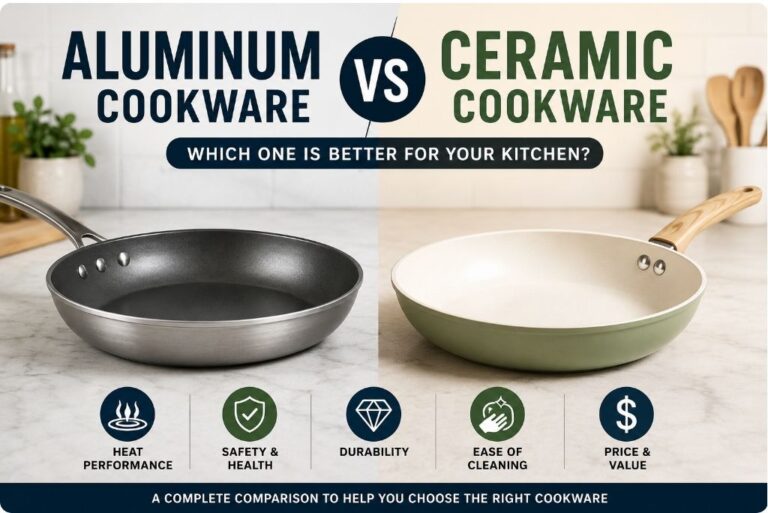
Choosing between granite and ceramic cookware isn’t about finding one material that’s better in every way. Each has strengths and weaknesses, and the right choice depends on how you cook and what matters most to you. Here’s a closer look at how they compare in the areas that make the biggest difference in everyday cooking.
Safety
Both ceramic and granite cookware are generally safe for everyday cooking when they’re made by reputable brands and used correctly.
One important thing to know is that granite cookware is not made from solid granite. It’s usually an aluminum pan with a nonstick coating that has a stone-like appearance. Most modern granite cookware is made without PFOA, but it’s still worth checking the manufacturer’s specifications before buying.
Ceramic cookware uses a mineral-based coating instead of traditional PTFE nonstick coatings. Many people choose it because they prefer cookware marketed as PFAS-free. Like any coated cookware, however, ceramic should be replaced if the coating begins to chip or peel.
No matter which type you choose, avoid overheating an empty pan and replace cookware if the cooking surface becomes badly damaged. Following the care instructions from the manufacturer helps keep both options safe to use.
Durability
If durability is your top priority, granite cookware usually has the advantage.
Its coating is often more resistant to everyday wear, making it a better choice for busy kitchens where cookware is used almost every day. With proper care, a quality granite pan can maintain its performance for several years.
Ceramic cookware performs well when it’s new, but its nonstick surface often wears down more quickly. Even if the pan still looks good, food may begin sticking after a few years of regular use.
The lifespan of either cookware depends just as much on how it’s treated as the material itself. Using medium heat, soft utensils, and gentle cleaning can significantly extend its life.
Heat Retention
Neither granite nor ceramic cookware is known for storing heat like cast iron. Instead, heat retention depends mostly on the pan’s base, usually aluminum.
Both cookware types heat up quickly, making them convenient for everyday meals. Granite cookware often maintains steady heat a little better because many models have a thicker aluminum body.
For most home cooks, the difference is small. Both work well for frying, sautéing, simmering, and everyday recipes.
Nonstick Performance
When brand new, ceramic cookware often has one of the smoothest cooking surfaces available. Eggs, pancakes, and fish can slide around with very little oil.
Granite cookware also offers excellent nonstick performance, although it may require a little more oil for certain foods. The advantage is that its nonstick surface often stays effective longer with proper care.
Regardless of which you choose, using high heat and metal utensils can shorten the life of the coating.
Cooking Experience
Your cooking style can help determine which cookware feels better to use.
Granite cookware is well suited for everyday meals like chicken, vegetables, stir-fries, and burgers. It handles frequent cooking well and offers reliable performance across a wide range of recipes.
Ceramic cookware shines when preparing delicate foods. If you regularly cook eggs, crepes, pancakes, or fish, you’ll likely appreciate its naturally slick surface.
For most families, either cookware can handle daily cooking. The difference is more about which foods you prepare most often.
Cleaning
Both cookware types are easy to clean because food doesn’t stick easily to the surface.
In most cases, warm water, a soft sponge, and mild dish soap are all you need. Avoid abrasive scrubbers or steel wool, as they can damage the coating.
Let the pan cool before washing it. Placing a hot pan under cold water may shorten the life of the nonstick surface over time.
Maintenance
Neither granite nor ceramic cookware requires much maintenance, but a few simple habits can make a big difference.
Cooking over medium or low heat helps protect the coating. Wooden, silicone, or nylon utensils are gentler than metal ones, and stacking pans with a protective liner can prevent scratches during storage.
These small steps take very little effort but can add years to the life of your cookware.
Weight
Both granite and ceramic cookware are generally lighter than cast iron and easier to handle than many stainless steel pans.
Because most are built with an aluminum core, they’re comfortable for everyday use and easy to lift, even when full of food.
Weight can vary between brands, so premium cookware may feel slightly heavier due to a thicker base that improves heat distribution.
Cost
Granite cookware is often the more affordable option, especially if you’re buying a complete cookware set.
Ceramic cookware is available across a wide price range. Entry-level sets can be inexpensive, while premium brands often cost more because of their design, coating technology, and warranty.
A higher price doesn’t always mean better performance. Build quality, warranty, and user reviews are often better indicators of long-term value.
Lifespan
For most home cooks, granite cookware tends to last longer than ceramic cookware.
A quality granite pan can often provide 3 to 5 years of reliable everyday use with proper care. Ceramic cookware typically delivers its best nonstick performance for around 2 to 4 years, although this varies by brand and cooking habits.
Replacing cookware shouldn’t be based on age alone. If the coating is peeling, deeply scratched, or food sticks despite proper use, it’s time to replace the pan regardless of its age.
Overall, if your priority is long-term durability and value, granite cookware usually comes out ahead. If you prefer a smooth nonstick surface for low- to medium-heat cooking, ceramic cookware remains an excellent choice, provided you’re prepared to replace it a little sooner.
Which Is Better for Different Types of Cooking?
The best choice depends on what you cook most often. Neither granite nor ceramic cookware is better for every situation. The table below can help you choose the right option based on your everyday cooking habits.
| Cooking Task | Better Choice | Why |
| Eggs and omelets | Ceramic | The smooth surface helps eggs slide out easily with little or no oil. |
| Pancakes and crepes | Ceramic | Delicate foods cook evenly and are less likely to stick. |
| Fish fillets | Ceramic | The gentle nonstick surface makes it easier to flip fragile fish without breaking it. |
| Chicken breasts | Granite | Usually handles frequent cooking well and provides more consistent browning. |
| Steaks and burgers | Granite | Better suited for medium to medium-high heat, helping develop a nice crust. |
| Stir-fries | Granite | More durable for frequent stirring and everyday high-activity cooking. |
| Vegetables | Either | Both work well for sautéing and roasting vegetables with a small amount of oil. |
| Tomato sauce and other acidic foods | Either | Both are suitable as long as the cooking surface is in good condition and not damaged. |
| Everyday family meals | Granite | A practical choice for people who cook regularly and want a pan that stands up to daily use. |
| Low-oil cooking | Ceramic | The naturally slick surface often lets you cook with less butter or oil. |
For most kitchens, granite cookware is the better all-around option because it usually lasts longer and handles daily cooking well. If you mostly cook delicate foods like eggs, pancakes, or fish and prefer using very little oil, ceramic cookware may be the better fit.
If you cook a wide variety of meals, many home cooks find that owning one granite pan for everyday cooking and one ceramic pan for delicate foods gives the best balance of durability, convenience, and cooking performance.
Pros and Cons
Every cookware material has strengths and weaknesses. The right choice depends on your cooking style, budget, and how much care you’re willing to give your cookware.
Pros and Cons of Granite Cookware
Pros
- Durable enough for everyday cooking.
- Good nonstick performance with proper care.
- Handles medium to medium-high heat well.
- Easy to clean with a soft sponge.
- Usually more affordable than many premium cookware options.
- Available in a wide range of styles and sizes.
Cons
- Most granite cookware is not made from real granite, which can confuse buyers.
- The nonstick coating can wear out over time.
- High heat and metal utensils may damage the cooking surface.
- Quality varies between brands, so cheaper options may not last as long.
Pros and Cons of Ceramic Cookware
Pros
- Smooth nonstick surface that’s great for eggs, pancakes, and fish.
- Often made without PFAS and PFOA, depending on the brand.
- Requires little oil for everyday cooking.
- Easy to clean when the coating is in good condition.
- Available in many modern colors and designs.
Cons
- The nonstick coating usually wears out faster than granite cookware.
- Doesn’t perform as well with frequent high-heat cooking.
- Scratches and chips can shorten its lifespan if not cared for properly.
- Premium ceramic cookware can be more expensive without lasting much longer.
Granite vs Ceramic Cookware: Which One Should You Choose?
Choose granite cookware if you want a practical everyday pan, like the idea of a stone-look finish, and want something that feels sturdy enough for frequent home cooking. It is a good fit for people who want convenience without being overly picky about coating labels.
Choose ceramic cookware if your top priorities are PFAS-free nonstick performance, easy release for delicate foods, and a cleaner-feeling cooking surface for lower-heat meals. It is especially attractive for cooks who make eggs, crepes, fish, and quick breakfasts often.
If you want the simplest answer, here it is: ceramic is usually the better pick for health-conscious shoppers who want PFAS-free nonstick performance, while granite is often the better pick for shoppers who want a more durable-feeling everyday pan and are comfortable with a broader range of coating designs.
Related Topic: Is Copper Cookware Safe?
Frequently Asked Questions
Is granite cookware healthier than ceramic cookware?
Not automatically. “Healthier” depends on the exact coating, product quality, and how you use it. Ceramic has the advantage of PFAS-free testing in Consumer Reports’ work, but ceramic products still need to be made well and used properly.
Does ceramic cookware scratch easily?
It can. Like other coated cookware, ceramic surfaces wear down faster with metal utensils, high heat, and aggressive cleaning.
Can I use both on high heat?
It is better not to. Coated nonstick cookware usually performs best at low to medium heat. For very high heat, stainless steel or cast iron is usually a better choice.
How do I know when to replace a pan?
Replace it when you see chipping, deep scratches, peeling, warping, or when the coating stops releasing food properly. Consumer Reports specifically advises discarding damaged nonstick cookware.
Final Verdict
Granite vs ceramic cookware is not a battle with one universal winner. It is a question of fit. Granite cookware is often the more practical everyday choice for people who want convenience and durability in a familiar nonstick pan. Ceramic cookware is usually the better choice for readers who want PFAS-free nonstick performance and mostly cook at low to medium heat. The best decision is the one that matches your cooking habits, your safety priorities, and how much care you are willing to give the pan.