Is Granite Non Stick Cookware Safe? What You Need to Know Before Buying
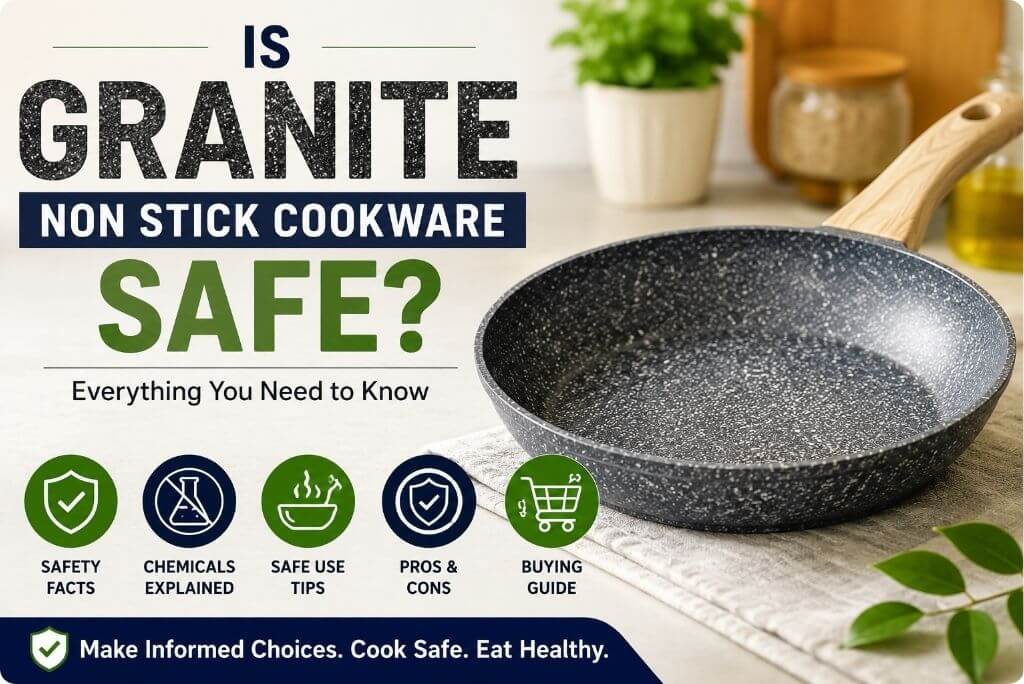
Granite nonstick cookware has become popular because it looks modern, feels easy to use, and promises simple cleanup with less oil. That is exactly why many people ask the same important question: is granite non stick cookware safe for everyday cooking? The answer depends less on the word “granite” and more on the actual coating, the quality of the pan, and how you use it.
In most cases, a well-made granite-style nonstick pan from a reputable brand is a practical and generally safe choice for normal home cooking, but damaged pans, unknown materials, and overheating are the things to watch most closely.
Quick Answer: Is Granite Non Stick Cookware Safe?
Yes, granite nonstick cookware is generally safe for everyday use when the coating is intact and the pan is used as directed. The main risks are not from the “granite” look itself but from low-quality products, deep scratches, peeling coating, and overheating. The safest approach is to buy from a trustworthy brand, follow the heat and cleaning instructions, and replace the pan if the surface starts to break down.
What Is Granite Nonstick Cookware?
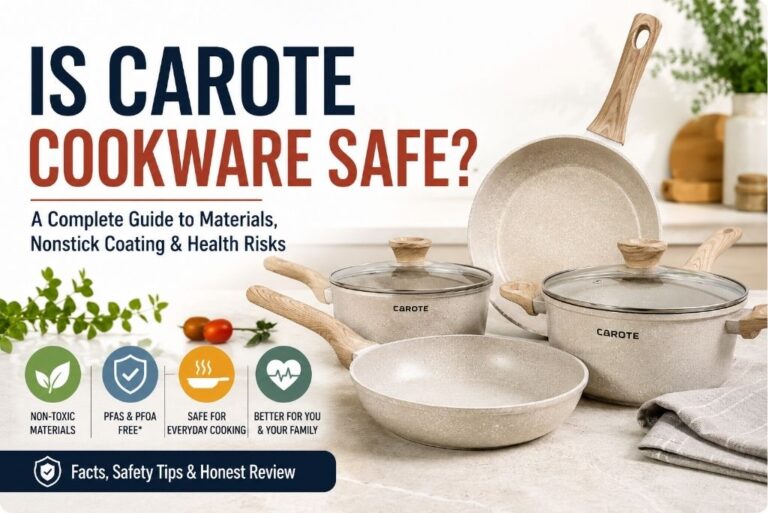
Despite the name, granite cookware is usually not made from real stone. In the market, the term generally refers to a metal pan with a speckled, stone-like nonstick coating. You will often see aluminum construction paired with a granite-style coating or finish, which is meant to improve food release and make cleaning easier. In other words, “granite” is mostly a description of appearance and coating style, not a sign that the pan is carved from solid granite.
That matters because the real safety question is not about granite rock. It is about the coating chemistry, the quality of the base metal, and whether the pan is designed for normal kitchen use. Some granite-style cookware uses PTFE-based nonstick layers, while others use ceramic or sol-gel-style coatings. The label alone does not tell you everything.
Is Granite Non Stick Cookware Safe?
For the majority of households, the short answer is yes: high-quality granite nonstick cookware is generally safe when used properly. The primary reasons are simple. Food-contact cookware sold by reputable brands is designed to meet safety standards; the coating keeps food away from the base metal, and normal cooking temperatures are typically well within the range of the cookware’s capabilities.
The FDA explains that food-contact ingredients and materials can be reviewed for safety, and that some PFAS used in nonstick cookware are tightly bound in the coating, limiting migration into food.
The key phrase is used properly. Safety is not only about what the pan is made of; it is also about how you cook with it. A pan that is fine for medium heat can be damaged by empty-pan overheating, a broiler, rough scrubbing, or metal utensils if the manufacturer does not approve them.
All-Clad’s nonstick care guidance is a useful example of what responsible cookware care looks like: cook on low to low-medium heat, avoid overheating, avoid metal tools, and do not use abrasive cleaners or scrubbers.
Does Granite Cookware Contain Harmful Chemicals?
PTFE
Some granite nonstick cookware does contain PTFE-based coating technology. That fact alone does not make the pan unsafe. The real question is whether the pan is used within normal cooking temperatures and whether the coating stays intact.
FDA notes that some PFAS are authorized for use in non-stick cookware coatings, and it says those coatings are tightly bound through a heating process. That is very different from loose, unstable chemicals sitting on the surface of the pan.
PFOA
PFOA is the chemical many people still associate with old nonstick pans, but it is important not to confuse PFOA with PTFE. They are not the same thing. When a cookware brand says “PFOA-free,” it is usually addressing a legacy concern tied to older manufacturing methods rather than saying the pan contains no coating at all.
FDA’s current PFAS page and Q&A show that the conversation today is more nuanced than the old “nonstick equals dangerous” idea.
PFAS
PFAS is the broader family of chemicals people mean when they say “forever chemicals.” FDA says PFAS are a large family of chemicals, that very small amounts can enter foods through processing and cookware, and that some PFAS have been authorized in non-stick cookware coatings.
At the same time, FDA also says the coatings are polymerized and tightly bound and that studies show negligible PFAS migration to food from those coatings. That is why it is reasonable to be cautious without assuming every granite pan is automatically unsafe.
Heavy Metals
A well-made cookware pan should not be a source of heavy-metal concern in normal use, but this is one reason to avoid mystery brands with vague labeling and no safety information. The safest approach is to buy cookware from companies that clearly explain their materials, cooking limits, and care instructions.
FDA’s food-contact framework is designed around materials that contact food, which is exactly why transparent labeling matters here.
When Can Granite Nonstick Cookware Become Unsafe?
Overheating
This is one of the biggest real risks. Granite-style nonstick pans are not meant to be blasted on high heat for long periods, and they are definitely not meant to sit empty on a burner until they get extremely hot. Manufacturer care instructions for nonstick cookware commonly warn against overheating because it can damage the coating. That is why many brands recommend low or low-medium heat for everyday use.
Damaged Coating
A few tiny scuffs are one thing. A pan that is peeling, flaking, or deeply scratched is another. Once the coating is visibly failing, the nonstick performance usually drops, and the pan is no longer behaving the way it was designed to behave. At that point, replacement is usually smarter than trying to “push through” a damaged surface.
Poor-Quality Cookware
This is the problem many buyers overlook. A cheap granite pan from an unknown seller may look similar to a better one on day one, but the coating quality, heat stability, and durability can be very different. Brands that clearly disclose oven limits, utensil advice, and cleaning instructions are usually giving you a better clue that the product was designed with long-term use in mind.
Here is a practical way to think about it:
| Situation | Safe to Keep Using? | Replace? |
| Light cosmetic scuffs | Usually yes. | Not yet |
| Food starts sticking more than usual | Maybe, if the coating is still intact | Consider soon. |
| Deep scratches exposing the base | Not ideal | Yes. |
| Peeling or flaking coating | No | Yes. |
| Pan warps or heats unevenly | Sometimes, but performance suffers | Usually yes. |
| Repeated overheating | Not recommended | Often yes |
That table is a practical rule-of-thumb, not a lab test. When in doubt, replace the pan rather than hoping a failing coating will improve with more use.
How to Use Granite Cookware Safely
The safest way to use granite non stick cookware is also the simplest. Cook on low to medium heat unless the manufacturer clearly says otherwise, and avoid heating an empty pan for long periods. That one habit protects both the coating and the pan’s lifespan.
Use silicone, wood, or other gentle utensils if the brand does not specifically approve metal utensils. Clean the pan with a soft sponge instead of abrasive pads. If the cookware is dishwasher-safe, that does not mean the dishwasher is always the best choice; hand washing usually helps the coating last longer.
It also helps to think about what you cook. Eggs, pancakes, fish, vegetables, and other delicate foods are a natural fit for nonstick cookware. Heavy searing, extremely high heat, and long broiler use are better handled by stainless steel, cast iron, or another material built for that kind of work.
Granite Non Stick Cookware vs Other Cookware Materials
Granite non stick cookware has one big advantage: convenience. It is easy to cook delicate foods, easy to clean, and usually forgiving for beginners. That makes it a good everyday option for eggs, fish, pancakes, sautéed vegetables, and quick meals. But convenience is not the same as durability.
Stainless steel, cast iron, and hard-anodized cookware often last longer and tolerate more aggressive cooking, even if they are less forgiving in the pan. This is the practical trade-off most buyers need to understand.
| Material | Best For | Strengths | Main Trade-Off |
| Granite non stick | Easy everyday cooking | Food release, quick cleanup, beginner-friendly | Coating wears over time |
| Ceramic | Light non stick cooking | Often marketed as coating-focused and easy to use | Can lose performance sooner |
| Stainless steel | Searing, browning, sauces | Very durable, versatile, no non stick coating needed | Food can stick if technique is poor |
| Cast iron | High heat, long cooking | Excellent heat retention, long lifespan | Heavy, needs more care |
For most home cooks, granite cookware makes the most sense when convenience matters more than lifetime durability.
If you cook eggs every morning and want a pan that wipes clean quickly, granite can be a pleasant choice. If you sear meat often, use very high heat, or want a pan that can last for many years with less coating-related worry, stainless steel or cast iron may be the better long-term investment.
That is less about “good” versus “bad” and more about matching the tool to the job.
Pros and Cons of Granite Non Stick Cookware
Like any cookware, granite non stick cookware has both strengths and weaknesses. It’s a great choice for everyday cooking, but it’s not the best option for every cooking style. Knowing both the benefits and the limits will help you decide if it’s the right fit for your kitchen.
| Pros | Cons |
| Food releases easily with less oil or butter. | The nonstick coating will wear out over time. |
| Quick and easy to clean after cooking. | Not ideal for very high-heat cooking or searing. |
| Lightweight and comfortable to handle. | Deep scratches or peeling mean it’s time to replace the pan. |
| Heats quickly and evenly thanks to its aluminum base. | Usually, it doesn’t last as long as stainless steel or cast iron. |
| Works well for eggs, pancakes, fish, and other delicate foods. | Some products may contain PTFE, so always check the manufacturer’s information if that matters to you. |
| Many modern brands are made without PFOA. | Quality varies between brands, so cheaper cookware may not last as long. |
If you cook everyday meals and want a pan that’s easy to use and simple to clean, granite non stick cookware is a solid choice. However, if you often cook over very high heat or want cookware that can last for decades, stainless steel or cast iron may be a better long-term investment.
The biggest tip is to focus on quality, not just price. A well-made granite pan from a trusted brand will usually perform better and last longer than a cheaper alternative, making it a better value over time.
How to Choose a Safe Granite Cookware Set
The safest purchase is usually the one that gives you the clearest information. Look for a brand that states exactly what the coating is, whether the pan is PTFE-based or ceramic-based, and what temperatures the cookware can handle. Clear labeling matters more than glossy marketing terms.
It also helps to choose cookware with a solid base and a strong warranty. A thicker base usually heats more evenly, which can make cooking easier and reduce hot spots that stress the coating. Customer reviews can help too, but focus on long-term reports about peeling, warping, and cleaning—not just first impressions right after unboxing.
If a product only says “granite finish” without explaining the coating, temperature limit, or care instructions, treat that as a yellow flag. A safer pan is one whose safety and use guidelines are easy to understand.
Frequently Asked Questions
Is granite nonstick cookware safe for health?
In most cases, yes. Granite nonstick cookware is generally safe for normal home use when it is well made, used on appropriate heat, and kept in good condition. The main concerns are poor-quality coatings, overheating, and physical damage to the surface.
Does granite cookware contain PTFE or PFAS?
Some granite cookware does, and some does not. That depends on the brand and the coating technology. FDA materials show that some PFAS are approved for food-contact applications, including nonstick coatings, but that does not mean every “granite” pan uses the same chemistry.
Is scratched granite cookware safe?
Small scratches are usually more of a performance issue than a serious safety issue, but deep scratches, chips, peeling, or flaking are a strong sign that it is time to replace the pan. A damaged coating is less reliable and less pleasant to cook with.
How long does granite cookware last?
That depends on the quality of the pan and how gently you treat it. Light home use can stretch the lifespan, while high heat, metal utensils, and harsh cleaning shorten it. In general, granite cookware lasts as long as the coating stays intact and effective.
Is granite cookware better than ceramic or Teflon?
Not automatically. Granite cookware can be a very good everyday option, but “better” depends on your priorities. Ceramic may appeal to people who want a PFAS-free style of nonstick cookware, while traditional PTFE nonstick often offers excellent release. Granite cookware sits somewhere in between, and the brand matters a lot.
Final Verdict
So, is granite non stick cookware safe? For most home cooks, the honest answer is yes—if the cookware is well made, used properly, and replaced when the coating breaks down. It is a helpful everyday cooking tool, especially for eggs, pancakes, fish, and other delicate foods.
Just remember that the word “granite” describes the style of the pan, not a guarantee of safety by itself. The real safety factors are the coating type, the brand’s transparency, and how carefully you use the pan.
If you want the easiest, most practical decision, buy a reputable pan, keep the heat moderate, avoid rough cleaning, and replace it once the surface starts to peel, chip, or lose its smooth finish. That approach gives you the convenience of nonstick cooking without ignoring the details that matter most.