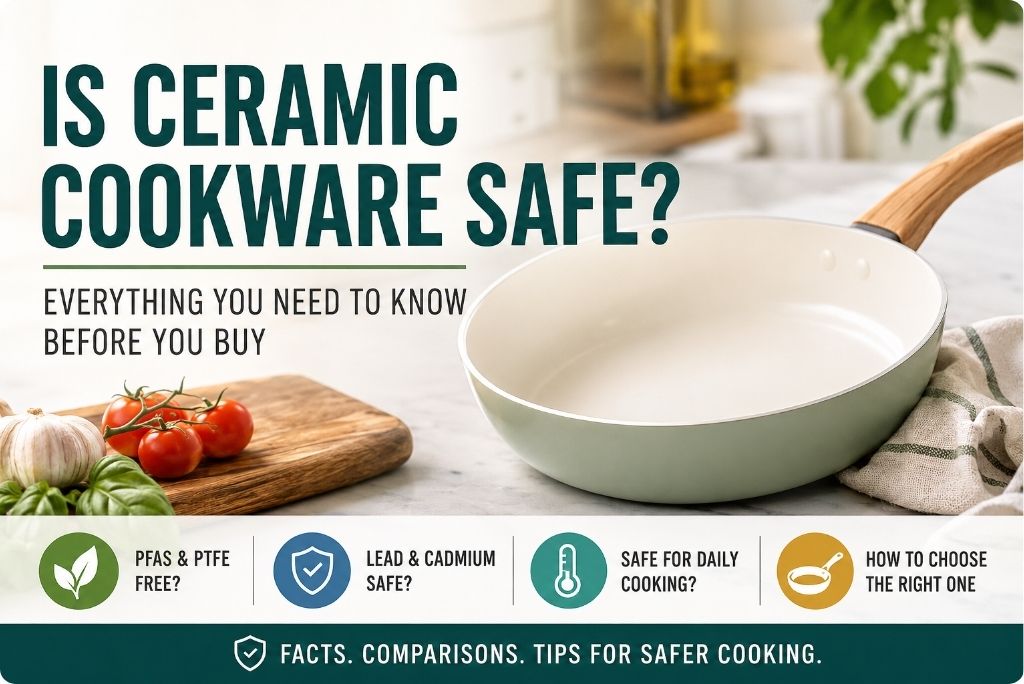

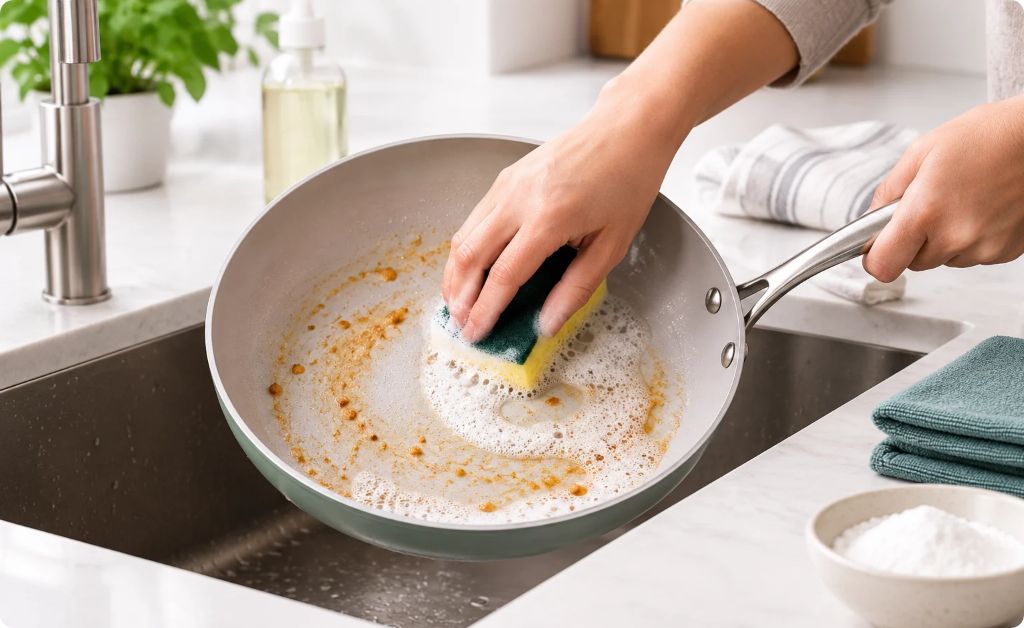
Ceramic nonstick pans are popular because food usually releases easily and cleanup can be quick. But the coating still needs gentle care.
Using the wrong sponge, scrubbing too aggressively, overheating the pan, or allowing oil residue to build up can shorten its useful life.
The good news is that you usually do not need special chemicals or aggressive cleaning methods.
Quick Answer: How Do You Clean a Ceramic Nonstick Pan?
Let the pan cool completely, then wash it with warm water, mild dish soap, and a soft sponge or non-abrasive cloth.
For stuck-on food, soak the pan in warm soapy water first. If residue remains, gently loosen it rather than scraping aggressively.
Avoid steel wool, scouring pads, abrasive powders, harsh cleaners, and sharp metal tools. These can damage the cooking surface. Manufacturer guidance from GreenPan and Caraway also recommends gentle cleaning and careful temperature control.
Before using any cleaning method, check the care instructions supplied with your particular pan.
What You Need
For normal cleaning, you only need:
- Warm water
- Mild dish soap
- A soft sponge or dishcloth
- A soft towel for drying
You generally do not need a strong degreaser or abrasive cleaner.
The goal is to remove food and oil without unnecessarily wearing the ceramic-coated surface.
Step 1: Let the Pan Cool
Do not immediately put a very hot ceramic pan under cold running water.
Allow it to cool first.
A sudden temperature change can create thermal shock and may contribute to warping or damage. Both GreenPan and Caraway recommend allowing cookware to cool before washing.
This is a small habit that can help protect your cookware over time.
Step 2: Remove Loose Food
Once the pan has cooled, rinse away loose crumbs and food particles with warm water.
Do not start scrubbing hard just because you see a little residue.
Most fresh food should come away easily with water and a soft sponge.
Step 3: Wash With Warm Soapy Water
Add a small amount of mild dish soap to warm water.
Use a soft sponge or non-abrasive cloth to clean the cooking surface.
Move the sponge gently across the pan rather than applying heavy pressure.
GreenPan recommends warm, soapy water with a soft sponge or brush and advises against abrasive detergents and steel wool.
Step 4: Rinse and Dry the Pan
Rinse away all remaining soap.
Then dry the pan with a soft towel or allow it to air-dry completely.
Drying is particularly useful before stacking cookware because moisture and trapped residue can make storage less clean.
How to Clean Stuck-On Food From a Ceramic Pan
Stuck food does not automatically mean the coating is ruined.
Start with the gentlest method.
Fill the pan with enough warm water to cover the affected area and add a little dish soap. Let it soak for a short period.
For more stubborn residue, some manufacturers recommend gently heating soapy water over low heat to help loosen the food. Caraway, for example, recommends simmering soapy water over low heat before gently removing the loosened residue with a sponge or non-abrasive scrubber.
Afterward, wash the pan normally.
What You Should Not Do
Do not attack stuck food with a knife, metal scraper, steel wool, or aggressive scouring pad.
Removing one stubborn spot is not worth unnecessarily scratching the cooking surface.
How to Remove Greasy Buildup
A ceramic pan can develop a sticky or dull surface when oil residue repeatedly builds up.
This can happen even when the pan looks relatively clean.
Start with warm water and dish soap. Use a soft sponge and clean the entire cooking surface rather than focusing only on one spot.
If your manufacturer’s instructions allow it, a mild baking soda paste can sometimes help with stubborn buildup. GreenPan specifically recommends baking soda as part of periodic deep cleaning for its ceramic cookware.
However, do not assume that every ceramic-coated pan has identical care instructions.
When in doubt, follow the manufacturer’s cleaning instructions.
How to Remove Brown or Dark Stains
Brown marks can develop from repeated cooking, overheated oil, or food residue.
First, clean the pan normally with warm soapy water.
If the discoloration remains, avoid immediately reaching for a harsh abrasive cleaner.
A gentle deep-cleaning method may work better, depending on the manufacturer’s instructions.
For example, GreenPan recommends a baking soda paste for periodic cleaning of stubborn buildup.
If the mark does not come off but the coating is otherwise smooth and intact, appearance alone does not necessarily mean the pan has stopped being usable.
Can You Put a Ceramic Nonstick Pan in the Dishwasher?
There is no universal answer.
Some ceramic nonstick pans are labeled dishwasher-safe, while others are specifically designed to be hand-washed.
For example, some GreenPan models are dishwasher-safe but recommend hand washing, while Caraway’s ceramic-coated cookware instructions say not to put its pans in the dishwasher.
So check the care instructions for your specific pan.
Why Hand Washing Is Usually the Gentler Choice
Even when a pan is technically dishwasher-safe, hand washing with mild soap and a soft sponge is generally a gentler cleaning routine.
If your main goal is to preserve the nonstick performance for as long as possible, hand washing is a sensible default unless your manufacturer says otherwise.
Can You Use Steel Wool on a Ceramic Nonstick Pan?
It is generally better to avoid steel wool on ceramic nonstick cooking surfaces.
Steel wool and aggressive scouring materials can scratch or wear the coating.
GreenPan specifically advises against steel wool, abrasive detergents, and iron sponges for its ceramic cookware.
Use a soft sponge or non-abrasive scrubber instead.
Can You Use Baking Soda?
Baking soda can be useful for stubborn residue, but the method matters.
A small amount mixed with water can form a paste that helps loosen buildup without requiring aggressive scrubbing.
GreenPan recommends baking soda paste as a periodic deep-cleaning method for its ceramic nonstick cookware.
Still, cookware brands can have different instructions, so check your pan’s manual before using any deep-cleaning method.
What About Vinegar?
Vinegar is sometimes suggested online for cookware stains, but you should not automatically use it on every ceramic-coated pan.
Different coatings and finishes can have different care requirements.
If your manufacturer does not recommend vinegar for the cooking surface, stick with warm water, mild dish soap, and a non-abrasive sponge.
For a coated pan, following the manufacturer’s instructions is more important than using a popular internet cleaning hack.
How to Clean a Ceramic Pan Without Scratching It
The basic rule is simple:
Use less force, not more.
If food is stuck, soften it first.
If grease remains, wash it again.
If discoloration remains, use a manufacturer-approved deep-cleaning method.
Avoid trying to make the pan look perfectly new by aggressively scrubbing the surface.
A little cosmetic discoloration is often preferable to unnecessary wear on the coating.
Common Cleaning Mistakes That Shorten a Ceramic Pan’s Life
1. Washing the Pan While It Is Still Extremely Hot
A very hot pan and cold water create a sudden temperature change.
Let it cool before washing.
2. Using Steel Wool
Steel wool is too aggressive for many ceramic nonstick surfaces.
Choose a soft sponge instead.
3. Using Abrasive Powder
Scouring powders can be unnecessarily harsh on a coated cooking surface.
Use mild dish soap for normal cleaning.
4. Scraping With Metal Tools
A metal knife or scraper can scratch the coating.
Soak stubborn food and loosen it gradually.
5. Using Too Much Heat
Cleaning is not the only part of cookware care.
Excessive heat can also reduce the performance and lifespan of ceramic nonstick cookware. GreenPan recommends low to medium heat for its ceramic nonstick cookware, while Caraway similarly recommends low to medium heat.
6. Using Cooking Spray Repeatedly
Cooking sprays can leave residue that becomes difficult to remove.
GreenPan specifically advises avoiding spray oils because buildup can affect the coating’s performance.
How to Keep a Ceramic Nonstick Pan Easy to Clean
Cleaning becomes much easier when you prevent heavy buildup in the first place.
Use moderate heat and avoid overheating an empty pan.
Use a small amount of suitable oil when needed rather than repeatedly applying cooking spray.
After cooking, clean the pan once it has cooled instead of allowing grease and food residue to remain for days.
And when storing multiple pans, avoid allowing rough surfaces or cookware edges to scrape directly against the cooking surface. A pan protector can add another layer of protection.
When Should You Replace a Ceramic Nonstick Pan?
Cleaning cannot restore a coating that has reached the end of its useful life.
Consider replacing the pan if you notice significant coating damage, such as:
- Extensive scratching
- Chipping or flaking
- Major surface deterioration
- A substantial and persistent loss of nonstick performance
GreenPan notes visible scratches or dull areas, reduced nonstick performance, and coating damage as signs that cookware may need replacement or refreshing.
A few stains or changes in appearance do not automatically mean the pan needs to be discarded.
The condition of the cooking surface matters more than whether the pan still looks brand new.
Ceramic Nonstick Cleaning: Simple Routine
For everyday use, you can keep the routine very simple:
Cook → cool → soak if necessary → wash gently → rinse → dry.
You do not need to turn every cleaning session into a deep-cleaning project.
Most ceramic nonstick pans are easiest to maintain when you remove food residue before it becomes heavily baked on.
Ceramic Nonstick vs. Stainless Steel Cleaning
Ceramic nonstick and stainless steel require different cleaning approaches.
Stainless steel can generally tolerate more aggressive cleaning because it does not have a nonstick coating. Ceramic-coated cookware needs more care because the cooking surface is designed to provide nonstick performance.
That is why a technique that works well for a heavily stained stainless steel pan may be inappropriate for a ceramic nonstick pan.
If you also use stainless steel cookware, see our guide on how to clean a burnt stainless steel pan.
Final Takeaway
The best way to clean a ceramic nonstick pan is usually the simplest way.
Let it cool, use warm soapy water, and clean it with a soft sponge. For stuck-on food, soak it first instead of immediately scrubbing harder.
Avoid steel wool, abrasive cleaners, sharp tools, and unnecessary high heat.
Most importantly, remember that ceramic cookware is not identical across brands. Always check the care instructions for your particular pan before using a dishwasher, deep-cleaning product, or unusual cleaning method.
If you take a gentle approach from the beginning, cleaning becomes easier and you can help preserve the pan’s nonstick performance for longer.
Frequently Asked Questions
What is the best way to clean a ceramic nonstick pan?
Let the pan cool, then wash it with warm water, mild dish soap, and a soft non-abrasive sponge. For stuck food, soak the pan before gently cleaning it.
Can I use steel wool on a ceramic nonstick pan?
It is best to avoid steel wool on ceramic nonstick cooking surfaces because it can scratch or wear the coating.
Can I use baking soda on a ceramic nonstick pan?
Some manufacturers recommend baking soda for stubborn buildup. However, care instructions vary, so check your cookware manufacturer’s guidance first.
Can ceramic nonstick pans go in the dishwasher?
Some are dishwasher-safe, while others are not. Even when dishwasher use is allowed, some manufacturers recommend hand washing to help preserve the cookware’s finish and performance.
Why is my ceramic pan becoming sticky?
Sticky performance can result from residue buildup, overheated oil, cooking sprays, or general wear. Cleaning the pan gently and avoiding excessive heat can help prevent buildup and maintain performance.
How do I clean burnt food from a ceramic pan?
Let the pan cool, soak the affected area in warm soapy water, and gently clean it with a non-abrasive sponge. For persistent residue, check the manufacturer’s instructions for an approved deep-cleaning method.
Should I season a ceramic nonstick pan?
Generally, ceramic nonstick cookware does not require traditional seasoning like cast iron. Some manufacturers recommend only a small amount of oil before cooking.
How do I know when a ceramic nonstick pan needs replacing?
Consider replacement when the cooking surface has significant scratches, chipping, flaking, or a substantial loss of nonstick performance.