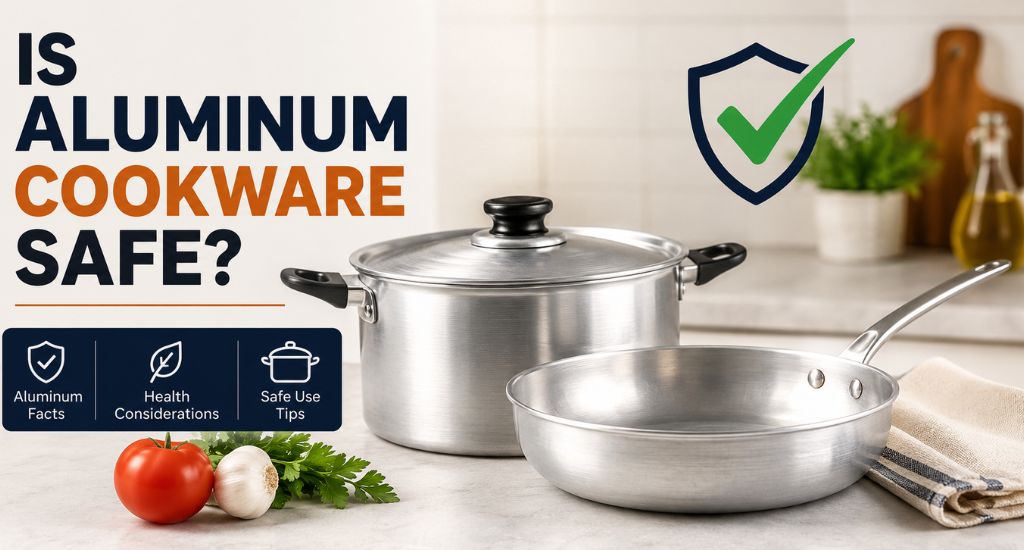
Is Aluminum Cookware Safe? What You Need to Know Before Using It Every Day
Many people have at least one aluminum pan in their kitchen, but they also have one important question: Is aluminum cookware safe?
The short answer is yes. For most people, aluminum cookware is safe for everyday cooking when it is used properly and kept in good condition. However, the type of cookware you use, the foods you cook, and the condition of the pan can all affect how much aluminum moves into your food.
In this guide, you’ll learn what health experts say, when aluminum cookware is perfectly fine to use, when you should be more careful, and simple ways to reduce any potential risks.
Quick Answer
Yes, aluminum cookware is generally considered safe for everyday cooking.
Health organizations agree that the small amount of aluminum that transfers into food during normal cooking is not considered harmful for most healthy adults. Your body naturally eliminates most of the aluminum you consume through food and water.
However, there are situations where more aluminum can leach into food, including:
- Cooking highly acidic foods for long periods
- Using old or heavily worn aluminum cookware
- Storing acidic foods in aluminum containers
- Using poor-quality cookware that may contain other harmful metals
For most households, using quality aluminum cookware occasionally—or even regularly for many meals—is not considered a health concern.
What the Experts Say
One reason aluminum cookware causes confusion is that there are many myths online. Looking at recommendations from trusted health organizations provides a much clearer picture.
The Agency for Toxic Substances and Disease Registry (ATSDR) explains that cooking food in aluminum cookware is generally considered safe. It also notes that acidic foods can increase the amount of aluminum that moves into food during cooking.
The European Food Safety Authority (EFSA) reviewed available research and established a tolerable weekly intake for aluminum of 1 milligram per kilogram of body weight. This guideline includes aluminum from all dietary sources—not just cookware.
The U.S. Food and Drug Administration (FDA) has also warned consumers about certain imported cookware that may leach lead, which is a different concern from aluminum itself. This is why buying cookware from reputable manufacturers is important.
Overall, the scientific evidence does not support the idea that normal use of quality aluminum cookware poses a significant health risk for most people.
What Makes Aluminum Cookware Safe or Unsafe?
Not all aluminum cookware performs the same way. Several factors determine how much aluminum may transfer into food.
Plain Aluminum vs. Anodized Aluminum
Plain aluminum cookware is lightweight, heats quickly, and is affordable. Because the cooking surface is bare aluminum, small amounts of the metal can move into food during cooking.
Anodized aluminum cookware goes through a special process that creates a hard protective layer on the surface. This layer makes the cookware more durable, more scratch-resistant, and less reactive with food.
For everyday cooking, anodized aluminum is generally considered the better option because it reduces aluminum leaching while keeping aluminum’s excellent heating performance.
Acidic Foods
Acidic ingredients have the biggest effect on aluminum cookware.
Foods that may increase aluminum transfer include:
- Tomato sauce
- Citrus fruits
- Vinegar-based recipes
- Wine sauces
- Rhubarb
For example, simmering tomato sauce for an hour in a plain aluminum pot can release more aluminum than boiling pasta in the same pot.
This doesn’t necessarily make the food unsafe, but it’s a good reason to choose stainless steel, glass, or anodized cookware for highly acidic recipes.
Heat, Cooking Time, and Repeated Use
The longer food stays in contact with aluminum, especially at high temperatures, the greater the opportunity for aluminum to move into the food.
Quick cooking methods like boiling vegetables or heating water generally result in much less aluminum transfer than slow simmering or braising acidic dishes.
Scratches, Dents, and Worn Surfaces
Older cookware deserves a closer look.
Deep scratches, heavy pitting, peeling coatings, or excessive wear may increase reactivity and reduce cooking performance.
A pan with cosmetic scratches isn’t necessarily unsafe, but cookware that is badly damaged or warped should be replaced.
When Aluminum Cookware Is Probably Fine: Aluminum vs. Nonstick Cookware
For many everyday meals, aluminum cookware works very well.
It’s generally a good choice for:
- Boiling water
- Cooking rice
- Steaming vegetables
- Frying eggs
- Sautéing vegetables
- Making pancakes
- Preparing pasta
- Cooking non-acidic soups
Many professional kitchens use aluminum cookware because it heats quickly, distributes heat evenly, and responds well to temperature changes.
If your cookware is in good condition and you’re cooking non-acidic foods, there is little reason to worry.
When You Should Be More Careful
There are a few situations where choosing another cookware material may be a better idea.
Consider using stainless steel, glass, or enamel cookware when:
- Cooking tomato-based sauces
- Making citrus marinades
- Preparing vinegar-heavy recipes
- Slow-cooking acidic foods
- Storing leftovers in the cooking pan overnight
It’s also wise to be cautious with cookware that has no brand name, lacks safety information, or appears to be of very poor quality.
Recent FDA warnings about certain imported cookware focused on possible lead contamination—not aluminum itself—but they highlight why purchasing cookware from trusted manufacturers matters.
How to Reduce Risk When Cooking with Aluminum
If you enjoy cooking with aluminum cookware, you don’t need to stop using it. A few simple habits can minimize aluminum exposure even further.
Choose anodized aluminum whenever possible, since its hardened surface is less reactive.
Avoid cooking highly acidic foods in plain aluminum for long periods.
Transfer leftovers into glass or food-safe storage containers instead of leaving them in the aluminum pan.
Replace cookware that has severe scratches, peeling coatings, deep pits, or significant damage.
Follow the manufacturer’s cleaning instructions, and avoid harsh abrasive cleaners that can wear down the cooking surface.
These simple steps help extend the life of your cookware while reducing unnecessary metal transfer.

Best Types of Aluminum Cookware
If you’re shopping for new cookware, understanding the different types can help you choose the right option.
Plain Aluminum
This is the most affordable type. It offers excellent heat conductivity but is more reactive with acidic foods.
Anodized Aluminum
A protective oxide layer makes it more durable and less reactive. This is one of the best choices for everyday home cooking.
This version undergoes an even stronger treatment, creating an exceptionally durable cooking surface that resists scratches and corrosion.
Coated Aluminum Cookware
Many nonstick pans use an aluminum base because aluminum spreads heat efficiently. As long as the coating remains intact and the cookware is used according to the manufacturer’s instructions, these pans can be a practical option.
Aluminum Cookware vs. Other Cookware Materials
Each cookware material has strengths and weaknesses.
Aluminum heats quickly, is lightweight, and is usually affordable.
Stainless steel is highly durable, non-reactive, and excellent for cooking acidic foods, although it doesn’t conduct heat as well without an aluminum or copper core.
Cast iron retains heat extremely well and can even add small amounts of iron to food, but it requires more maintenance and is much heavier.
Ceramic cookware offers a naturally non-reactive cooking surface, though coatings may wear over time depending on quality.
Glass cookware is completely non-reactive and ideal for baking and food storage, but it is heavier and can break if handled roughly.
There isn’t one perfect cookware material. The best choice depends on the foods you cook most often and your personal preferences.
Comparison Table
| Cookware | Reactive with Acidic Foods | Durability | Heat Conductivity | Everyday Safety |
| Plain Aluminum | High | Good | Excellent | Good with precautions |
| Hard Anodized Aluminum | Low | Excellent | Excellent | Very Good |
| Stainless Steel | Very Low | Excellent | Good | Excellent |
| Cast Iron | Moderate | Excellent | Good | Excellent (proper care) |
| Ceramic | Very Low | Good | Moderate | Excellent |
Read More: Aluminum vs. Ceramic Cookware
Myths and Misconceptions
Many claims about aluminum cookware have been repeated for years without proper context.
Myth: Any aluminum cookware is dangerous.
Fact: Quality aluminum cookware is generally considered safe for normal household cooking.
Myth: Aluminum cookware causes Alzheimer’s disease.
Fact: Current scientific research has not established that normal use of aluminum cookware causes Alzheimer’s disease. While researchers continue studying many possible factors involved in Alzheimer’s, health authorities do not recommend avoiding aluminum cookware as a way to prevent the disease.
Myth: Expensive cookware is always safer.
Fact: Price alone doesn’t determine safety. Buying cookware from reputable brands with good manufacturing standards is more important than choosing the most expensive option.
Myth: Aluminum and lead are the same issue.
Fact: They are completely different concerns. Aluminum cookware itself is different from cookware contaminated with lead. Recent FDA warnings relate to lead contamination in some imported cookware, not to aluminum cookware in general.
Frequently Asked Questions
Is aluminum cookware safe for everyday cooking?
Yes. For most healthy adults, quality aluminum cookware is considered safe for everyday use when used properly.
Is anodized aluminum safer than regular aluminum?
Generally, yes. The protective anodized surface reduces reactivity and makes the cookware more resistant to scratches and corrosion.
Can I cook tomato sauce in aluminum cookware?
You can, but it’s not ideal. Acidic foods may increase aluminum transfer into food. Stainless steel or enamel cookware is usually a better choice.
Does aluminum cookware cause Alzheimer’s disease?
Current scientific evidence does not show that normal household use of aluminum cookware causes Alzheimer’s disease.
Should I throw away old aluminum pans?
Not necessarily. Replace cookware that is badly worn, deeply scratched, warped, or damaged. Well-maintained aluminum cookware can continue to be used safely.
How do I know if my cookware may contain lead?
Purchase cookware from reputable manufacturers, check for safety certifications when available, and avoid products that lack proper labeling or have been recalled.
Final Verdict
So, is aluminum cookware safe?
For most people, the answer is yes.
Quality aluminum cookware has been used in kitchens for decades and is considered safe for everyday cooking by major health authorities. Most of the concern comes from specific situations—such as cooking highly acidic foods in plain aluminum for long periods, using heavily damaged cookware, or purchasing low-quality products that may contain other harmful metals.
If you want the best balance of performance and safety, choose well-made anodized aluminum cookware, avoid storing acidic foods in aluminum pans, and replace cookware that becomes badly worn.
Instead of worrying about aluminum cookware altogether, focus on buying quality products, using them correctly, and maintaining them well. Those simple habits will help you cook safely and confidently for years to come.