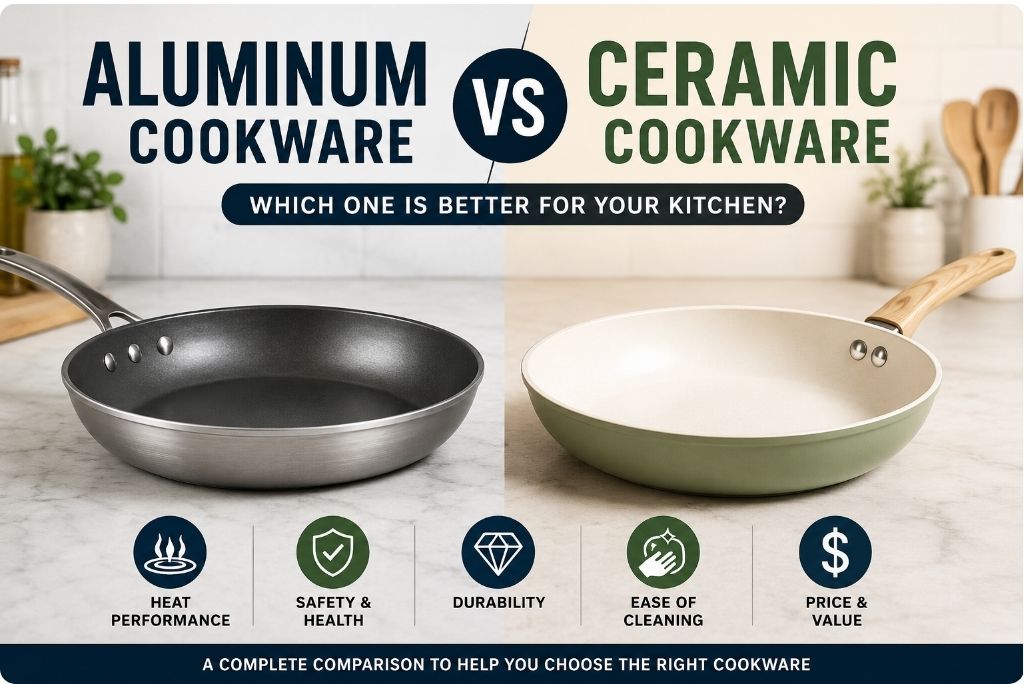
Aluminum vs Ceramic Cookware: Which Is Better for Your Kitchen?
If you are trying to choose between aluminum and ceramic cookware, the real question is usually not “Which one sounds better?” It is “Which one will actually work better for the way I cook?” For most home cooks, the answer depends on a mix of safety, heat control, cleanup, durability, and long-term value. Aluminum is known for fast, even heating, while ceramic cookware is usually chosen for its slick nonstick surface and easy cleanup.
This guide breaks down the differences in plain English so you can make a confident choice without sorting through marketing claims or confusing jargon. It also keeps one important point in view: cookware quality matters just as much as the material itself. Not all aluminum cookware is the same, and not all ceramic cookware performs the same over time.
Quick Comparison Table: Aluminum vs Ceramic Cookware
| Feature | Aluminum Cookware | Ceramic Cookware |
| Heat response | Heats quickly and evenly | Depends on the base; usually good, but less responsive than aluminum alone |
| Nonstick performance | Usually needs a coating | Usually slick when new |
| Safety | Safe when well made and properly used; avoid questionable imports | Often chosen as a PTFE-free option |
| Durability | Strong in anodized or hard-anodized forms | Coating can wear faster |
| Cleaning | Easy, depending on finish | Often very easy when new |
| Weight | Usually lightweight | Often lightweight too |
| Oven safety | Depends on handles and coating | Depends on the full design |
| Induction compatibility | Only if made for induction | Only if the base is induction-ready |
| Price | Often more affordable | Wide range |
| Best for | Everyday cooking, heat control, durability | Eggs, pancakes, easy cleanup |
What Is Aluminum Cookware?
Aluminum cookware is cookware made with aluminum as the main body or core. The big reason people like it is simple: aluminum moves heat fast and spreads it evenly, which helps with everyday tasks like sautéing, boiling, simmering, and frying. That quick response also makes temperature changes easier to control.

Types of Aluminum Cookware
Bare aluminum is the simplest form. It is light and heats quickly, but it can react more easily with acidic foods and may stain or discolor over time. Because of that, many people prefer more finished versions for regular home use.
Anodized aluminum has been treated to form a harder surface layer. This makes it more durable and less reactive than bare aluminum, which is why it is often considered a better everyday option. Hard-anodized aluminum goes a step further and is usually even tougher and more scratch-resistant than regular anodized cookware.
Nonstick-coated aluminum combines aluminum’s heating ability with a coating that helps food release more easily. This gives you the speed of aluminum with the convenience many people want from a nonstick pan.
Key Characteristics
The main strengths of aluminum cookware are its fast heating, even heat distribution, and lightweight feel. These features make it easy to use for daily cooking, especially when you want a pan that reacts quickly instead of lagging behind the burner. Aluminum is also common in cookware because it is practical and usually more affordable than many heavier materials.
One important safety note is that product quality matters. The FDA has recently warned that certain imported cookware made from aluminum or aluminum alloys may leach lead into food and should not be used. That does not mean all aluminum cookware is unsafe; it means buyers should avoid questionable, poorly regulated products and stick to trusted brands and sellers.
Read More: Is Aluminum Cookware Safe
What Is Ceramic Cookware?
In everyday cookware shopping, “ceramic cookware” usually means ceramic-coated cookware, not a pot made entirely of solid ceramic. These pans often have a metal base, commonly aluminum, with a ceramic-style nonstick coating on top. That is why they feel lightweight and cook somewhat like other nonstick pans.

Types of Ceramic Cookware
Ceramic-coated cookware is the most common type. It uses a metal core plus a ceramic-based nonstick coating. This is the version most people compare against aluminum cookware.
100% ceramic cookware exists too, but it is less common in everyday skillet-style cooking. It tends to be heavier and is used differently from the ceramic-coated pans most buyers are looking at. For this comparison, the practical focus is usually ceramic-coated cookware, since that is what shoppers most often mean.
Key Characteristics
Ceramic cookware is popular because food tends to slide off easily, especially when the pan is new. That makes it appealing for eggs, pancakes, and other delicate foods. Many buyers also like it because it is often marketed as a PTFE-free alternative to traditional nonstick cookware.
The trade-off is that ceramic coatings can lose their slickness over time. Consumer Reports has noted that ceramic-coated nonstick pans can perform well, but the coating still wears with use, so long-term care matters.
Aluminum vs Ceramic Cookware: Detailed Comparison
Heat Distribution and Cooking Performance
Aluminum has the edge in pure heat response. It heats quickly and spreads heat well, which helps reduce hot spots and makes it easier to control food while cooking. That matters when you are sautéing vegetables, simmering sauces, or trying to keep the temperature steady.
Ceramic-coated cookware usually performs well too, but its cooking feel depends heavily on the metal base underneath. Many ceramic pans use aluminum as the base, so they can still heat evenly. Even so, the ceramic layer itself is not what gives the pan heat power; it is the base material beneath the coating.
For everyday cooking, aluminum usually gives you more control. For simple low-stick cooking, ceramic often feels easier. That is the main difference in practice: aluminum is better for heat management, while ceramic is better for easy release.
Nonstick Performance
Ceramic cookware is usually the better choice when food release is the top priority. A fresh ceramic coating can make eggs, fish, and pancakes easy to cook with very little oil. That is one reason ceramic-coated pans are so popular with people who want a nonstick surface without traditional PTFE coatings.
Aluminum alone is not naturally nonstick. If you want easy release from aluminum, you usually need a coating or a well-seasoned surface. So if your main goal is effortless cleanup after eggs or crepes, ceramic has the simpler first impression.
The important catch is longevity. Ceramic nonstick usually starts strong but can lose performance over time, especially with high heat, rough cleaning, or frequent use. That is why a pan can feel excellent in month one and much less impressive a year later.
Safety and Health
For most home cooks, the safety difference is less about “good material versus bad material” and more about product quality and how the cookware is used. Properly made aluminum cookware is widely used, but the FDA has warned that some imported aluminum cookware may leach lead into food, which is a serious concern. Buyers should avoid suspiciously cheap, unverified products and watch for recalls or safety alerts.
On the aluminum side, EFSA has assessed dietary aluminum exposure and set a tolerable weekly intake, which shows that the topic is about exposure level and product quality, not a simple yes-or-no danger label. In normal use, migration from food contact materials is generally only a small part of total exposure, but poor-quality products can still be a problem.
Ceramic cookware is often chosen because it avoids some concerns people have with traditional nonstick coatings. Consumer Reports and other sources note that many ceramic-coated pans are marketed as PFAS-free or PTFE-free alternatives. That said, the main safety point is not just the coating label; it is also whether the product is well made and whether the coating remains intact.
The honest bottom line is this: neither material is automatically “safer” in every situation. Safe use depends on buying quality cookware, avoiding damaged pans, and using cookware the way it was designed to be used.
Durability and Lifespan
Aluminum cookware can last a long time, especially when it is anodized or hard-anodized. Those finishes help protect the surface and make the pan more resistant to wear. If durability is your priority, that is one of the strongest reasons to choose quality aluminum cookware.
Ceramic cookware usually does not last as long in the nonstick sense. The pan may still look fine, but the coating can lose its slickness gradually. Once that happens, cleanup gets harder and the pan starts to feel less useful even though the base is still intact.
So if you want a pan that keeps performing well for years, aluminum with a good finish usually has the advantage. If you are happy trading some lifespan for a smoother nonstick experience, ceramic can still be a smart buy.
Ease of Cleaning
Ceramic cookware usually wins on first-impression cleanup. Food often wipes away easily, which makes it feel low effort and beginner-friendly. That ease of cleaning is one of the strongest reasons people like ceramic-coated pans.
Aluminum cookware can also be easy to clean, but the experience depends on the finish. Bare aluminum may stain more easily, while anodized or coated aluminum tends to be simpler to maintain. If the pan is well made, cleanup is not difficult; it just may not feel as effortless as a fresh ceramic surface.
The smartest habit for both materials is to avoid harsh scrubbers and very aggressive cleaning products. That helps preserve the cooking surface and extends the usable life of the pan.
Read More: How to Use Ceramic Cookware
Heat Resistance and Oven Safety
Oven safety depends less on the word “aluminum” or “ceramic” and more on the full cookware design. Handles, lids, coatings, and manufacturer heat limits all matter. A pan can be made from a heat-friendly material but still not be oven-safe because of its handle or coating.
Ceramic-coated pans are often promoted for being heat tolerant, but the coating can still wear if it is repeatedly overheated. Aluminum cookware is generally strong in this area, especially when it is built for higher heat and has a durable finish.
Induction Compatibility
Pure aluminum cookware does not work on induction by itself because induction needs a magnetic base. That means an aluminum pan must be specially made for induction use, usually with a magnetic layer underneath. Ceramic cookware has the same issue if the base is not induction-ready.
So the real question is not “aluminum or ceramic?” but “Does this exact pan have an induction-compatible base?” That is the simplest way to avoid buying the wrong cookware.
Weight and Handling
Aluminum cookware is usually lightweight, which makes it easy to lift, stir, and move around the kitchen. That is helpful if you cook often, toss vegetables in the pan, or simply do not want heavy pots on the stove.
Ceramic cookware can also feel light, especially when it uses an aluminum base. But some ceramic pans feel a bit more substantial depending on their construction. In day-to-day use, both can be comfortable, but aluminum still tends to be the easiest to handle.
Price and Long-Term Value
Aluminum cookware is often the more affordable choice, especially at the basic level. Even better, higher-quality anodized aluminum can still offer strong value because it usually lasts longer and performs more consistently than cheap pans.
Ceramic cookware comes in a wide price range. Some pans are inexpensive, while premium ceramic-coated options can cost quite a bit more. The key question is value over time: a cheaper ceramic pan may seem appealing at first, but if the coating wears quickly, the real cost can rise because you replace it sooner.
Pros and Cons
Pros and Cons of Aluminum Cookware
Pros
- Fast heating and good heat control.
- Lightweight and easy to handle.
- Often budget-friendly.
- Durable when anodized or hard-anodized.
Cons
- Bare aluminum can react more with acidic foods.
- Poor-quality imported aluminum cookware may pose contamination risks.
- Pure aluminum is not induction-compatible unless specially designed.
Pros and COns of Ceramic Cookware
Pros
- Excellent food release when new.
- Easy cleanup.
- Often PTFE-free, which appeals to many buyers.
- Good for low-oil cooking.
Cons
- Nonstick performance can wear down over time.
- Can be damaged by harsh cleaning and heavy use.
- Quality varies a lot by brand.
- Not always the best long-term value if the coating fades quickly.
Which Cookware Is Better for Different Types of Cooks?
For everyday home cooks, aluminum usually has the edge because it heats quickly, handles a wide range of foods well, and tends to last longer when it is anodized or hard-anodized. If you cook often and want a dependable workhorse pan, aluminum is usually the safer bet for performance and value.
For health-conscious buyers, ceramic may look more appealing because many ceramic-coated pans are marketed as PTFE-free alternatives. That said, “healthier” should not mean ignoring quality. A well-made aluminum pan from a trusted brand is often a better choice than a cheap ceramic pan that wears out fast or a questionable imported pan with contamination issues.
For beginners, ceramic is often easier to love at first because food release is simple and cleanup is fast. It is forgiving for eggs, pancakes, and light cooking. If the goal is confidence in the kitchen, ceramic can be a friendly starting point.
For budget shoppers, aluminum often gives better long-term value. Even if the starting price is similar, aluminum cookware usually lasts longer and keeps its performance better, especially in anodized form.
For high-heat cooking, aluminum is usually the better choice. It responds faster to heat changes and gives you better control when you are searing, sautéing, or reducing sauces. Ceramic-coated pans can handle plenty of normal cooking, but they are not usually the best pick if high heat is your daily habit.
For low-oil cooking, ceramic is often the more convenient option because food slides off easily when the coating is fresh. That makes it especially useful for delicate foods and lighter meals.
Read More: Ceramic vs Stainless Steel Cookware
How to Choose Between Aluminum and Ceramic Cookware
The best choice depends on how you cook, not on which material sounds more modern. Start by asking what matters most in your kitchen: fast heat, easy cleanup, long life, or a slick surface for delicate foods.
Choose aluminum if you want:
- quick heating and better temperature control
- a lightweight pan that feels easy to use
- stronger long-term value
- a durable option for everyday cooking
- a pan that performs well across many recipes
Choose ceramic if you want:
- easy food release for eggs, pancakes, and fish
- a pan that feels simple and beginner-friendly
- a PTFE-free nonstick surface
- quick cleanup and low-oil cooking convenience
The most practical buying rule is this: if performance and durability matter most, aluminum usually wins; if easy release and easy cleanup matter most, ceramic usually wins.
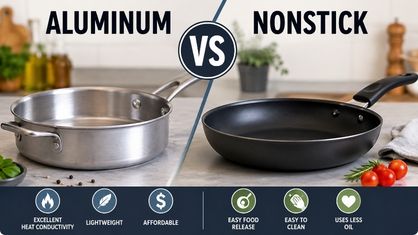
Read More: Aluminum vs Nonstick Cookware
Frequently Asked Questions
Is aluminum cookware safe?
Yes, when it is well made and used properly. The main concern is avoiding poor-quality imported cookware that may leach lead into food.
Is ceramic cookware non-toxic?
Ceramic cookware is often marketed as PTFE-free, but “non-toxic” is too broad of a claim to trust without looking at the product quality and how it is made.
Which lasts longer, aluminum or ceramic?
In most cases, anodized or hard-anodized aluminum lasts longer than ceramic-coated cookware.
Which is better for frying?
Ceramic is often nicer for eggs and delicate foods, while aluminum usually gives better control for general frying and browning.
Can ceramic cookware replace aluminum?
Sometimes, but not completely. Ceramic is great for easy release, while aluminum is usually better for control and durability.
Final Verdict
If you want the simplest answer, here it is: aluminum is usually better for performance and durability, while ceramic is usually better for easy release and easier cleanup. Aluminum is the stronger all-around choice for most everyday cooks, especially if you value heat control and long-term value. Ceramic is a good fit if your top priority is convenience and nonstick-style cooking.