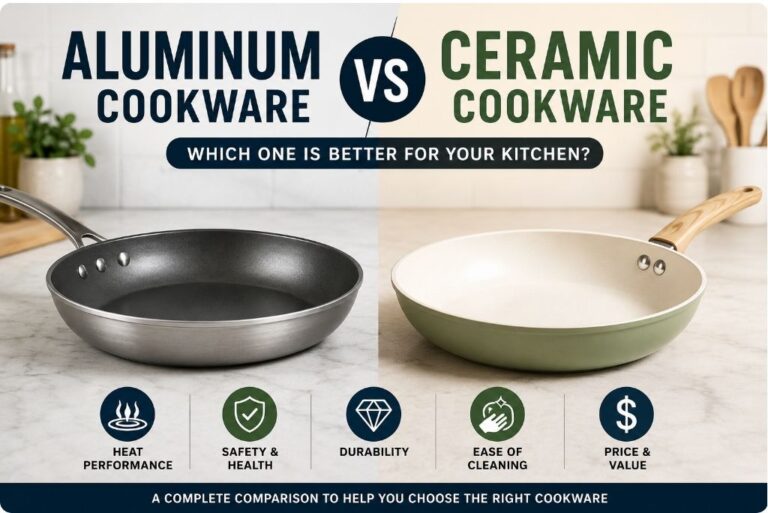
Aluminum vs Nonstick Cookware: Which Is Better for Your Kitchen?
Choosing between aluminum and nonstick cookware can be confusing. Both options are affordable, popular, and useful in everyday kitchens, but they perform differently. Many shoppers wonder which one is safer, more durable, easier to use, and worth the money.
The right choice depends on how you cook. Aluminum cookware offers fast heating, better temperature control, and long-term versatility, while nonstick cookware makes cooking easier with excellent food release and simple cleanup.
In this guide, we will compare aluminum vs nonstick cookware based on cooking performance, safety, durability, maintenance, cost, and everyday use. You will learn which option is best for beginners, busy home cooks, high-heat cooking, and people who want convenient meal preparation.
Aluminum vs Nonstick Cookware: Quick Comparison
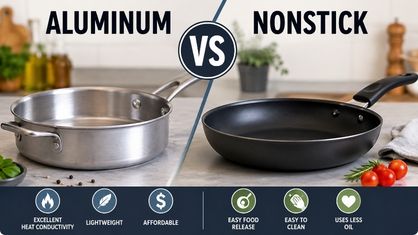
If you are trying to choose between aluminum and nonstick cookware, the biggest difference is simple: aluminum is better for fast, even heating, while nonstick is better for easy food release and quick cleanup. Both can work well in the kitchen, but they solve different problems.
| Feature | Aluminum Cookware | Nonstick Cookware |
| Material | Made from aluminum, sometimes with a hard-anodized surface | Metal pan with a nonstick coating on top |
| Cooking performance | Heats fast and responds quickly to temperature changes | Best for foods that stick easily, like eggs and pancakes |
| Heat conductivity | Excellent | Usually not as fast on its own; depends more on the base pan |
| Food release | Food can stick if the pan is not coated or well used | Food slides off easily with little oil |
| Safety | Generally safe, especially hard-anodized types | Generally safe when used properly, but coatings should not be overheated |
| Durability | Stronger than many people expect, especially hard-anodized aluminum | Coating wears down over time |
| Cleaning | Easy to clean, but not always effortless | Very easy to clean in most everyday use |
| Maintenance | Usually low, though coated versions need normal care | Needs more care to protect the coating |
| Lifespan | Can last a long time if well made | Usually shorter because the coating eventually wears out |
| Oven compatibility | Often oven-safe, but check the handle and coating | Often oven-safe too, but temperature limits are more important |
| Induction compatibility | Usually not compatible unless the base is made for induction | Usually not compatible unless the pan is designed for induction |
| Price | Often affordable to mid-range | Often affordable, with prices rising for better coatings and brands |
| Best for | Searing, sautéing, sauces, and everyday cooking | Eggs, pancakes, fish, and low-oil cooking |
The short version is this: choose aluminum if you want faster heat and more control while cooking. Choose nonstick if you want the easiest cooking and cleanup, especially for delicate foods. If you cook a wide mix of meals, aluminum usually gives more long-term value. If you mostly want convenience, nonstick is the easier choice.
What Is Aluminum Cookware?
Aluminum cookware is made from aluminum metal, which is shaped into pans, pots, and baking trays. It is popular because it heats up quickly and does a good job spreading heat across the cooking surface. That means food usually cooks faster and more evenly than it would in some heavier pans.
There are two common types of aluminum cookware. Regular aluminum is lightweight and affordable, but it can react with acidic foods like tomato sauce if it is left uncoated. Hard-anodized aluminum goes through a process that makes the surface much harder and more stable. This gives it better durability and makes it more resistant to scratches and wear.

One of the biggest strengths of aluminum cookware is how fast it responds to heat. If you turn the stove up or down, the pan reacts quickly. That gives you better control when cooking sauces, sautéing vegetables, or browning meat. It is also usually lighter than stainless steel or cast iron, which makes it easier to lift and handle.
The main drawback is that plain aluminum is not always the best choice for every food. It can scratch more easily, and untreated aluminum may react with acidic ingredients. Hard-anodized aluminum solves many of these problems, but it still needs normal care and should not be treated roughly.
Aluminum cookware works best for everyday cooking that needs quick, even heat. It is a solid choice for frying, sautéing, simmering, and making simple one-pan meals. If you want cookware that is easy to use and gives you good heat control, aluminum is a practical option.
What Is Nonstick Cookware?
Nonstick cookware has a special coating on the cooking surface that helps food release easily. The most common type uses PTFE, which is the coating many people know from everyday nonstick pans. Some newer pans use ceramic nonstick instead, which works in a similar way by making the surface slick and less likely to stick.
The biggest advantage of nonstick cookware is convenience. It needs less oil, food is easier to flip, and cleanup is usually quick. That makes it a good choice for busy cooks, beginners, and anyone who often makes eggs, pancakes, or fish.

The main drawback is that the coating does not last forever. Over time, it can wear down, scratch, or lose its nonstick performance. It also needs gentler care than plain metal cookware, and very high heat can damage some nonstick pans.
Nonstick cookware is best for foods that stick easily or break apart easily. It is especially helpful for eggs, crepes, pancakes, soft fish, and light everyday cooking. If you want the easiest cooking experience with the least cleanup, nonstick is hard to beat.
Aluminum vs Nonstick Cookware: Detailed Comparison
Cooking Performance
Aluminum heats up fast and reacts quickly when you change the stove temperature. That gives you better control when you are browning meat, sautéing vegetables, or making sauces that need steady heat.
Nonstick cookware is easier for delicate foods like eggs, pancakes, and fish because food releases with less effort. It is not usually the best choice for deep browning, but it works very well for simple, low-stick cooking.
Safety
Modern aluminum cookware is generally safe, especially hard-anodized aluminum, which has a tougher surface and is less likely to react with food. Plain aluminum can react more with acidic ingredients, but that is less of a concern with coated or anodized pans.
Nonstick cookware is also safe when used correctly. The main thing to remember is heat: very high heat can damage the coating over time, so medium heat is usually the better choice. One common myth is that all nonstick pans are the same, but quality and care make a big difference.
Durability and Lifespan
Aluminum cookware can last a long time, especially if it is hard-anodized. It holds up well to everyday use, though it can still scratch or dent if handled roughly.
Nonstick cookware usually wears out faster because the coating gradually loses its slick surface. When food starts sticking more often, or the coating looks worn, that is usually a sign its best days are over.
Cleaning and Maintenance
Nonstick is easier to clean day to day because food usually wipes off with little effort. It is the more forgiving option if you want a quick cleanup after a busy meal.
Aluminum is also easy to care for, but it may need a little more attention depending on the finish. For nonstick pans, soft utensils and gentle washing help protect the coating. Some nonstick cookware says dishwasher-safe, but hand washing usually helps it last longer.
Cost and Long-Term Value
Aluminum cookware often gives better long-term value because it tends to last longer, especially in hard-anodized form. It may cost a little more upfront than basic nonstick, but you may replace it less often.
Nonstick cookware is often cheaper at first, which makes it appealing for quick purchases. The tradeoff is that it usually needs replacing sooner, so the lower price does not always mean better value over time.
Which Cookware Is Better for Different Foods?
| Food | Better Choice | Why |
| Eggs | Nonstick | Eggs are delicate and stick easily. Nonstick makes them easier to flip and clean up. |
| Pancakes | Nonstick | The batter lifts off more easily, so pancakes cook and flip with less mess. |
| Fish | Nonstick | Fish can break apart while cooking, so a slick surface helps keep it intact. |
| Steak | Aluminum | Aluminum heats fast and helps build better browning on the outside. |
| Chicken | Aluminum | It gives better heat control for getting a golden crust without overcooking. |
| Stir-fries | Aluminum | Quick heat response helps when you are cooking fast over medium or high heat. |
| Sauces | Aluminum | It reacts quickly when you lower the heat, which helps prevent scorching. |
| Vegetables | Either | Nonstick is easier for soft vegetables, while aluminum gives better browning and faster cooking. |
The best choice depends on what you cook most often. Nonstick is the easier option for sticky or delicate foods. Aluminum is the stronger all-round choice when you want better heat control, browning, and versatility.
Pros and Cons
Pros and Cons of Aluminum Cookware
Pros
- Heats up quickly and evenly.
- Gives good control when changing cooking temperatures.
- Lightweight and easy to handle.
- Hard-anodized aluminum is durable and resists everyday wear.
- Works well for many cooking styles, from frying to simmering.
Cons
- Regular aluminum can react with acidic foods if it is not coated or anodized.
- Food may stick more easily than in a nonstick pan.
- Lower-quality pans can dent or warp over time.
Pros and Cons of Nonstick Cookware
Pros
- Food releases easily with little oil or butter.
- Makes cooking eggs, pancakes, and fish much easier.
- Cleans up quickly after most meals.
- A good choice for beginners and busy home cooks.
Cons
- The nonstick coating wears out with regular use.
- High heat and metal utensils can shorten the life of the coating.
- Usually needs to be replaced sooner than quality aluminum cookware.
Both types have their strengths. Aluminum cookware offers more versatility and long-term durability, while nonstick cookware stands out for convenience and easy everyday cooking. The better choice depends on how you cook most often.
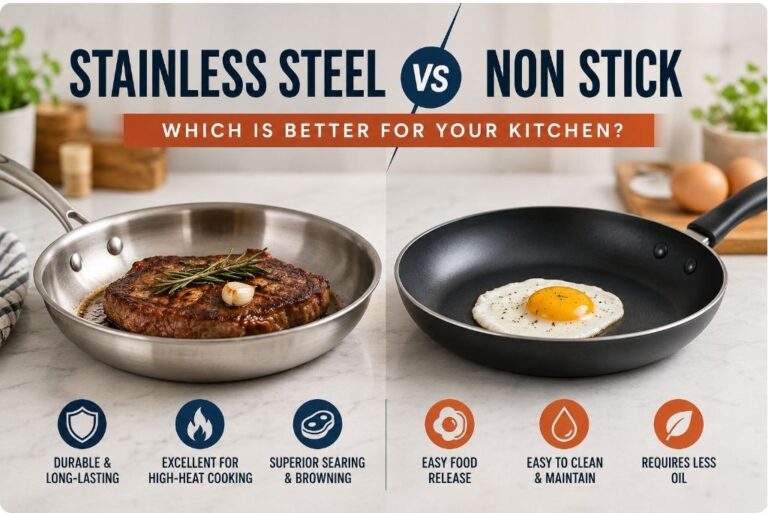
Read More: Stainless Steel vs Non-Stick Cookware
Which Cookware Should You Choose?
For beginners, nonstick is usually the easiest place to start. It is more forgiving, food is less likely to stick, and cleanup is simple. If you want cookware that makes everyday cooking feel easier, nonstick is a good choice.
For everyday home cooks, aluminum often makes more sense. It heats fast, gives better control, and can handle a wider range of meals. If you cook often and want one pan that can do more, aluminum is usually the better long-term pick.
For health-conscious users, the best choice depends more on how you cook than on the material alone. Both can be safe when used properly. If you want the simplest low-oil cooking, choose nonstick. If you want a more durable pan for regular use, aluminum is the stronger option.
If you cook at high heat, choose aluminum. It handles higher temperatures better and gives you better browning on foods like chicken, steak, and vegetables. Nonstick is not the best choice for very hot cooking.
If you want easy cleanup, nonstick wins. Food usually wipes off with little effort, which saves time after meals. It is the most convenient option for busy kitchens.
For budget-conscious shoppers, both can be affordable, but cheap nonstick pans often need replacing sooner. Aluminum usually gives better value over time because it tends to last longer, especially if you choose a well-made pan.
A simple way to decide is this: choose nonstick if you cook eggs, pancakes, or delicate foods and want the easiest cleanup. Choose aluminum if you want better heat control, more versatility, and longer-lasting value. For many kitchens, having one of each is the most practical setup.
Frequently Asked Questions
Is aluminum cookware safe?
Yes, aluminum cookware is generally safe for everyday use, especially when it is hard-anodized or coated. Plain aluminum may react with acidic foods, but normal cooking is not a problem for most people.
Is nonstick cookware safe?
Yes, nonstick cookware is safe when used the right way. The main thing to avoid is overheating an empty pan or using a badly worn coating.
Which lasts longer?
Aluminum usually lasts longer, especially hard-anodized aluminum. Nonstick pans usually wear out sooner because the coating eventually loses its slick surface.
Can aluminum replace nonstick?
Not completely. Aluminum is better for heat control and browning, but it does not stop food from sticking the way nonstick does. For some meals, nonstick is still the easier choice.
Which cookware is healthier?
Neither is automatically healthier. What matters most is how you cook. If you use less oil, a nonstick may fit your style better. If you want a durable pan for regular cooking, aluminum is a strong choice.
Which cookware is better for everyday cooking?
Aluminum is usually better for everyday cooking because it is more versatile and handles a wider range of foods well. Nonstick is better if your meals are mostly simple and stick-prone.
Which is easier to clean?
Nonstick is easier to clean. Most food wipes off with very little effort, which makes it the more convenient option after a busy meal.
Read More: Aluminum vs Ceramic Cookware
Final Verdict
Aluminum cookware is the better choice if you want fast heating, better control, and a pan that can handle a wider range of cooking tasks. It works especially well for people who cook often and want something more versatile for everyday meals.
Nonstick cookware is the better choice if your main goal is easy cooking and easy cleanup. It is the most convenient option for eggs, pancakes, fish, and other foods that tend to stick.
For most home cooks, aluminum offers the best overall value because it lasts longer and does more jobs well. But if convenience matters more than durability, nonstick may be the better fit.
The best choice depends on how you cook. If you want one pan for more serious everyday cooking, choose aluminum. If you want the easiest pan for simple meals, choose nonstick. There is no single winner for everyone, only the one that matches your kitchen habits best.