
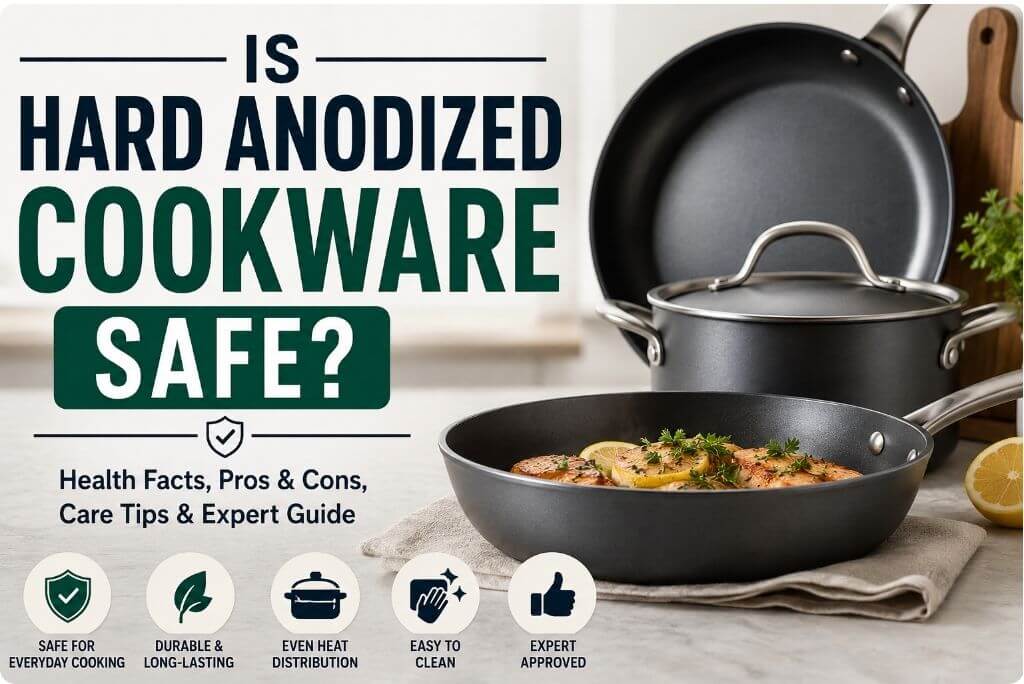
Is Hard Anodized Cookware Safe? A Complete Guide
If you have been wondering whether hard anodized cookware is safe, you are not alone. A lot of people like it because it heats well, feels lighter than cast iron, and often has an easy-release surface, but they still worry about aluminum, nonstick coatings, and what happens when a pan gets scratched or overheated. The good news is that, for most home cooks, hard anodized cookware is generally considered a safe and practical choice when it is used the right way and kept in good condition.
This guide breaks the topic down in plain English so you can understand what hard anodized cookware is, where the real safety concerns are, and how to decide whether a pan is still worth using or should be replaced.
Quick Answer: Is Hard Anodized Cookware Safe?
Yes, hard anodized cookware is generally safe for normal cooking. The anodizing process creates a hardened, corrosion-resistant surface that is integrated with the aluminum itself rather than sitting on top like paint, which is one reason it performs better than ordinary aluminum cookware.
The main safety questions are not about the anodized layer alone, but about the overall condition of the pan and any added nonstick coating. If the coating is badly worn, if the pan is overheated, or if the cookware comes from an unverified source, safety concerns increase.
What Is Hard Anodized Cookware?
Hard anodized cookware starts as aluminum, but the surface is changed through a special process that makes it much tougher. The aluminum is put through an electric bath, which creates a hard outer layer on top of the metal. This layer is not a coating that sits on top and can easily peel off. It becomes part of the surface itself.

That hardened layer matters because it helps protect the pan from reacting with food. Plain aluminum can react with acidic ingredients like tomato sauce or vinegar. Hard anodized aluminum is far less reactive, so it is better suited for everyday cooking.
How It Differs from Regular Aluminum Cookware
The biggest difference is strength. Regular aluminum is soft, so it can scratch, dent, and react with certain foods more easily. Hard anodized cookware is made to be more durable and more stable in the kitchen.
| Feature | Regular Aluminum | Hard Anodized Cookware |
| Reactivity | Can react with acidic foods | Much less reactive |
| Durability | Softer and easier to damage | Harder and more wear-resistant |
| Scratch resistance | Scratches more easily | Holds up better with normal use |
| Corrosion resistance | Can wear down faster | Better protection against corrosion |
| Everyday safety | Fine for some uses, but less stable over time | Generally a safer, more reliable choice for daily cooking |
Hard anodized cookware is not perfect. Some pans still have a nonstick coating that can wear out over time, and very rough use can damage any cookware. But compared with regular aluminum, it is usually the stronger and safer option for most home kitchens.
Is Hard Anodized Cookware Safe?
Yes—hard anodized cookware is generally safe for everyday cooking when it is made well and used as directed. The anodizing process changes the surface of the aluminum into a hard aluminum-oxide layer that is durable and corrosion-resistant, and that layer is bonded into the metal instead of sitting on top like paint. In simple terms, it helps protect the food from direct contact with the aluminum underneath.
A common myth is that hard anodized cookware is just plain aluminum with a thin finish. It is not. The surface itself has been changed, which is why it holds up better than regular aluminum cookware. Research on cookware leaching also shows that neutral foods cause little metal release, while acidic foods can increase leaching in aluminum cookware in general, so the protective layer matters most when you cook things like tomato sauce, vinegar-based dishes, or lemon-based recipes.
The main thing to watch is quality and condition. The FDA has warned that some imported aluminum cookware can leach lead, so it is smart to buy from reputable brands and replace pans that are badly damaged, peeling, or warped. Used normally, hard anodized cookware is a practical and safe choice for most home kitchens, but it still needs sensible care.
Does Hard Anodized Cookware Leach Aluminum?
Yes, but usually much less than untreated aluminum cookware. Aluminum can move into food, and that transfer is more likely when the food is acidic, like tomato sauce, vinegar-based dishes, or citrus recipes. EFSA notes that chemicals from food-contact materials can transfer into food, and research on aluminum cookware has found more leaching from new cookware and from acidic foods.
Hard anodized cookware is different because its surface has been changed into a hard aluminum-oxide layer. That layer acts like a protective barrier, so the food is not touching bare aluminum the way it does in untreated pans. Based on that surface change, hard anodized cookware is generally considered a safer choice than regular aluminum for everyday cooking.
The practical takeaway is simple: hard anodized cookware is usually a good option for normal home cooking, even with acidic foods, as long as the pan is in good condition. If the surface is badly damaged or worn through, it is smart to replace it, because the protection is no longer doing its job as well.
Is the Nonstick Coating Safe?
Hard anodized cookware itself is not the same as the nonstick coating on top of it. The hard anodized base is the durable metal body, while the cooking surface may also have a separate nonstick layer. That is why it helps to check the label and know exactly what kind of pan you have. The FDA says PFAS are used in some food-contact applications, including nonstick coating applications, and it also notes that very small amounts can enter food through cookware.
For many modern pans, the main concern is PTFE, the material often used in nonstick coatings. PTFE is generally considered fine for normal home cooking, but it should not be overheated. Guidance commonly says to keep it at normal cooking temperatures and avoid empty, high-heat preheating, because PTFE can begin to break down at around 500°F (260°C) and release fumes.
PFOA is a different issue. It is an older PFAS chemical that regulators have worked to phase down, and it is not the same thing as PTFE. “PFOA-free” is a reassuring label, but it does not mean a pan can be overheated safely. If the pan smokes, smells sharp, or has a damaged coating, lower the heat and replace it if the surface is worn. Overheated PTFE can release fumes that are especially dangerous for pet birds.
When Can Hard Anodized Cookware Become Unsafe?
Hard anodized cookware is usually safe, but like any pan, it should be replaced when the surface is badly worn. Small marks are normal. The real concern is damage that reaches the protective layer or makes the pan hard to clean and use safely.
Deep scratches are worth watching. If the scratch is only on the surface, the pan may still be fine. If you can see exposed metal, or if the damage keeps getting worse, it is better to replace it.
Peeling or flaking coating is a clear warning sign. Once the coating starts coming off, the pan is no longer in good condition for regular cooking. The same goes for pans that have been overheated so badly that the surface looks burnt, warped, or changed in color in a way that does not go away.
Replace or Continue Using?
| Condition | What to Do |
| Small surface marks | Continue using |
| Light scratches with no exposed metal | Usually fine |
| Deep scratches that expose metal | Replace soon |
| Peeling or flaking coating | Replace |
| Warped, burnt, or damaged by extreme heat | Replace |
| Loose handle or broken part | Replace |
The simple rule is this: if the pan still has a solid surface and cooks normally, it is usually fine. If the surface is coming apart, badly warped, or clearly worn out, it is time to stop using it.
Here’s a concise, reader-friendly section that avoids repetition while giving readers practical information.
Pros and Cons of Hard Anodized Cookware
Hard anodized cookware is a favorite in many kitchens because it offers a good balance of performance, durability, and convenience. It heats quickly, is comfortable to handle, and is easier to maintain than many other cookware materials.
That said, no cookware is perfect. Understanding both the advantages and the limitations will help you decide if it’s the right choice for your cooking style.
| Pros | Cons |
| Durable surface that resists everyday wear | Nonstick coating can wear out over time (on coated models) |
| Heats evenly to help reduce hot spots | Some models do not work on induction cooktops |
| Lightweight and easy to lift compared to cast iron | Not designed for extremely high-heat cooking |
| Smooth surface makes cleaning quick and easy | Usually costs more than basic aluminum cookware |
| Better resistance to rust and corrosion than regular aluminum | May need replacing sooner than stainless steel if the coating wears out |
For most home cooks, the advantages outweigh the drawbacks. If you cook at medium heat, take reasonable care of your cookware, and don’t need induction compatibility, hard anodized cookware is a reliable choice that can serve you well for many years.
Hard Anodized Cookware vs Other Cookware Materials
Hard anodized cookware sits in a useful middle ground. It is usually safer and more durable than basic aluminum, easier to handle than cast iron, and less demanding than stainless steel. It is not always the best choice for every cook, but it works well for many everyday kitchens.
| Material | Safety | Durability | Heat Performance | Maintenance | Best For |
| Hard anodized | Generally very safe when used properly | Very good | Heats evenly and quickly | Easy to clean; coating may wear on some pans | Everyday cooking, families, busy home cooks |
| Stainless steel | Very safe | Excellent | Good, but can have hot spots | Easy to maintain, but food may stick more | Searing, browning, long-term use |
| Ceramic | Usually safe, but coatings can wear | Moderate | Heats well at first, but performance can drop | Easy at first; surface may lose nonstick feel | Low-oil cooking, short to medium-term use |
| Cast iron | Very safe when cared for | Excellent | Holds heat very well, but heats slowly | Needs more care and seasoning | Frying, searing, rustic cooking |
| Traditional aluminum | Safe in many cases, but less protective | Lower than hard anodized | Heats fast | Can scratch and react more easily | Budget cooking, light use |
If you want something lightweight, easy to clean, and dependable for daily cooking, hard anodized cookware is a strong choice. If you want the most long-lasting option, stainless steel or cast iron may be better. If you prefer a pan that feels easier to use than cast iron but less fussy than stainless steel, hard anodized cookware is often the sweet spot.
How to Keep Hard Anodized Cookware Safe
A little care goes a long way. Hard anodized cookware is designed for everyday use, but the way you cook and clean it has a big impact on how long it lasts.
Cook on low to medium heat for most meals. Hard anodized aluminum heats up quickly, so high heat is rarely needed. Using moderate heat also helps protect the cooking surface and reduces the chance of damaging a nonstick coating.
Choose utensils made from wood, silicone, or nylon whenever possible. They are gentler on the surface and help prevent unnecessary scratches. If your pan has no nonstick coating, check the manufacturer’s instructions before using metal utensils.
Clean the pan with warm water, mild dish soap, and a soft sponge after it has cooled. Avoid steel wool, abrasive cleaners, and harsh scouring pads, as they can wear down the surface over time.
Store your cookware carefully to prevent scratches. If you stack pans, place a pan protector, soft cloth, or paper towel between them to keep the cooking surfaces from rubbing together.
The most common mistakes are overheating an empty pan, using sharp metal tools on coated cookware, and cleaning a hot pan with cold water. Avoiding these habits will help your cookware stay safe, perform better, and last for many years.
Read More: Can I Use Induction Cookware on a Gas Stove?
When Should You Replace Hard Anodized Cookware?
Hard anodized cookware does not last forever. If the pan is still smooth, flat, and cooking well, you can usually keep using it. But once the surface or body starts to fail, it is safer to replace it.
The clearest warning sign is peeling coating. If the cooking surface is coming off, the pan is no longer in good shape for regular use. Deep scratches that expose metal are another reason to stop using it, especially if the damage keeps spreading.
A warped base is also a problem. A pan that sits unevenly on the burner may heat badly and cook food unevenly. If the handle feels loose, cracked, or unstable, replacement is the safer choice.
Persistent sticking is another clue that the surface is wearing out. If food suddenly starts sticking much more than it used to, the pan may be losing its nonstick performance or protective finish.
| Condition | What It Usually Means |
| Peeling coating | Replace now |
| Deep scratches exposing metal | Replace soon |
| Warped base | Replace if it no longer sits flat |
| Persistent sticking | Surface may be worn out |
| Loose handle | Replace for safety |
A good rule is simple: if the pan still looks solid and works normally, keep using it. If the surface is damaged, uneven, or falling apart, it is time for a new one.
Best Hard Anodized Cookware Brands
Most major cookware brands offer safe, well-made hard anodized cookware. Instead of choosing a brand based on advertising alone, look for one with a solid reputation, clear care instructions, and a warranty that shows the company stands behind its products.
| Brand | What It’s Known For | Best For |
| Calphalon | Durable hard anodized cookware with reliable nonstick performance | Everyday home cooking |
| All-Clad | Premium build quality and excellent heat distribution | Serious home cooks and long-term use |
| Anolon | Comfortable handles and durable nonstick surfaces | Frequent daily cooking |
| Cuisinart | Good quality at a reasonable price | Budget-conscious families |
| T-fal | Affordable cookware that’s easy to use and maintain | Beginners and casual cooks |
| Ninja | Modern cookware with durable coatings and oven-safe designs on many models | Busy households and versatile cooking |
No matter which brand you choose, check a few key details before buying. Make sure the cookware is PFOA-free, compatible with your cooktop, oven-safe if you plan to bake, and backed by a good warranty. Reading recent customer reviews can also help you spot any common issues with durability or performance.
A trusted brand is a good starting point, but proper care matters just as much. Even the best cookware will last longer and stay safer when it’s used according to the manufacturer’s instructions.
Read More: Is Carote Cookware Safe?
Frequently Asked Questions
Is hard anodized cookware toxic?
For normal home use, quality hard anodized cookware is generally not considered toxic. The anodized surface is durable and corrosion-resistant, and the main safety concerns come from damaged coatings, poor-quality imports, or misuse rather than the basic hard anodized material itself.
Can I cook acidic foods in it?
Yes, quality hard anodized cookware is commonly used for tomato sauces, vinegar-based dishes, and citrus-heavy recipes. The anodized surface is designed to be more stable than raw aluminum, but long cooking times, poor quality, or damaged surfaces are still worth avoiding.
Is the dishwasher safe?
Some pans are labeled dishwasher safe, but hand washing is usually gentler and helps the surface last longer. Consumer Reports notes that harsh detergents and high heat can shorten the life of nonstick cookware and damage the finish.
Does it contain PFOA or PFAS?
Many modern nonstick coatings used on cookware are not made the way older coatings were, and the FDA says some PFAS used in nonstick cookware coatings are polymerized and tightly bound with negligible migration to food. Still, if avoiding PFAS is your priority, uncoated stainless steel or cast iron may be simpler choices.
Is scratched hard anodized cookware safe?
A light scratch is not always an emergency, but deep damage is a warning sign. If the coating is peeling, flaking, or exposing the base material, replacement is the safer choice.
Final Verdict
So, is hard anodized cookware safe? For most people, yes. A quality pan with a well-made anodized surface is a practical and generally safe choice for everyday cooking, especially when you treat the nonstick layer gently and avoid questionable imports. The key is not just the material name. It is the quality of the product, the condition of the cooking surface, and how carefully you use it.
If you want a lightweight pan that heats quickly, cleans easily, and holds up better than bare aluminum, hard anodized cookware is a smart option. If you prefer a coating-free surface or plan to cook very hard at very high heat, stainless steel or cast iron may suit you better. The best choice is the one that fits your cooking style and that you can keep in good condition for the long run.


One Comment