Cast Iron vs Stainless Steel: Which Cookware Is Better?
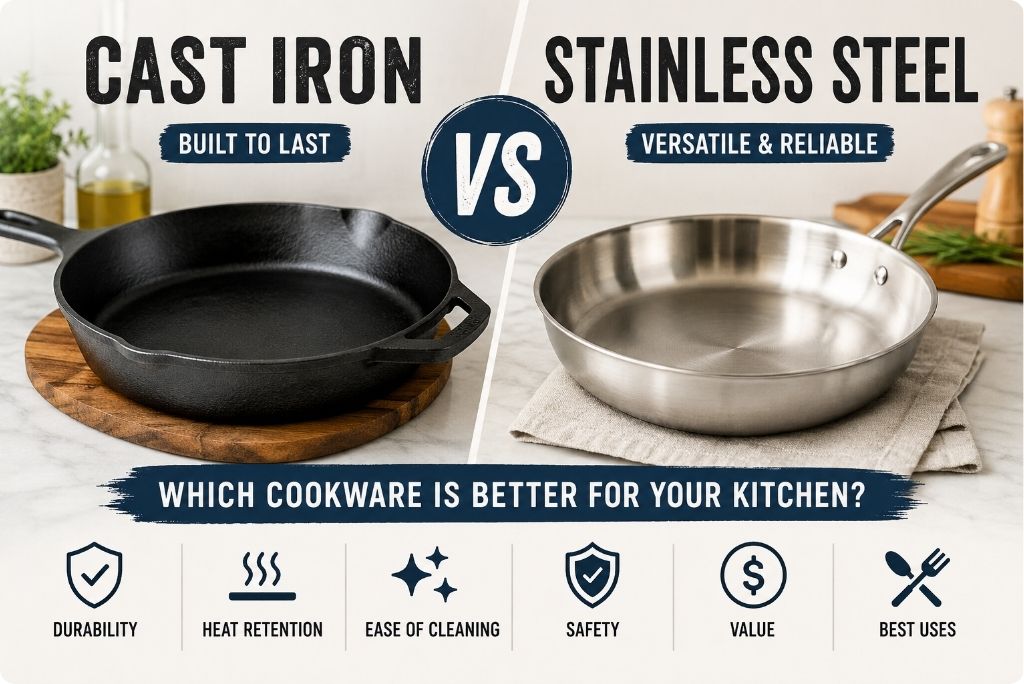
Choosing between cast iron and stainless steel can be confusing because both are popular, long-lasting, and widely used in home kitchens. At first glance, they may seem similar, but each one performs differently when it comes to heat retention, cooking control, maintenance, and the types of food they handle best.
If you are trying to decide which cookware is better for everyday cooking, this Cast Iron vs Stainless Steel comparison will help you make a clear choice. We will break down the real differences in performance, safety, durability, cleaning, and value so you can choose the right pan for your kitchen, cooking style, and budget.
Whether you are a beginner looking for easy-to-use cookware or a home cook who wants better searing and long-term performance, this guide will help you understand which option is the better fit—and when it makes sense to own both.
Cast Iron vs Stainless Steel: Quick Comparison
| Factor | Cast Iron | Stainless Steel |
| Cooking performance | Best for strong searing and steady, even heat | Best for everyday cooking and flexible use |
| Heat retention | Excellent | Good, but not as strong |
| Heat responsiveness | Slow to heat up and slow to cool down | Heats up faster and adjusts to heat changes more quickly |
| Durability | Very durable, but can rust if not cared for | Very durable and easier to keep in good shape |
| Maintenance | Needs seasoning and dry storage | Low maintenance; usually easier for daily use |
| Cleaning | Takes more care to clean properly | Easier to clean, especially after regular cooking |
| Reactivity with acidic foods | Not ideal for long cooking with tomatoes, vinegar, or citrus | Better for acidic foods |
| Oven safety | Very oven-friendly | Also oven-safe in most cases |
| Weight | Heavy | Usually lighter and easier to handle |
| Lifespan | Can last for decades or even generations | Can also last for many years |
| Price | Often very affordable | Often costs more, especially good-quality pans |
| Best for | Searing, frying, baking, and heat-heavy cooking | Everyday meals, sauces, vegetables, and low-fuss cooking |
Cast iron is the stronger choice when you want deep browning and steady heat. Stainless steel is the easier choice when you want a pan that fits into everyday cooking with less upkeep.
If you cook a little of everything, the table above usually makes the decision clear: cast iron is the specialist, and stainless steel is the everyday all-rounder.
What Is Cast Iron Cookware?
Cast iron cookware is made by pouring melted iron into a mold and letting it harden. That simple build is what gives it its weight and its ability to hold heat so well. It is a very old type of cookware, but it is still popular because it cooks well and can last for many years.

How It’s Made
Most cast iron pans are made from one solid piece of iron. That means there are no layers or hidden cores inside. Because of that, the pan heats slowly, but it also stays hot for a long time once it gets going.
Types of Cast Iron
Bare cast iron is the classic type. It needs seasoning, which means a thin layer of oil is baked onto the surface to help protect it and reduce sticking. It can work very well, but it does need regular care.
Enameled cast iron has a smooth coating on top of the iron. This makes it easier to use and removes the need for seasoning. It is also a better choice for simmering sauces and cooking acidic foods, though the coating can chip if it is handled roughly.
Best Uses
Cast iron works best for foods that need strong heat and steady cooking. It is a great choice for steak, burgers, cornbread, roasted vegetables, and oven dishes. It is less convenient for quick everyday meals, mostly because it is heavy and takes more care to clean and store properly.
What Is Stainless Steel Cookware?
Stainless steel cookware is made from a metal blend that resists rust and holds up well over time. It is one of the most common choices in home kitchens because it is sturdy, low-fuss, and works for many types of cooking.

How It’s Made
Most stainless steel pans are not made from stainless steel alone. Many have a layer of aluminum or copper inside to help the pan heat more evenly. That extra layer makes a big difference, because plain stainless steel can heat unevenly on its own.
Multi-Ply vs Single-Ply
Single-ply cookware is made from one layer of metal. It is usually cheaper, but it may heat unevenly and feel less stable on the stove.
Multi-ply cookware has several layers bonded together. This usually gives better heat control and more even cooking, which is why it is often the better choice if you cook often. It usually costs more, but it also tends to perform better.
Best Uses
Stainless steel is a strong choice for everyday cooking. It works well for sautéing vegetables, making pan sauces, cooking pasta, browning meat, and preparing acidic foods like tomato-based dishes. It is not naturally nonstick, so it works best when you preheat it properly and use a little oil.
Cast Iron vs Stainless Steel: Detailed Comparison
Cooking Performance
Cast iron is the better choice when you want a hard sear. It gets very hot and stays that way, so it works well for steak, burgers, and anything that needs a deep brown crust. It is also great for baking, especially when you want the pan to hold steady heat in the oven.
Stainless steel is more flexible for everyday cooking. It browns food well, and it is usually the easier pan to use for vegetables, sauces, fish, and quick stovetop meals. It does not give quite the same heavy sear as cast iron, but it handles a wider range of foods with less effort.
Heat Retention and Heat Control
Cast iron holds heat longer than stainless steel. That is useful when you add cold food to the pan, because the temperature does not drop as quickly. The trade-off is that it heats up slowly and takes longer to cool down.
Stainless steel responds faster when you change the heat. That makes it easier to cook more delicate foods or adjust the temperature during cooking. It gives you more control, while cast iron gives you more staying power.
Durability and Lifespan
Both materials can last a very long time, but they age differently. Cast iron is extremely tough, but it can rust if it stays wet or is not cared for properly. It can also crack if it is dropped or shocked by sudden temperature changes.
Stainless steel is easier to keep in good shape. It resists rust, does not need seasoning, and handles daily use well. Good stainless steel cookware can last for years, and cast iron can last for generations.
Maintenance and Cleaning
Cast iron needs more care. It should be dried well, lightly oiled when needed, and cleaned gently so the seasoning stays in place. That extra step is worth it for many cooks, but it is not the most convenient option.
Stainless steel is much easier to live with. You can wash it like a normal pan, and it does not need special upkeep. It is still helpful to clean it soon after cooking, especially if food is stuck on, but the routine is simpler.
Safety
For most everyday cooking, stainless steel is the safer and easier choice for acidic foods like tomatoes, vinegar, and lemon-based sauces. It is non-reactive, so it does not change the flavor of the food in the same way bare cast iron can.
Cast iron is also safe to use, but it can add small amounts of iron to food, especially with acidic recipes. For many people, that is not a problem. Still, if you cook acidic dishes often, stainless steel is usually the more practical option.
Weight and Ease of Use
Cast iron is heavy. That weight helps it hold heat, but it also makes it harder to lift, wash, and store. Some people love the solid feel, while others find it tiring to use every day.
Stainless steel is usually lighter and easier to handle. That makes it a better fit for busy kitchens, quick meals, and anyone who wants cookware that is easy to move around.
Price and Long-Term Value
Cast iron is often cheaper to buy, and it can still give excellent long-term value because it lasts so long. A good skillet can stay useful for decades if it is cared for properly.
Stainless steel usually costs more, especially if you buy a well-made multi-ply pan. But it often pays off in convenience, easier care, and more consistent everyday use. In practice, cast iron is the better budget pick, while stainless steel is often the better low-maintenance investment.
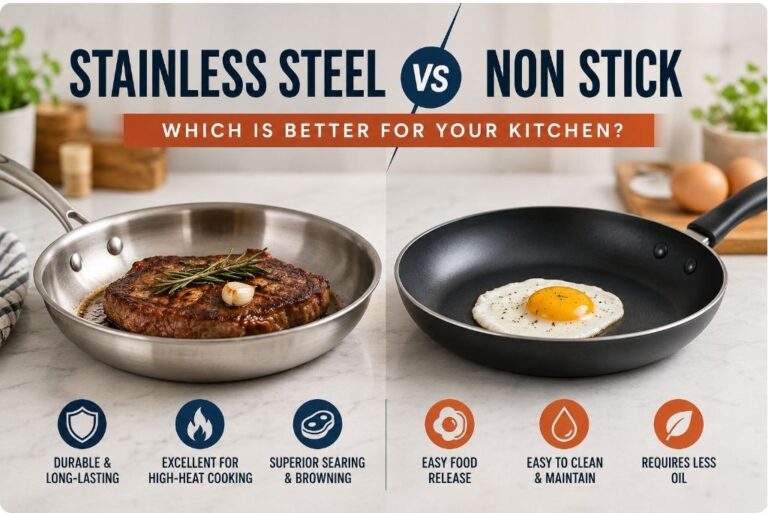
Read More: Stainless Steel vs Non-Stick Cookware
Which Cookware Should You Choose?
There is no single winner because the best cookware depends on how you cook. If you’re still unsure, these recommendations can help you make the right choice.
| If You Are… | Best Choice | Why |
| A beginner | Stainless Steel | Easier to care for and works well for many everyday meals. |
| A busy home cook | Stainless Steel | Quick to clean, low maintenance, and suitable for a wide range of recipes. |
| A health-conscious family | Stainless Steel | Non-reactive surface makes it a good choice for cooking everything, including acidic foods like tomato-based dishes. |
| A serious home cook | Both | Stainless steel handles everyday cooking, while cast iron shines when you want the best sear or oven performance. |
| A budget buyer | Cast Iron | A quality cast iron skillet is often inexpensive and can last for decades with proper care. |
If you’re buying your first piece of cookware, stainless steel is usually the safest choice because it is versatile and easy to live with. If you already have the basics covered, adding a cast iron skillet gives you another tool for recipes that benefit from steady, high heat.
For many kitchens, the best solution isn’t choosing one over the other—it’s using each where it performs best.
Pros and Cons
Both cast iron and stainless steel are excellent cookware, but they have different strengths. Looking at the advantages and drawbacks side by side can help you decide which one fits your cooking style.
Cast Iron Pros and Cons
| Pros | Cons |
| Excellent heat retention for searing and baking | Heavy and harder to lift |
| Can develop a naturally nonstick surface with proper seasoning | Needs regular seasoning and care |
| Extremely durable and can last for generations | Can rust if left wet |
| Works on almost all stovetops and in the oven | Takes longer to heat up |
| Often more affordable than high-end stainless steel | Bare cast iron is not ideal for long cooking with acidic foods |
Cast iron is a great choice if you enjoy cooking at high heat and do not mind a little extra maintenance. With proper care, it can be one of the longest-lasting pieces of cookware you will ever own.
Stainless Steel Pros and Cons
| Pros | Cons |
| Easy to clean and maintain | Food can stick if the pan is not preheated properly |
| Safe for cooking acidic foods | Does not hold heat as long as cast iron |
| Durable and resistant to rust | Good-quality multi-ply cookware can be expensive |
| Heats up and cools down more quickly | Thin, low-cost pans may heat unevenly |
| Suitable for many different cooking methods | Requires a little practice to prevent sticking |
Stainless steel is the better fit if you want cookware that is versatile, low maintenance, and easy to use every day. While it has a small learning curve, especially for beginners, it becomes very reliable once you learn the right cooking technique.
Which Cookware Should You Choose?
The right choice depends on how you cook, how much time you want to spend on maintenance, and what foods you make most often. Here’s a simple guide to help you decide.
| If You Are… | Best Choice | Why |
| A beginner | Stainless Steel | Easier to care for, versatile, and works well for many everyday meals. |
| A busy home cook | Stainless Steel | Quick to clean, low maintenance, and ideal for frequent use. |
| A health-conscious family | Stainless Steel | Non-reactive with acidic foods and a practical choice for everyday cooking. |
| A serious home cook | Both | Stainless steel handles daily cooking, while cast iron excels at high-heat searing and baking. |
| A budget buyer | Cast Iron | Usually costs less and can last for decades with proper care. |
If you’re buying your first quality pan, stainless steel is the safest all-around choice because it can handle almost any recipe with very little upkeep.
If you enjoy cooking steaks, burgers, homemade bread, or other dishes that benefit from steady, high heat, adding a cast iron pan is a worthwhile upgrade.
If your budget allows, owning one stainless steel pan and one cast iron skillet gives you the most flexibility. Together, they can handle almost every cooking task in a home kitchen.
Care Tips
Taking good care of your cookware helps it cook better and last much longer. The good news is that both cast iron and stainless steel are easy to maintain once you know the basics.
Cast Iron Care
Wash the pan with warm water and a soft brush or sponge soon after cooking. Avoid leaving it to soak for long periods, as standing water can lead to rust.
Dry the pan completely with a towel, then place it over low heat for a minute or two to remove any remaining moisture. If the surface starts to look dry or dull, rub on a very thin layer of cooking oil to help maintain the seasoning.
Store cast iron in a dry place. If you stack it with other pans, place a paper towel or pan protector between them to help protect the cooking surface.
Stainless Steel Care
Wash stainless steel with warm, soapy water after each use. For stuck-on food, let the pan soak for a few minutes before cleaning with a non-abrasive sponge.
If the pan develops stains, rainbow colors, or white spots from heat or hard water, a little white vinegar or a stainless steel cleaner can usually restore its shine.
To reduce sticking, let the pan preheat before adding oil. Once the oil is hot, add the food and give it time to release naturally before trying to flip or stir it. This simple step makes stainless steel much easier to cook with.
Related Topic: Ceramic vs Stainless Steel Cookware
Frequently Asked Questions
Is cast iron better than stainless steel?
Neither is better for every situation. Cast iron is excellent for high-heat cooking and baking, while stainless steel is more versatile and easier to use every day. The best choice depends on the types of meals you cook most often.
Which is healthier?
Both are considered safe cookware when used properly. Stainless steel is a good choice for cooking acidic foods because it is non-reactive. Bare cast iron can add small amounts of iron to food, which may be helpful for some people but is not necessary for everyone.
Which lasts longer?
With proper care, both can last for decades. Cast iron is famous for lasting generations, while high-quality stainless steel is also built for long-term everyday use.
Which is easier to clean?
Stainless steel is generally easier to clean because it does not need seasoning or special care. Cast iron requires a little more attention to prevent rust and keep its seasoned surface in good condition.
Which is better for steak?
Cast iron is usually the better choice. Its excellent heat retention helps create a rich, even crust while keeping the inside juicy.
Can both be used on induction cooktops?
Yes. Most cast iron cookware works on induction cooktops. Many stainless steel pans are also induction-compatible, but check the manufacturer’s instructions before buying because not every stainless steel pan is designed for induction.
Should I own both?
If you cook a wide variety of meals, owning both is a smart choice. Stainless steel is ideal for everyday cooking, while cast iron is perfect for recipes that benefit from steady, high heat. Together, they cover almost everything you need in a home kitchen.
Final Verdict
Cast iron and stainless steel are both excellent cookware choices, but they serve different purposes. Cast iron stands out for high-heat cooking, strong searing, and recipes that benefit from steady heat. Stainless steel is better for everyday meals because it is easier to maintain, more versatile, and works well with a wider range of ingredients.
If you cook a lot of steaks, burgers, roasted foods, or baked dishes, cast iron is a valuable addition to your kitchen. If you want one reliable pan for daily cooking, sauces, vegetables, and family meals, stainless steel is usually the better choice.
There is no single “best” cookware for everyone. The right choice depends on how you cook, what foods you prepare most often, and how much maintenance you are willing to handle.
For many home cooks, the ideal setup is not choosing one over the other—it is using stainless steel for everyday cooking and cast iron when you need powerful heat and excellent browning.