Stainless Steel vs Non-Stick Cookware: Which Is Better?
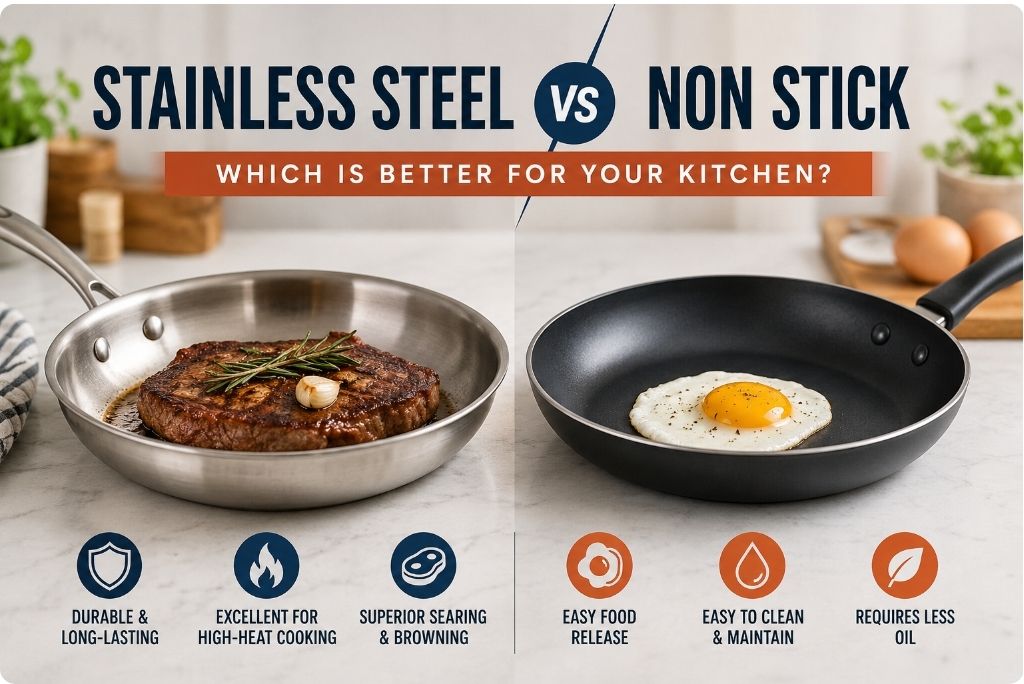
Choosing between stainless steel and non-stick cookware is really about matching the pan to the way you cook. Both are common food-contact materials used in home kitchens, but they solve different problems: stainless steel is built for durability, heat, and browning, while non-stick is built for easy release and low-stress cleanup.
Quick Comparison: Stainless Steel vs Non-Stick Cookware
If you want a pan that lasts a long time and handles many kinds of cooking, stainless steel is usually the better pick. If you want something easy to use and food slides off with very little effort, nonstick is often the easier choice.
| Feature | Stainless Steel | Non-Stick |
| Cooking performance | Great for browning, searing, and high-heat cooking | Best for simple cooking and delicate foods |
| Food release | Food can stick if the pan is not used correctly | Food usually releases very easily |
| High-heat cooking | Handles high heat well | Not ideal for high heat |
| Durability | Very durable and long-lasting | Coating wears out over time |
| Ease of cleaning | Can take more effort to clean | Usually very easy to clean |
| Maintenance | Needs a little more care and technique | Needs gentle care to protect the coating |
| Safety | Stable and reliable for everyday cooking | Safe when used properly, but should not be overheated |
| Lifespan | Often lasts for years | Usually has a shorter lifespan |
| Price | Often costs more at first | Usually cheaper to buy |
| Best for | People who want versatility and long-term value | People who want convenience and easy cooking |
In simple terms, stainless steel is better for durability and versatility. It is a stronger long-term choice and works well for many types of cooking.
Nonstick is better for convenience and delicate foods. It is easier for beginners, easier to clean, and helpful for eggs, pancakes, and fish. The trade-off is that it usually does not last as long.
What Is Stainless Steel Cookware?
Stainless steel cookware is made from a strong metal that does not rust easily and can handle everyday cooking very well. It is a popular choice for pans, pots, and saucepans because it is tough, long-lasting, and works for many types of meals.
Many good stainless steel pans are made with multi-ply or clad construction. That means the pan is built with more than one layer of metal, usually stainless steel outside and aluminum or copper in the middle. This helps the pan heat more evenly, so food cooks more consistently and you get fewer hot spots.

One of the biggest advantages of stainless steel is durability. It can handle high heat, works well for browning meat, and usually lasts for years. It is also a good all-purpose choice for cooking sauces, vegetables, and many everyday dishes.
The main drawback is that food can stick if the pan is not used the right way. Stainless steel also takes a little more practice than nonstick cookware, so it may feel less forgiving at first.
What Is Non-Stick Cookware?
Nonstick cookware is a pan with a special coating that helps food slide off more easily. This makes everyday cooking simpler, especially when you are cooking eggs, pancakes, or other delicate foods.
Most nonstick pans use a coating called PTFE, which is the material behind many familiar nonstick surfaces. Some pans use ceramic nonstick instead. Ceramic coatings can also reduce sticking, but they often wear down faster than good PTFE coatings.

The biggest advantage of nonstick cookware is convenience. It usually needs less oil, cleans up quickly, and is easier to use if you do not want to deal with food sticking to the pan.
The main downside is that the coating does not last forever. It can wear out, scratch, or lose its nonstick ability over time, especially if the pan is used on high heat or cleaned too harshly. That means nonstick cookware is useful, but it usually needs replacing sooner than stainless steel.
Stainless Steel vs Non-Stick Cookware: Detailed Comparison
Cooking Performance
For browning and searing, stainless steel is the stronger choice. It gives you better contact with the food and more flavorful browned bits in the pan, which is useful for meat, vegetables, and sauces. Stainless steel also performs well when you want a more serious, restaurant-style result.
Non-stick shines in the opposite kind of cooking. It is excellent for eggs, omelets, pancakes, fish, and other delicate foods that can fall apart easily. When the goal is a clean release with very little oil, non-stick usually wins.
Heat control matters too. Stainless steel handles high heat and rapid temperature changes better, while non-stick is better kept at low to medium heat. That makes stainless steel more flexible if you cook a wide range of meals.
Safety
Stainless steel is generally considered a safe cooking surface, but studies show that some stainless steel cookware can release small amounts of nickel and chromium into food, especially during longer cooking times and with acidic foods like tomato sauce. That does not make stainless steel dangerous for most people, but people with nickel sensitivity may want to pay closer attention.
Modern non-stick cookware is also generally safe when used properly. Food-safety guidance from the Singapore Food Agency and the German Federal Institute for Risk Assessment says PTFE-coated cookware should not be overheated, because very high temperatures can cause the coating to break down and release fumes. The safe-use message is simple: avoid empty-pan overheating, keep heat moderate, and replace pans that are badly worn or damaged.
So, which is safer? For everyday use, both can be safe when used correctly. Stainless steel is more tolerant of rough use, while non-stick requires more attention to heat and condition.
Durability and Lifespan
Stainless steel clearly wins on durability. It does not have a fragile coating that can wear off, and good-quality pans are often bought as long-term kitchen tools. That is why stainless steel is often treated as an investment rather than a disposable pan.
Non-stick cookware usually has a shorter life because the coating slowly breaks down through heat, scrubbing, and normal use. Once the surface is scratched, flaking, bubbling, or no longer releasing food well, the pan is near the end of its useful life.
If you want one pan that can stay in your kitchen for years without much worry, stainless steel is usually the better buy. If you want a pan that works beautifully for a few years and makes cooking easier every day, non-stick can still be worth it.
Cleaning and Maintenance
Non-stick is easier to clean day-to-day. A soft sponge, warm water, and mild soap are usually enough. It is less likely to need soaking or scrubbing, which makes it appealing for quick meals and busy nights.
Stainless steel usually needs more attention, especially after cooking proteins or sauces. The good news is that once you learn the basic method, it becomes much easier: preheat the pan, add oil at the right time, and let food release naturally before turning it. That small skill change solves most of the sticking complaints people have with stainless steel.
In practice, non-stick is easier to clean, but stainless steel is easier to trust over the long run.
Cost and Long-Term Value
Non-stick pans often cost less upfront, which makes them a good entry-level option. The trade-off is that they may need replacement sooner, especially if they are used heavily or exposed to high heat.
Stainless steel usually costs more at the beginning, particularly if you buy a good multi-ply pan or set. But because it lasts so much longer, it often delivers better value over time. That is why many cooks eventually move from cheap non-stick pans to at least one solid stainless steel skillet.
Which Cookware Is Better for Different Foods?
The best cookware often depends on what you’re cooking. Some foods need a surface that prevents sticking, while others benefit from higher heat and better browning. This quick guide can help you choose the right pan for the job.
| Food | Better Choice | Why |
| Eggs | Nonstick | Eggs release easily with little or no sticking. |
| Pancakes | Nonstick | Makes flipping easier and helps pancakes brown evenly. |
| Fish | Nonstick | Delicate fillets are less likely to break apart. |
| Steak | Stainless steel | Creates a deep, flavorful crust with high heat. |
| Chicken | Stainless steel | Produces better browning and helps lock in flavor. |
| Stir-fries | Stainless steel | Handles high heat needed for quick cooking. |
| Pan sauces | Stainless steel | The browned bits left in the pan create rich, flavorful sauces. |
If you mostly cook eggs, pancakes, or fish, a nonstick pan will make everyday cooking easier. If you regularly cook meat or want deeper flavor from browning, stainless steel is the better choice.
Many home cooks find that keeping one nonstick pan and one stainless steel pan covers almost every cooking task.
Pros and Cons
Both stainless steel and nonstick cookware have strengths and trade-offs. The right choice depends on what matters most to you, whether that’s long-term durability or everyday convenience.
Pros and Cons of Stainless Steel
Pros
- Very durable and built to last for many years.
- Handles high heat, making it great for searing and browning.
- Works well for many cooking methods, from frying to simmering sauces.
- Doesn’t have a coating that can wear away with normal use.
Cons
- Takes a little practice to prevent food from sticking.
- Usually, it costs more than nonstick cookware at first.
- Cleanup can take longer after cooking sticky or burnt foods.
Pros and Cons of Nonstick
Pros
- Food releases easily, even with very little oil.
- Quick and simple to clean after everyday meals.
- Easy to use, especially if you’re new to cooking.
- Great for delicate foods like eggs, pancakes, and fish.
Cons
- The nonstick coating gradually loses its performance over time.
- Not suitable for very high cooking temperatures.
- Usually needs replacing sooner than stainless steel cookware.
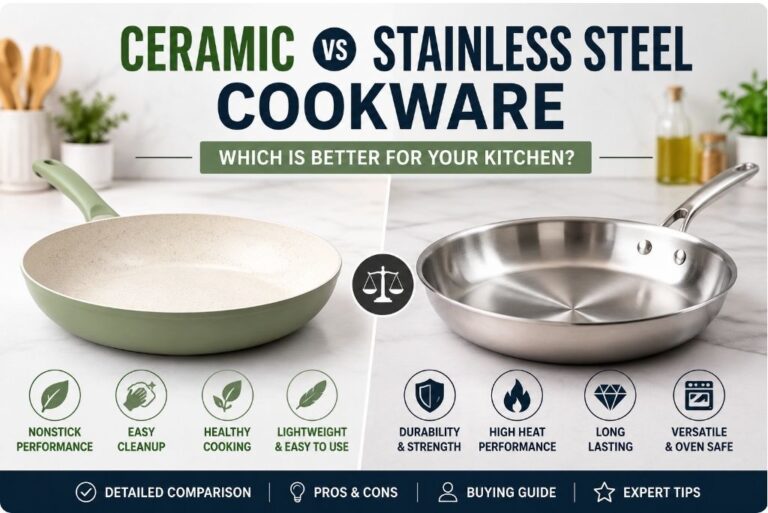
Read More: Ceramic vs Stainless Steel Cookware: Which Is Better
Which Cookware Should You Choose?
The better choice depends on how you cook most often. If you want a pan that can handle high heat, last for years, and give you better browning, stainless steel is the stronger long-term choice.
Choose stainless steel if you cook meat often, make sauces, or want cookware that can stay in your kitchen for a long time. It takes a little more practice, but it gives you more flexibility.
Choose nonstick if you cook eggs, pancakes, or other delicate foods often. It is easier to use, easier to clean, and a good choice if you want less oil and less effort.
For most kitchens, the best answer is to own both. A stainless steel skillet is great for everyday cooking that needs heat and flavor, while a nonstick skillet is helpful for quick meals and foods that stick easily. Together, they cover almost everything a home cook needs.
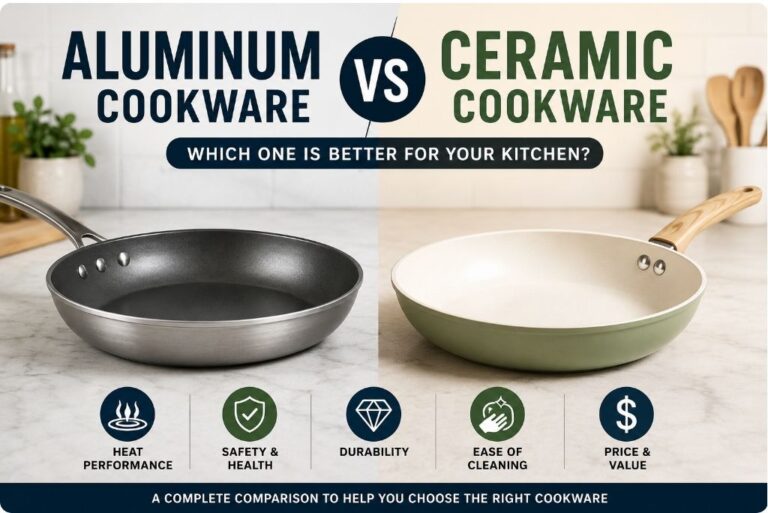
Read More: Aluminum vs Nonstick Cookware
Frequently Asked Questions
Is stainless steel healthier than nonstick?
Stainless steel is often seen as a safer long-term choice because it has no coating to wear off. That said, modern nonstick cookware is generally safe when used correctly.
Is modern nonstick cookware safe?
Yes, most modern nonstick cookware is safe for everyday use if you follow the heat limits and do not overheat the pan. The coating is the part that needs care.
Why does food stick to stainless steel?
Food usually sticks when the pan is not heated properly or when there is not enough oil. With the right heat and timing, stainless steel can work much better.
Which cookware lasts longer?
Stainless steel usually lasts much longer. Nonstick pans wear out faster because the coating slowly loses its effect over time.
Can stainless steel replace nonstick?
For many tasks, yes. Stainless steel can do most of the same jobs, but it takes more practice and is not as easy for foods like eggs or fish.
Which cookware is best for everyday cooking?
That depends on what you cook most. Nonstick is better for easy daily meals, while stainless steel is better if you want one pan that can handle more types of cooking.
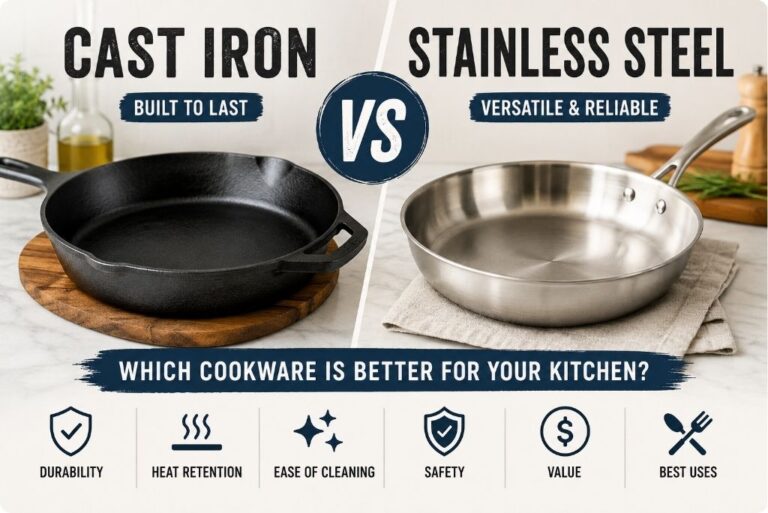
Read More: Cast Iron vs Stainless Steel
Final Verdict
If you want convenience, easy cleanup, and simple cooking for delicate foods, non-stick cookware is the better fit. If you want durability, better browning, and stronger long-term value, stainless steel is the better choice.
For most home kitchens, the best answer is not choosing one forever. It owns both, then uses each one for the kind of cooking it does best. That gives you easier mornings, better dinners, and fewer cooking frustrations overall.