How to Season a Cast Iron Pan for Beginners

Cast iron cookware can last for decades, but it does require a little more care than stainless steel or traditional nonstick cookware.
The most important part of that care is seasoning.
Seasoning is a layer of oil that has been heated onto the cast iron surface. It helps protect the pan from rust and creates a smoother, easier-release cooking surface over time. Lodge describes seasoning as oil baked onto cast iron through a process called polymerization.
But there is one important detail beginners often miss: you may not need to season a new cast iron pan at all.
Many modern cast iron pans are sold pre-seasoned and ready to cook with. If your pan already has a factory seasoning, you can usually wash, dry, add a little cooking oil, and start cooking.
This guide explains when seasoning is necessary, how to season a cast iron pan in the oven, how to maintain the seasoning, and how to fix common problems such as sticky surfaces, rust, and flaking.
Quick Answer: How Do You Season a Cast Iron Pan?
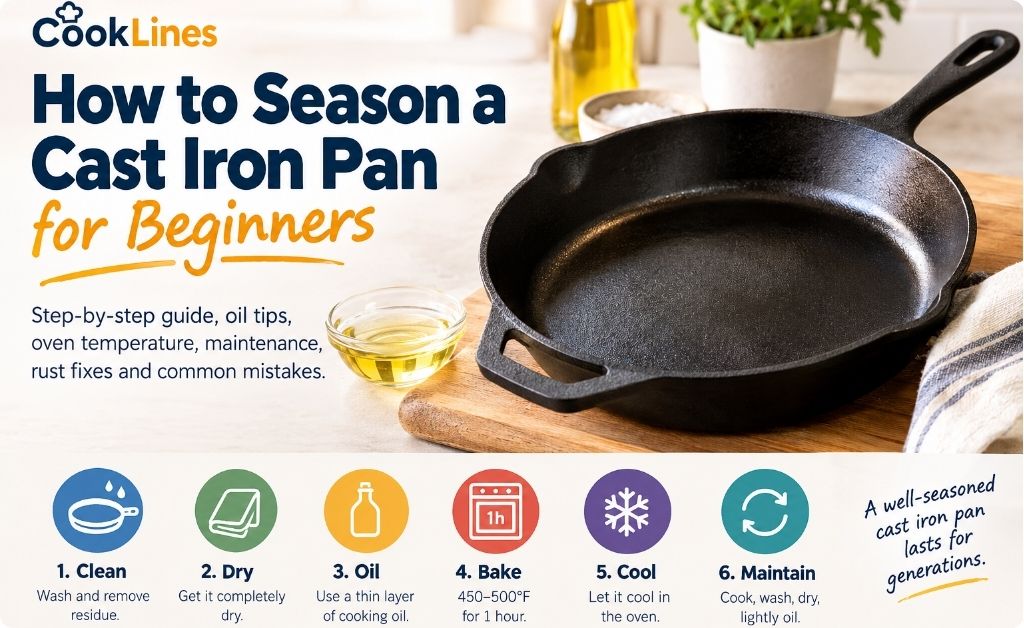
If your cast iron pan needs seasoning, the basic process is:
- Wash the pan with warm water and mild dish soap.
- Dry it completely.
- Apply a very thin layer of cooking oil.
- Wipe away excess oil until the surface looks almost dry.
- Place the pan upside down in an oven.
- Bake it at about 450–500°F for one hour.
- Turn off the oven and let the pan cool inside.
- Repeat the process if additional seasoning is needed.
Lodge currently recommends heating cast iron at 450–500°F for one hour when seasoning in the oven. It also emphasizes using a very thin layer of oil rather than leaving excess oil on the surface.
The exact instructions can vary by manufacturer, so check the care instructions supplied with your cookware before following a general seasoning method.
What Is Cast Iron Seasoning?
Despite the name, seasoning doesn’t mean adding salt, spices, or a special food coating to your pan.
Cast iron seasoning is simply oil that has been heated until it forms a hardened layer on the iron surface.
This process is known as polymerization.
When properly built up, the seasoning provides an easy-release cooking surface and helps protect the underlying iron from moisture and rust.
Seasoning isn’t a one-time treatment.
Every time you cook with some oil or fat, additional layers can build up. That’s why regular cooking is an important part of maintaining a cast iron pan.
Do You Need to Season a New Cast Iron Pan?
Not necessarily.
This is one of the most useful things for a beginner to understand.
Many modern cast iron pans come pre-seasoned from the factory.
For example, Lodge says its cast iron cookware is seasoned before it leaves the foundry and is ready to use after a quick rinse and drying.
If your new pan is labeled pre-seasoned, you generally don’t need to perform a full oven-seasoning process before your first meal.
Instead:
Wash → dry → add a little oil → cook.
Over time, regular cooking can continue building the seasoning.
When Should You Season a New Pan?
You may want to season or reseason it if:
- The manufacturer’s instructions recommend it.
- The surface has areas where seasoning has worn away.
- The pan develops light rust.
- Food begins sticking more than expected.
- Cleaning has removed part of the seasoning.
- The surface looks dry or uneven.
The important point is to follow the instructions for your particular cookware rather than assuming every cast iron pan needs exactly the same treatment.
What You’ll Need
For a basic oven-seasoning process, you only need a few things:
- Cast iron pan
- Cooking oil
- Paper towel or lint-free cloth
- Oven
- Baking sheet or aluminum foil
Lodge recommends neutral oils such as vegetable or canola oil for home seasoning and emphasizes applying only a thin layer.
You don’t need a special seasoning spray unless you prefer using one.
Step 1: Wash the Cast Iron Pan
Start with a clean pan.
Use warm water and mild dish soap to remove food residue, dust, or other material from the surface.
Modern dish soap is not automatically harmful to properly seasoned cast iron. Lodge explicitly says soap is acceptable for cleaning its cast iron cookware.
You don’t need to aggressively strip the entire pan unless you’re intentionally restoring damaged or heavily rusted cookware.
For a normal reseasoning job, the goal is simply to start with a clean surface.
Step 2: Dry the Pan Completely
Drying is extremely important.
Cast iron contains iron, and prolonged exposure to moisture can lead to rust.
After washing, wipe the pan thoroughly with a paper towel or lint-free cloth.
You can also place it on the stovetop over low heat for a short time to evaporate remaining moisture.
Lodge recommends completely drying cast iron before applying oil.
Don’t move to the oiling step while visible water remains on the surface.
Step 3: Apply a Very Thin Layer of Oil
Add a small amount of cooking oil to the pan.
Then spread it over the entire cooking surface.
For full reseasoning, the oil can also be applied to the exterior and handle according to the cookware manufacturer’s instructions.
The important word here is thin.
You might think more oil will create a better seasoning layer, but excessive oil can leave the surface sticky or gummy.
Lodge specifically recommends applying a very thin layer and wiping away excess oil before baking.
How Much Oil Should You Use?
You need much less than most beginners expect.
After rubbing the oil over the pan, take a clean paper towel and wipe the surface again.
The pan should look lightly coated rather than wet with oil.
If you can see pools or thick drops of oil, you’ve probably used too much.
Step 4: Wipe Away the Excess Oil
This step is easy to overlook, but it can make a major difference.
Take a clean paper towel and wipe the entire pan as though you are trying to remove almost all of the oil.
You’re not actually removing all of it.
You’re leaving behind an extremely thin layer.
That thin layer is what you want to bake into the surface.
Too much oil can produce an uneven or sticky finish. Lodge notes that sticky or gummy seasoning can result from applying too much oil or not heating it sufficiently.
Step 5: Put the Pan Upside Down in the Oven
Place the pan upside down on the oven rack.
Putting it upside down helps prevent oil from pooling on the cooking surface.
Lodge recommends placing aluminum foil on a lower oven rack to catch any excess oil that may drip during the process.
Make sure the pan is positioned securely and that any manufacturer-specific instructions are followed.
Step 6: Bake the Pan
Preheat the oven to approximately 450–500°F.
Place the pan inside and bake it for about one hour.
Lodge’s current reseasoning instructions use this temperature range and baking time.
Avoid opening the oven repeatedly.
The goal is to heat the oil sufficiently so that it forms the hardened seasoning layer.
Step 7: Let the Pan Cool in the Oven
Once the hour is finished, turn off the oven.
Leave the pan inside and allow it to cool gradually.
Lodge recommends cooling the cookware in the oven after seasoning.
The pan will be extremely hot, so don’t attempt to handle it with bare hands.
Step 8: Repeat if Necessary
One seasoning cycle may be enough for routine maintenance, but you can repeat the process if the surface needs additional seasoning.
Don’t judge the pan only by its color.
A cast iron surface doesn’t have to look perfectly black or glossy to work properly.
Lodge notes that variations in seasoning are normal and can even out with continued use.
In many cases, cooking regularly is more useful than repeatedly reseasoning the pan from scratch.
What Is the Best Oil for Seasoning Cast Iron?
There isn’t one magical oil that every cast iron owner must use.
For oven seasoning, choose a neutral cooking oil with an appropriate smoke point.
Lodge recommends vegetable oil or canola oil for home seasoning and notes that a high-smoke-point oil is useful for this purpose.
The most important factors are:
- Use a suitable cooking oil.
- Apply a very thin layer.
- Wipe away excess oil.
- Heat the pan adequately.
The technique matters at least as much as the specific oil.
How Often Should You Season Cast Iron?
There is no universal schedule.
A well-maintained cast iron pan doesn’t necessarily need to go through a full oven-seasoning process every few weeks or months.
Regular cooking with oil naturally adds to the seasoning layer. Lodge describes regular cooking as the easiest way to maintain and build seasoning.
Consider a full reseasoning when the surface has clearly deteriorated, rust has been removed, or the seasoning has become damaged or patchy.
If the pan is cooking well and the surface is stable, there may be no reason to strip and reseason it.
How to Maintain Cast Iron Seasoning
The simplest maintenance routine is:
Wash → dry → lightly oil.
After cooking:
- Allow the pan to cool enough to handle safely.
- Wash it with warm water.
- Use mild dish soap if needed.
- Remove stuck-on food with an appropriate brush or scraper.
- Dry the pan completely.
- Apply a very thin layer of cooking oil if needed.
Lodge recommends this basic wash, dry, and oil approach for everyday care.
You don’t need to perform a full oven seasoning after every meal.
Can You Use Soap on Seasoned Cast Iron?
Yes.
The old idea that all soap will destroy cast iron seasoning is outdated for modern dish soap.
Lodge specifically states that soap is acceptable for cleaning its cast iron cookware.
The more important concern is prolonged exposure to water.
After washing, dry the pan thoroughly.
Can You Cook Acidic Foods in Cast Iron?
Yes, but there is an important qualification.
Acidic ingredients such as tomatoes, citrus, and vinegar can affect the seasoning, particularly when the seasoning is new or not well established.
Lodge says small amounts of acidic ingredients can be fine, while larger amounts cooked for extended periods can break down seasoning. It recommends being more cautious with new cast iron and long acidic cooking times.
For a well-seasoned pan, a short tomato-based recipe or a quick deglaze may be perfectly practical.
For long acidic cooking, especially when the pan’s seasoning is still developing, enameled cast iron may be a better option.
What Happens If Cast Iron Seasoning Becomes Sticky?
Sticky seasoning usually means there is too much oil on the surface or the oil hasn’t fully bonded.
Don’t keep adding more oil.
Instead, clean the sticky surface and reassess the seasoning.
Lodge explains that excessive oil or insufficient heating can result in sticky seasoning and recommends additional heating as one way to correct it.
The next time you season, use considerably less oil.
Remember:
Thin layer, not wet layer.
What If the Seasoning Starts Flaking?
Small flakes don’t necessarily mean the entire pan is ruined.
Flaking can happen when seasoning layers haven’t fully bonded to the surface.
Lodge recommends scrubbing away loose seasoning with an appropriate nylon brush or salt, then rinsing, drying, oiling, and reseasoning if necessary.
If large areas repeatedly flake, the pan may need more thorough restoration.
How to Fix Rust on Cast Iron
Rust is a common cast iron problem, but light or moderate rust doesn’t automatically mean the cookware is finished.
The basic restoration process is:
Remove rust → wash → dry → oil → reseason.
For significant rust, Lodge recommends scrubbing the affected areas, washing the pan, drying it thoroughly, applying a thin layer of oil, and then reseasoning it in the oven.
Steel wool can be appropriate for rust removal during restoration, even though it isn’t recommended as an everyday cleaning method for maintaining seasoning.
How to Keep Cast Iron From Rusting
Rust prevention is mostly about moisture control.
After washing:
- Dry the pan completely.
- Don’t leave it soaking in water.
- Don’t store it while damp.
- Apply a very thin layer of oil when appropriate.
- Store it somewhere dry.
Lodge specifically warns that leaving cast iron in water, allowing it to air dry, or storing it in a moisture-prone environment can lead to rust.
Does Cast Iron Become Naturally Nonstick?
A well-seasoned cast iron pan can develop an easy-release cooking surface, but calling it identical to modern coated nonstick cookware can create unrealistic expectations.
Cast iron still benefits from proper preheating and a small amount of cooking oil.
Lodge recommends preheating cast iron gradually, avoiding unnecessarily high heat, and adding a little oil before cooking.
So seasoning helps, but cooking technique still matters.
Why Does Food Stick to My Seasoned Cast Iron Pan?
Seasoning isn’t the only factor controlling sticking.
Food may stick because:
- The pan wasn’t properly preheated.
- There wasn’t enough cooking fat.
- The food was moved too soon.
- The heat was too high or too low.
- The seasoning is damaged.
- The food contains a lot of moisture.
- The pan was overloaded.
Lodge’s cooking guidance recommends gradually preheating cast iron, adding some oil, and avoiding excessive heat.
If your food is sticking, don’t immediately assume the seasoning has failed.
Check your cooking technique first.
Cast Iron Seasoning Mistakes to Avoid
Using Too Much Oil
This is probably one of the most common seasoning mistakes.
A thick layer doesn’t create a better finish.
It can create a sticky surface instead.
Skipping the Drying Step
Moisture encourages rust.
Always dry the pan thoroughly.
Repeatedly Seasoning a Pan That Doesn’t Need It
If your pan is already well seasoned and cooking properly, constantly stripping and reseasoning it may be unnecessary.
Regular cooking can maintain the seasoning naturally.
Leaving the Pan Wet
Never put cast iron away while it is still wet.
Using Excessive Heat
Cast iron holds heat extremely well, so maximum burner settings aren’t necessary for many recipes.
Lodge recommends starting around medium or medium-low and adjusting as needed.
Cooking Long Acidic Recipes in New Cast Iron
Tomatoes, vinegar, citrus, and other acidic ingredients can challenge a new seasoning layer.
Build the seasoning first and use a different pan for long acidic cooking when appropriate.
Cast Iron Seasoning vs. Stainless Steel
It’s useful to understand the difference between the two cookware types.
| Feature | Cast Iron | Stainless Steel |
|---|---|---|
| Needs seasoning? | Seasoning is useful and protects the surface | No |
| Rust protection | Seasoning helps protect exposed iron | Stainless steel is naturally corrosion resistant |
| Heat retention | Very high | Depends on construction |
| Cooking fat | Helpful | Helpful |
| Permanent nonstick coating | No | No |
| Maintenance | Requires drying and seasoning care | Generally simpler |
| Acidic foods | Can affect seasoning during long cooking | Generally suitable |
| Long-term use | Can last for generations with proper care | Can also provide very long service life |
The main difference is that cast iron’s cooking surface benefits directly from maintaining its seasoning layer, while stainless steel does not depend on a baked-on oil layer.
That’s why you should not treat the two pans exactly the same.
Should You Strip and Reseason Cast Iron Regularly?
Usually, no.
If your pan is functioning well, there is little reason to strip away a good seasoning layer just because it isn’t perfectly smooth or evenly colored.
Seasoning naturally changes as you cook.
Lodge notes that uneven or patchy seasoning can be normal and can improve with continued use.
Full stripping and restoration makes more sense when the pan has significant rust, badly damaged seasoning, or another condition that cannot be corrected through normal maintenance.
A Simple Cast Iron Care Routine for Beginners
If you want the simplest routine possible, remember these four steps:
Cook → wash → dry → lightly oil.
That’s it for most everyday use.
You don’t need to perform a complete oven seasoning after every meal.
Use the oven-seasoning method when the pan genuinely needs a stronger seasoning layer.
Final Takeaway
Seasoning cast iron doesn’t need to be complicated.
If your pan is already factory-seasoned, you can usually start cooking without performing a full seasoning process. If the seasoning needs to be rebuilt, clean and completely dry the pan, apply an extremely thin layer of suitable cooking oil, and bake it according to the manufacturer’s recommended temperature and time.
The biggest mistake beginners make is usually using too much oil.
A good seasoning layer is thin, dry-looking, and built gradually.
Regular cooking, proper cleaning, thorough drying, and sensible heat control will often do more for your cast iron pan than repeatedly starting the seasoning process from scratch.
With consistent care, a cast iron pan can become a reliable everyday piece of cookware that gets easier to use over time.
Frequently Asked Questions
How often should I season a cast iron pan?
There is no fixed schedule. If the seasoning is intact and the pan cooks well, regular cooking can maintain it. Reseason when the surface has significant wear, rust, or other problems.
What is the best oil for seasoning cast iron?
Neutral cooking oils such as vegetable or canola oil are commonly recommended for home seasoning. The more important factor is applying a very thin layer rather than using a large amount of oil.
How long do you bake cast iron when seasoning it?
Lodge recommends baking at approximately 450–500°F for one hour when reseasoning its cast iron cookware. Follow your own manufacturer’s instructions if they differ.
Can I use soap on cast iron?
Yes. Modern dish soap can be used to clean seasoned cast iron. The important part is to dry the pan thoroughly afterward.
Why is my cast iron seasoning sticky?
A sticky surface can result from applying too much oil or not heating the seasoning sufficiently. Use a much thinner oil layer when seasoning and follow the recommended heating process.
Can I cook tomatoes in cast iron?
Yes, but long cooking with large amounts of acidic ingredients can affect the seasoning, especially on newer cookware. Shorter acidic recipes are generally less concerning once the seasoning is well established.
Why does my cast iron pan keep rusting?
The most common issue is moisture. Leaving cast iron wet, soaking it, or storing it in a damp environment can encourage rust. Dry it thoroughly after washing and maintain an appropriate protective oil layer.
Does a new cast iron pan need seasoning?
Not always. Many modern cast iron pans come pre-seasoned and ready to use. Check the manufacturer’s instructions before performing a full seasoning process.
Can I use metal utensils on cast iron?
Cast iron is durable, but utensil recommendations can vary by cookware and cooking situation. Lodge states that its cast iron cookware can be used with metal, wooden, and silicone utensils.
Is cast iron naturally nonstick?
Seasoned cast iron can develop an easy-release surface, but it does not behave exactly like modern coated nonstick cookware. Proper preheating, cooking fat, and heat control still matter.