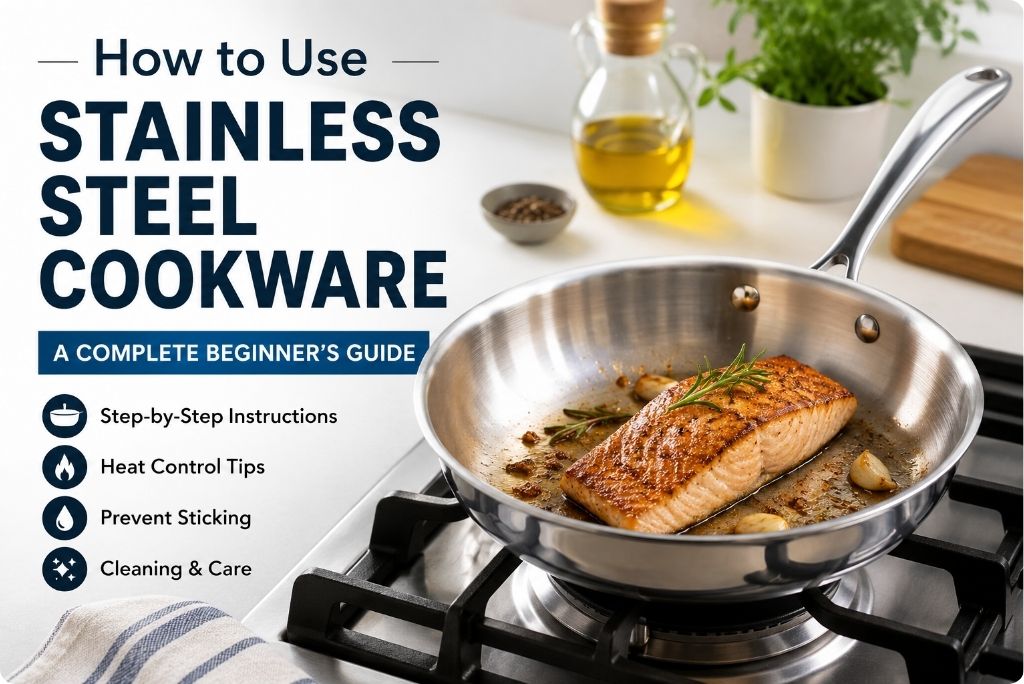
How to Use Stainless Steel Cookware: A Complete Beginner’s Guide
Learning how to use stainless steel cookware can take a little practice, especially if you’re used to nonstick pans. Food may stick, the pan may discolor, or the heat can seem difficult to control at first.
The good news is that stainless steel becomes much easier to use once you understand a few basic techniques. Preheating the pan, controlling the heat, using the right amount of oil, and giving food enough time to brown can make a big difference.
In this guide, you’ll learn how to use stainless steel cookware properly, prevent food from sticking, cook common foods, avoid common mistakes, and clean your cookware without unnecessary hassle.
How Does Stainless Steel Cookware Work?
Why Food Sticks to Stainless Steel
Stainless steel does not have a nonstick coating, so food can grip the surface more easily at first. That does not mean the pan is bad. It usually means the heat, moisture, or timing is off.
Cold food placed in a cold pan often sticks. Food that is wet can also cling and steam instead of browning. With proteins like chicken, steak, or fish, sticking is common at the start because the surface needs time to cook and form a crust. Once that crust forms, the food often releases on its own.
That is why patience matters. If you try to move the food too soon, it is more likely to tear or stick. Let it sit long enough to brown, and the pan usually does more of the work for you.
Why Stainless Steel Requires Different Cooking Techniques
Stainless steel works differently from nonstick cookware. With nonstick, the coating does most of the job. With stainless steel, the cook has to manage the heat, the oil, and the timing.
The biggest difference is temperature control. Stainless steel gives the best results when the pan is properly heated before the food goes in. If the heat is too low, food can stick and turn pale. If it is too high, oil can smoke and food can burn.
That is why stainless steel rewards a calmer approach. Preheat the pan, add the food at the right moment, and do not rush to flip it. Once you get used to that rhythm, stainless steel becomes very reliable for everyday cooking.

How to Use Stainless Steel Cookware Step by Step
Start with a clean, dry pan
Before heating, make sure the pan is clean and fully dry. Even a little water can affect how the pan heats and make cooking less predictable.
A clean surface also helps the food cook more evenly. If there is leftover grease or stuck-on food, it can burn and throw off the flavor of the dish.
Preheat the pan properly
Most stainless steel cooking works best over moderate heat. There is usually no need to blast the pan on high.
Let the pan warm up before adding anything. If the pan is overheated while empty, oil can smoke quickly and food can brown too fast on the outside while staying undercooked inside.
Test the pan’s temperature
A simple water-drop test can help. Drop in a tiny bit of water. If it beads up and skitters across the pan, the surface is ready.
If the water disappears too quickly, the pan may still be too cool. If it bursts into steam right away, the pan may be too hot.
Add the right amount of oil
Add the oil after the pan is warm, not before. You only need enough to coat the cooking surface in a thin layer.
If the oil smokes right away, the heat is too high. That usually means the pan needs a short break before you add the food.
Add dry food to the pan
Pat meat or fish dry before cooking. Wet food is more likely to stick and steam instead of brown.
Dry food makes better contact with the pan, which helps it cook more evenly. It also gives you a better crust and better flavor.
Let the food cook before moving it
This is the part many people rush. Food often sticks at first, but that does not always mean something is wrong.
As the surface browns, it usually releases more easily. If you force it too early, it can tear and stick more. A little patience here makes a big difference.
Adjust the heat while cooking
Once the food is in the pan, keep an eye on the heat. If the oil smokes or the food is browning too quickly, lower the heat.
If nothing seems to be happening, the heat may be too low. Stainless steel works best when you stay alert and make small adjustments instead of leaving the heat untouched the whole time.
How to Cook Different Foods in Stainless Steel Cookware
How to Cook Steak
Steak is one of the best foods to cook in stainless steel because the pan helps build a strong brown crust. Start by heating the pan well, then add a little oil and place the steak in the pan once the surface is hot.
Do not move it too soon. The steak will usually release more easily after the crust forms. Flip it when the first side has browned and no longer feels stuck.
How to Cook Chicken
Chicken needs steady heat more than high heat. If the pan is too hot, the outside can brown too fast while the inside stays undercooked. If it is too cool, the chicken may stick and cook unevenly.
Pat the chicken dry before it goes into the pan. That helps it brown instead of steam. Let it cook long enough on the first side to release naturally, then finish cooking at a controlled heat until it is done all the way through.
How to Cook Fish
Fish can be delicate, so the surface needs to be dry and the pan needs enough oil. A damp fillet is more likely to stick and break apart when you try to flip it.
Use moderate heat and give the fish time to set before moving it. If it still feels stuck, it likely needs a little more time. Once the outside firms up, it usually lifts much more easily.
How to Cook Eggs
Eggs are harder to cook in stainless steel than in nonstick pans, but they can still work well with the right heat. Use low to medium heat and enough fat to coat the pan lightly.
The main challenge is that eggs are sensitive to heat. Too much heat makes them set too quickly and stick more. A slower, gentler cook usually gives you better results.
How to Cook Vegetables
Vegetables cook best when the pan is hot enough to brown them, but not so hot that they burn. Add them in a single layer if possible, because crowded vegetables release too much moisture and start to steam.
Let them sit long enough to pick up color before stirring. That is what gives you better flavor and a nicer texture. If the pan looks dry, add a little more oil rather than turning the heat too high.
How to Prevent Food From Sticking to Stainless Steel
Use the right cooking temperature
Stainless steel works best when the heat is steady, not extreme. If the pan is too cold, food can cling to it. If it is too hot, the outside can burn before the inside is ready.
The goal is simple: keep the heat high enough to cook food, but not so high that it smokes or scorches.
Preheat the pan before adding food
A cold pan is one of the most common reasons food sticks. Let the pan warm up first so the surface is ready when the food goes in.
This small step makes a big difference. It helps the food brown instead of grabbing onto the pan.
Dry food before cooking
Wet food is more likely to stick. Pat meat, fish, or vegetables dry before they go into the pan.
Less surface moisture means better browning and less steaming. It also gives the food a better chance to release cleanly.
Use enough cooking fat
A thin layer of oil or fat helps food move more easily on the pan. Too little fat can cause sticking, especially with lean foods.
You do not need a lot. Just enough to lightly cover the cooking area is usually enough.
Do not move food too early
Food often sticks at the start, and that is normal. Give it time to brown before trying to flip or stir it.
If you try to move it too soon, it can tear. Once the surface is ready, it usually releases with much less effort.
Avoid overcrowding the pan
Too much food in the pan drops the temperature and creates steam. That makes sticking more likely and weakens browning.
Cook in smaller batches when needed. It takes a little more time, but the results are usually much better.
Common Stainless Steel Cooking Mistakes
Starting with a cold pan is a common mistake. When the pan has not warmed up yet, food is more likely to stick and cook unevenly. A little preheating helps the surface behave more predictably.
Using excessive heat can cause just as many problems. The pan may smoke, the oil may burn, and the outside of the food can brown too fast. Moderate heat is usually safer and easier to control.
Adding wet food often leads to steaming instead of browning. Water on the surface makes it harder for the food to sear and release cleanly. Patting food dry before cooking usually gives better results.
Using too little oil can make the pan feel sticky even when the heat is right. A thin layer of fat helps the food move more easily and brown better. You do not need a lot, just enough to coat the cooking area.
Moving food too soon is another easy mistake. Food often needs a little time to form a browned surface before it lets go naturally. If you force it early, it can tear and cling to the pan.
Overcrowding the pan lowers the temperature and creates steam. That makes sticking more likely and prevents good browning. Cooking in smaller batches usually gives cleaner, better results.
Expecting stainless steel to behave like nonstick cookware leads to frustration. It does not have a coating, so it needs more attention to heat, timing, and moisture. Once you adjust to that, it becomes much easier to use.
How to Clean Stainless Steel Cookware
How to clean stainless steel after everyday cooking
For normal cleanup, let the pan cool a little first, then wash it with warm water and mild soap. A soft sponge or cloth is usually enough.
Dry the pan right away so water spots do not form. This also helps keep the surface looking clean over time.
How to remove stuck-on food
If food is stuck, soak the pan in warm water for a few minutes. That usually loosens the residue without much effort.
If needed, use a gentle scrubber to lift the rest. The goal is to remove the food without scratching the surface harder than necessary.
How to clean burnt or heavily stained stainless steel
For tougher messes, a simple paste of baking soda and water often helps. Let it sit briefly, then scrub gently and rinse well.
A stainless steel cleaner can also be useful for stubborn marks. Use it only when regular washing is not enough, and follow the product directions.
How to remove rainbow or heat discoloration
Rainbow coloring usually comes from heat, not damage. It is a cosmetic change and does not mean the pan is ruined.
A stainless steel cleaner or a mild baking soda paste can often reduce it. If the stain is from heat, it may take a little patience, but it usually comes off.
What to avoid when cleaning
Do not use harsh scrubbing pads unless the manufacturer says they are safe. Aggressive cleaning can leave scratches that make the pan harder to keep clean.
Avoid sudden temperature changes, like putting a very hot pan into cold water. That can stress the pan and affect how it sits on the stove later.
Also follow the maker’s care instructions. Some pans are dishwasher-safe, but others last longer with handwashing.
Stainless Steel Cookware Troubleshooting Guide
| Problem | Likely Cause | Solution |
| Food sticks immediately | Pan is too cold, or the food is too wet | Preheat the pan properly and dry the food first |
| Food will not release | It was moved too soon | Let it brown a little longer before flipping |
| Oil starts smoking | Heat is too high | Lower the heat before adding more food |
| Food burns quickly | The pan is too hot | Use moderate heat and make small adjustments |
| Food is pale and watery | The pan is overcrowded | Cook in smaller batches so the pan stays hot |
| Brown residue remains | The food has cooked onto the surface | Deglaze the pan or clean it while it is still warm |
| Pan has rainbow stains | Heat discoloration | Use a stainless steel cleaner or a mild baking soda paste |
These problems are very common and usually easy to fix. In most cases, the pan is not the issue. The heat, moisture, or timing just needs a small adjustment.
Expert Tips for Getting Better Results
The biggest improvement usually comes from better heat control, not more heat. Stainless steel works best when the pan is hot enough to cook the food, but not so hot that it burns the oil or scorches the surface.
It also helps to preheat the pan gradually. A slow, even warm-up gives you more control than a sudden blast of high heat.
Before searing, pat meat and fish dry. Extra moisture makes browning harder and can cause the food to stick longer than it should.
If food sticks, do not assume the pan is faulty. In many cases, it just needs a small adjustment in heat, timing, or moisture.
Use a pan that fits the amount of food you are cooking. A pan that is too small crowds the food, while one that is too large can heat unevenly.
When you are still learning, start with easier foods like vegetables or chicken before moving to more delicate items. That makes it easier to get comfortable with the pan.
After cooking, do not ignore the browned bits in the pan. They often add real flavor to a sauce once you add a little liquid and loosen them from the surface.
Is Stainless Steel Cookware Safe to Use?
General food-contact safety
Stainless steel is widely used for cookware and other food-contact items because it is made to touch food during cooking and prep. That does not make every pan identical, but in normal use it is a common and practical choice for home kitchens.
A small amount of nickel and chromium can move into food during cooking, especially with acidic ingredients and longer cooking times. For most people this is not a problem, but anyone with a nickel sensitivity may want to pay extra attention to how the cookware reacts with certain foods.
When to replace or stop using cookware
Stop using a pan if it is badly warped, deeply pitted, or damaged enough that it no longer sits flat or cooks evenly. Warping can affect heat contact and make the pan less reliable, and severe surface damage can make cleanup and cooking harder. Manufacturer care guides also warn that harsh treatment and thermal shock can damage cookware.
Following manufacturer instructions
Always follow the maker’s instructions for oven use, dishwasher use, and stovetop compatibility. Some stainless steel cookware is oven-safe to high temperatures, many lines are dishwasher-safe, and induction compatibility depends on the base construction and product design. For example, Calphalon lists stainless steel lines as oven-safe, dishwasher-safe, and induction-compatible on specific models, while All-Clad gives its own heat and care limits.
Read More: Is Ceramic Cookware Safe?
Frequently Asked Questions
Do you need to preheat stainless steel cookware?
Yes. Preheating helps the pan reach a more suitable cooking temperature before you add food. This can improve browning and reduce sticking.
Why does food stick to stainless steel?
Food can stick when the pan is too cold, the food is wet, there is not enough cooking fat, or the food is moved too soon. Stainless steel has no nonstick coating, so cooking technique matters more.
How do you keep food from sticking to stainless steel?
Preheat the pan, use enough oil or cooking fat, and dry the food before cooking. Then give the food time to brown before trying to move it.
What heat should you use with stainless steel cookware?
Medium heat is a good starting point for most cooking. You can adjust it as needed, but avoid using high heat unless the recipe calls for it and you can control the temperature.
Should you put oil in a stainless steel pan before or after preheating?
For most cooking, preheat the pan first and then add the oil. Once the oil is warm and flowing easily across the surface, add your food. If the oil starts smoking, the pan is too hot.
Can you use metal utensils with stainless steel cookware?
Generally, yes. Stainless steel cookware does not have a delicate nonstick coating that can be scratched by normal metal utensils. Still, use reasonable care to avoid unnecessary damage to the cooking surface.
How do you clean burnt stainless steel cookware?
Let the pan cool, then soak it in warm water to loosen the burnt food. For stubborn residue, a baking soda paste or a suitable stainless steel cleaner can help. Follow the cookware manufacturer’s care instructions.
Final Takeaway
Using stainless steel cookware comes down to a few simple habits: preheat the pan, control the heat, use enough oil, and keep your food reasonably dry. Once the food is in the pan, give it time to cook before trying to move it.
Clean the cookware properly after each use, and avoid treating it like a nonstick pan. Stainless steel may take a little practice at first, but the learning curve is worth it.
Once you understand how heat and timing affect your food, stainless steel cookware becomes a reliable choice for everyday cooking. It is especially useful when you want good browning, strong searing, and a pan that can handle years of regular use.